
To access our unique news archive of over 1,400 articles with insights on over 500+ sustainable sports organisations, join the GSS Network today.
Login here if you are a registered network subscriber.
News article
From Crisis to Confidence: Olle Dahlin on rebuilding the IBU and the future governance of sport
When Olle Dahlin became President of the International Biathlon Union (IBU) in 2018, he inherited an organisation confronting one of the most serious governance crises in international sport.
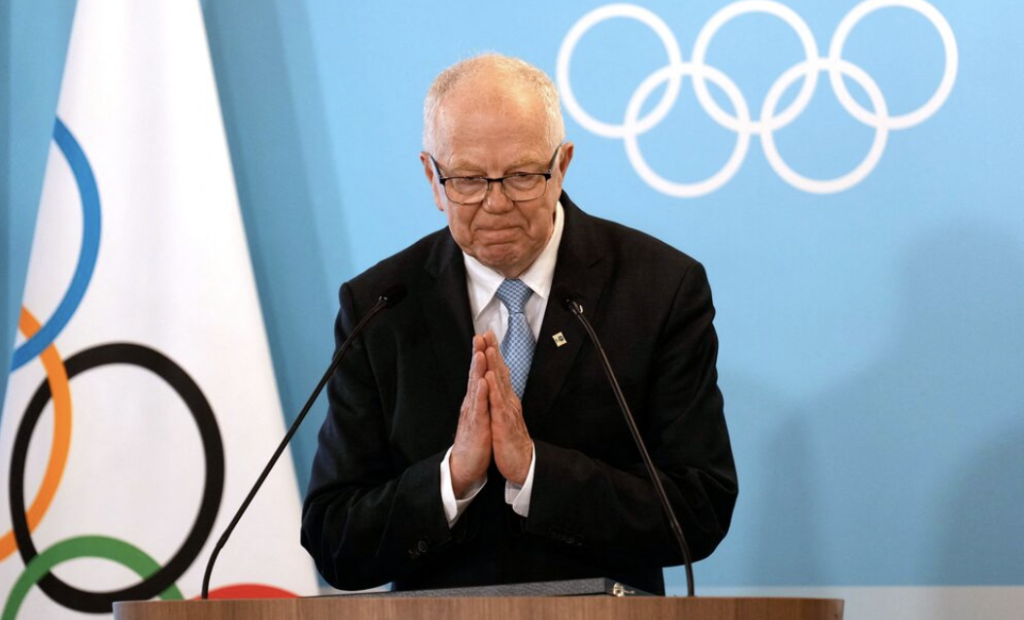
Eight years later, as he prepares to step down from the presidency on 19 September, the organisation he leaves behind looks very different. An independent integrity unit, term limits, athlete representation, gender quotas, a new constitution and a strategic framework have helped rebuild trust, while sustainability, development and international growth have moved towards the centre of the federation’s agenda.
For Dahlin, however, the most important achievement is less easily measured.
“I think perhaps others are better to characterise it, but I think it is to unify the biathlon family,” he told Global Sustainable Sport.
“Because it was absolutely not unified. It started from a big split inside the old board, mistrust from a big part of the Biathlon Family such as the athletes, National Federations, officials and external stakeholders. This is the most important in any organisation – to be unified, but it was so obvious in the IBU how it was not unified.
It is a transformation that offers lessons extending far beyond biathlon.
“I think perhaps others are better to characterise it, but I think it is to unify the biathlon family ... because it was absolutely not unified. It started from a big split inside the old board, mistrust from a big part of the Biathlon Family such as the athletes, National Federations, officials and external stakeholders. This is the most important in any organisation – to be unified, but it was so obvious in the IBU how it was not unified.
Never waste a crisis
The scale of the challenge facing the IBU in 2018 meant that simply replacing its leadership was never going to be enough.
Dahlin’s response was to use the crisis as an opportunity to reconsider how the organisation itself should operate.
“There is some famous guy who once upon a time said, ‘Never don’t utilise a crisis’,” he recalled.
“There was only one direction to go. You do the analysis, you do the strategy, you set the organisation and you execute.”
“There is some famous guy who once upon a time said, ‘Never don’t utilise a crisis’ ... there was only one direction to go. You do the analysis, you do the strategy, you set the organisation and you execute.”
Crucially, the IBU did not attempt to investigate its past entirely from within. An external review commission was established to report to Congress, alongside work on a new constitution.
“The earlier problem was that the old board was not transparent,” Dahlin said. “So to really bring the transparency there, and not just come in as a new board or a new guy without the transparency, we established the external review commission.”
At the same time, the federation interviewed stakeholders and conducted a wider assessment of the organisation.
From that emerged Target 26 – the IBU’s first strategic plan – followed by an Extraordinary Congress in 2019.
The significance of the approach was that governance reform and organisational strategy were developed together. The IBU was not simply attempting to repair the past; it was deciding what kind of organisation it wanted to become.
“The earlier problem was that the old board was not transparent ... so to really bring the transparency there, and not just come in as a new board or a new guy without the transparency, we established the external review commission.”
Perhaps the most significant structural change was the creation of the Biathlon Integrity Unit (BIU).
Responsibility for wrongdoing – from anti-doping violations through to corruption – was removed from the federation’s normal governance structures and placed within a separate unit with its own board.
“That was one of the most important things in the new constitution,” Dahlin explained.
“All the wrongdoing, from anti-doping to corruption, was handled by this separate unit with a separate board, and the normal board of the IBU could focus on the sport and how to develop that with the Target 26 strategy.”
Other reforms followed.
“That was one of the most important things in the new constitution ... all the wrongdoing, from anti-doping to corruption, was handled by this separate unit with a separate board, and the normal board of the IBU could focus on the sport and how to develop that with the Target 26 strategy.”
Athletes gained full representation on the IBU Executive Board. Term limits were introduced. Gender quotas were established.
Those changes matter because governance ultimately depends upon where power resides – and how that power can be challenged.
Dahlin himself is now experiencing one consequence of the reforms.
Having served one term on the board before becoming President for two terms, the term limits mean his presidency must end.
More importantly, he believes the reforms have created sufficient checks and balances to protect the organisation from excessive concentration of power in the future.
“I think we have now established this culture,” he said.
“Of course, perhaps you should never say never, but I think we have such a good culture now in our organisation.
“What I think the main problem is when this extreme wrongdoing has happened is when the president has been there for too long.”
“I think we have now established this culture ... of course, perhaps you should never say never, but I think we have such a good culture now in our organisation ... what I think the main problem is when this extreme wrongdoing has happened is when the president has been there for too long.”
Governance cannot stop at the international federation
There is another important dimension to the IBU model.
Reforming an international federation means little if poor governance remains embedded throughout the organisations that ultimately own it.
The IBU currently has around 65 member federations, including approximately ten provisional members. But membership is no longer intended to be simply a passport to Congress and a vote.
Full members are expected to demonstrate activity and strategy, while mechanisms exist to downgrade federations that become inactive.
“We are really not trying to have these more inactive members that just come to the Congress and vote,” Dahlin said.
“To be a full member, you have to have a strategy and to do something.”
“We are really not trying to have these more inactive members that just come to the Congress and vote ... to be a full member, you have to have a strategy and to do something.”
The federation is also taking its governance programme down to national level.
The BIU provides governance tools and support to members, while IBU development funding can support strategic and governance projects.
“We also need and want that culture among our members, because the culture of our members can also influence our culture,” Dahlin explained.
That is an important lesson for international sport. Governance cannot simply be imposed from the top. The standards of an international federation and those of its members are interconnected.
“We also need and want that culture among our members, because the culture of our members can also influence our culture,”
From a “mid-sized sports club” to an international federation
Governance reform was accompanied by substantial organisational development – and Dahlin is quick to emphasise that the transformation of the IBU has been a team effort rather than the work of one president.
He describes the organisation he inherited in striking terms.
“When I took over, we were as a mid-sized sports club,” he said. “Now we are an established international federation with a very strong development department.”
That development infrastructure now includes four levels of coach education, seminars, financial assistance, governance programmes and sustainability initiatives, providing national federations with considerably greater support.
“Money is not everything,” Dahlin added, “but it’s good to have.”
Financial strength has enabled the IBU to reinvest in its members, athletes and development programmes. But Dahlin believes one of the most important changes has been building the professional team capable of delivering them.
“When I took over, we were as a mid-sized sports club ... now we are an established international federation with a very strong development department ... money is not everything, but it’s good to have ... with this strong staff now, it’s also easier to develop how the board works,”
“I’m so happy about the organisation,” he said. “I used to say it’s so easy to be the president with such a good organisation and such a good team at the office.”
That stronger executive team has also changed the relationship between management and governance. Rather than the board becoming involved in the day-to-day running of the federation, Dahlin believes professional staff have increasingly enabled it to operate at the appropriate level.
“With this strong staff now, it’s also easier to develop how the board works,” he said, allowing the board to concentrate more clearly on “strategy and policies”.
It is another potentially important lesson from the IBU experience. Good governance is not achieved solely by restricting presidential power or introducing new constitutional rules. It also requires investing in capable people and creating an organisation strong enough to operate without depending upon the president.
For Dahlin, building that team has been fundamental to the IBU’s journey from crisis towards becoming a modern international federation.
“I’m so happy about the organisation ... I used to say it’s so easy to be the president with such a good organisation and such a good team at the office.
Leadership cannot become a one-man show
Asked what advice he would give another federation president arriving in difficult circumstances, Dahlin returns repeatedly to strategy and stakeholder engagement.
“Take your time,” he said. “The analysis, the strategy, involve all your stakeholders when you make the strategy, set the organisation and execute.
“It’s not rocket science.”
The danger, he believes, is the temptation for a new leader to believe that change depends upon them personally.
“You have confidence in the organisation, so you don’t end up as just a one-man show coming in here and trying to make things a quick fix.”
“Take your time. The analysis, the strategy, involve all your stakeholders when you make the strategy, set the organisation and execute. It’s not rocket science. You have confidence in the organisation, so you don’t end up as just a one-man show coming in here and trying to make things a quick fix.”
International federations, he points out, are ultimately member-owned organisations.
“The owners are the national federations. You must realise that.”
That may be one of the most important observations of his presidency.
Good governance is not simply about finding a good president. It is about creating an organisation that does not depend upon having one.
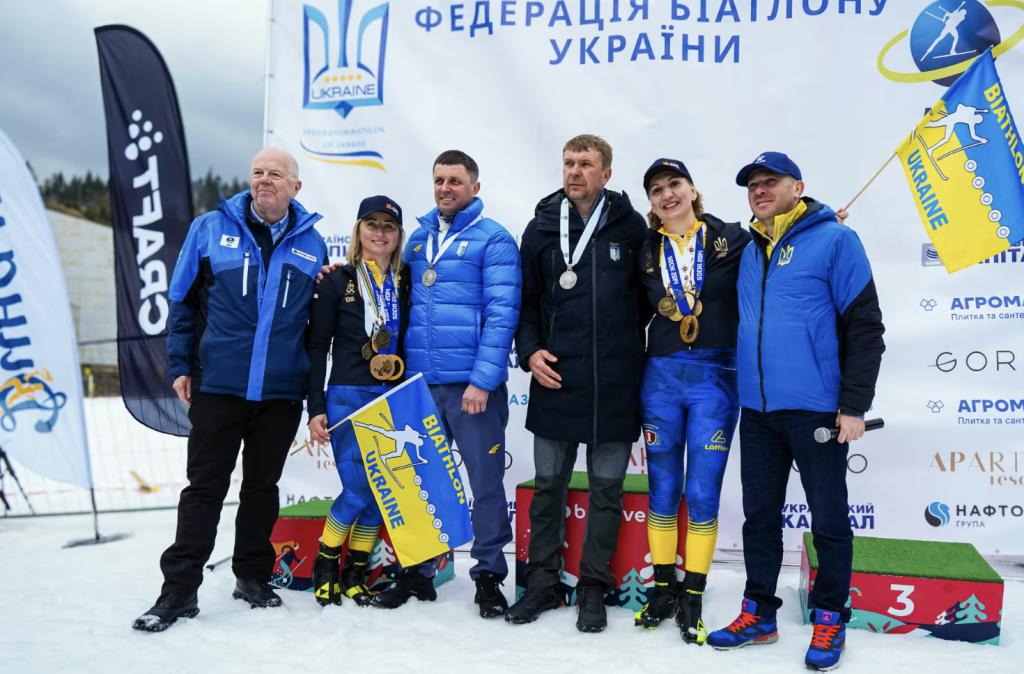
“The owners are the national federations. You must realise that.”
Sustainability moves to the centre
One of the clearest examples of the importance of people as well as strategy can be seen in the IBU’s approach to sustainability.
Sustainability was built directly into Target 26 as one of three overarching objectives: double the number of biathletes worldwide, double revenues and reduce the sport’s carbon footprint by 50%, while moving towards climate neutrality or net zero.
For an outdoor winter sport, Dahlin believes the case was unavoidable.
“It should be obvious,” he said.
Having spent much of his business career in the forest, pulp and paper industries, environmental issues were already familiar territory.
“It has been a little in my DNA to work with that,” he said. “We also see the need to really work systematically with these topics.”
“It should be obvious ... it has been a little in my DNA to work with that ... we also see the need to really work systematically with these topics.”
But Dahlin is equally clear that ambition needs people capable of turning strategy into action, and he singles out Riikka Rakic and her leadership of the IBU’s sustainability work as an important part of the federation’s progress.
“I think the fit between us was perfect,” he said. “I was so happy to see the possibility to more and more engage Riikka in the IBU.”
“We need that type of leadership, and then we can speed up when the right leadership is there.”
Rakic’s growing role came as the IBU itself was developing a stronger management structure – something Dahlin says did not exist when he first became President.
“I think the fit between us was perfect. I was so happy to see the possibility to more and more engage Riikka in the IBU. We need that type of leadership, and then we can speed up when the right leadership is there.”
Having the support of the board and management, combined with the right specialist leadership, allowed sustainability to move much more quickly from ambition towards implementation.
Dahlin jokes that “a good goalkeeper should also have luck”, before adding of Rakic: “She is fantastic, and of course that has helped the whole process that we just can say: go, go, go.”
The urgency is reinforced by what Dahlin has witnessed personally.
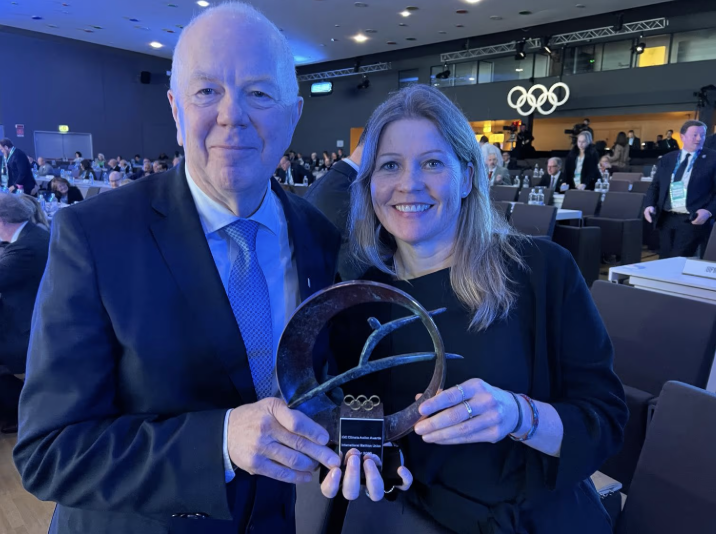
“a good goalkeeper should also have luck .., she is fantastic, and of course that has helped the whole process that we just can say: go, go, go.”
After more than half a century in biathlon, he says the geographical boundary where reliable cross-country skiing is possible has been moving progressively northwards – including around the part of Sweden where he grew up.
That experience helped ensure sustainability was not positioned as an isolated environmental programme but as one of the strategic priorities for the entire organisation.
“When we made the strategy, that was one of these three overall targets,” he said. “That also helped in the organisation because there was never a question about how important that was to work on.”
The results have increasingly received external recognition. During the Milan Olympic session, the IBU received a sustainability award – something Dahlin sees not as the result of a single initiative but as recognition of a much longer process.
“That was also not a quick fix,” he said. “It was really a journey.”
There is another lesson here that goes beyond sustainability. Strategy can establish the direction of an organisation, but progress ultimately depends upon finding people with the expertise, authority and leadership to deliver it.
In the IBU’s case, Dahlin provided the presidential backing, the board supported the direction and Rakic and the wider team were empowered to turn sustainability into an organisational priority rather than a standalone project.
“When we made the strategy, that was one of these three overall targets. That also helped in the organisation because there was never a question about how important that was to work on ... that was also not a quick fix. It was really a journey.”
Olympic recognition for a governance journey
The transformation of the IBU – and Dahlin’s role in leading it – received significant personal recognition during Milano Cortina 2026 when he was presented with the Olympic Order by IOC President Kirsty Coventry.
The Olympic Order is the highest distinction awarded by the IOC and recognises remarkable service to the Olympic Movement. In presenting the award, Coventry specifically highlighted the circumstances Dahlin inherited in 2018 and the subsequent transformation of the federation.
“When Olle became president of the IBU in 2018, the sport needed someone who could restore trust, safeguard its values, and put athletes at the centre,” she said, describing good governance as “the backbone of everything he did”.
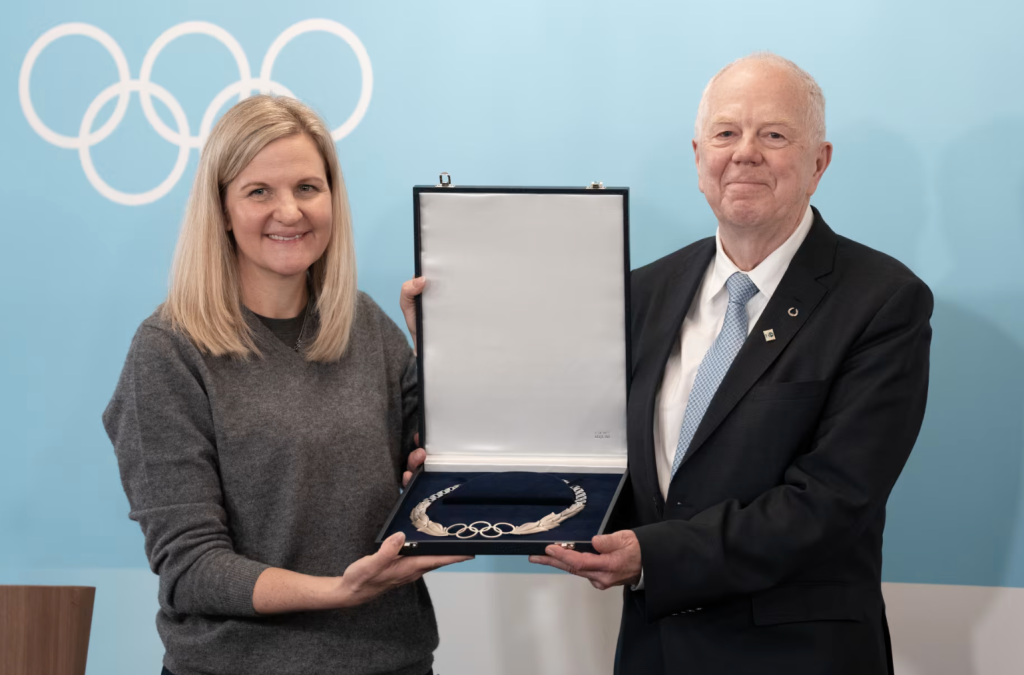
“When Olle became president of the IBU in 2018, the sport needed someone who could restore trust, safeguard its values, and put athletes at the centre.”
For Dahlin, however, the recognition belonged to the wider organisation rather than the President alone.
“It was, of course, fantastic,” he told Global Sustainable Sport. “I think for the biathlon family that was really an award to the whole family of the journey that we have discussed.”
He also recalled Coventry’s recognition that the transformation had been delivered in what he described as a “calm but firm way”.
That combination perhaps best characterises Dahlin’s eight years as President: significant structural change, but built around strategy, institutional reform and the development of a team capable of carrying the organisation forward beyond his own presidency.
“It was, of course, fantastic. I think for the biathlon family that was really an award to the whole family of the journey that we have discussed.”
Benchmarking a transformation
The scale of the transformation is also beginning to show through independent benchmarking.
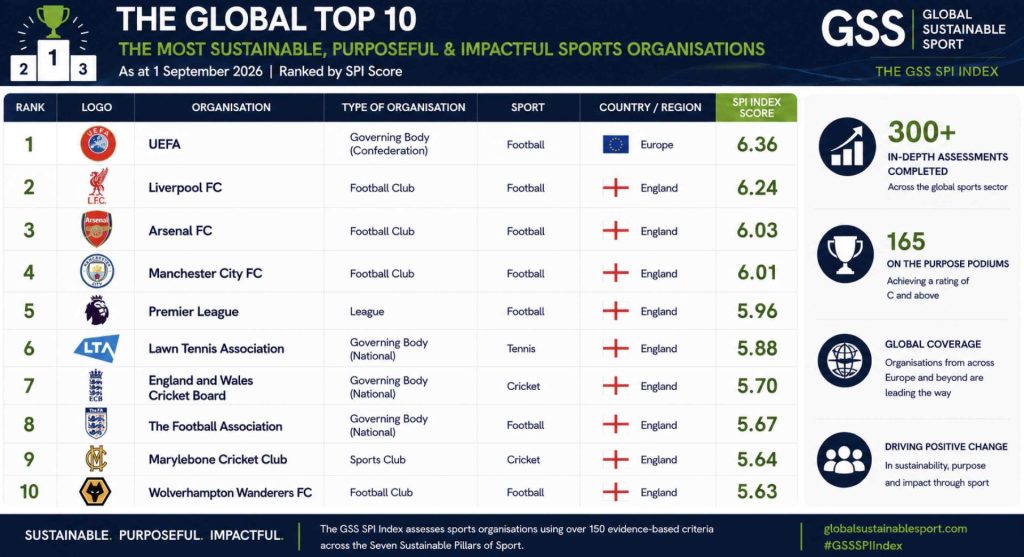
More significantly in the context of Dahlin’s legacy, the federation ranks ninth globally in the Power – or governance – Pillar, tenth in Profile and 25th in Planet. Among Olympic international federations, the IBU currently sits second overall, behind World Rugby.
Dahlin welcomed the holistic nature of the assessment, arguing that benchmarking itself can become a catalyst for improvement.
“Benchmarking is really a driver in itself because nobody wants to be the last one,” he said.
“The benchmarking creates a lot of activity.”
It is particularly significant given where the organisation stood eight years ago.
The IBU’s journey suggests that governance, sustainability, development, partnerships and organisational culture should not be treated as separate programmes. Progress in one can strengthen the others.
“Benchmarking is really a driver in itself because nobody wants to be the last one. The benchmarking creates a lot of activity.”
Taking biathlon beyond Europe
The next challenge is growth.
Dahlin readily acknowledges that biathlon remains predominantly European.
“We are too European a sport,” he said.
He identifies two regions where the opportunity is particularly significant: Asia and North America.
Recent discussions in China have encouraged him, and he expects stronger Chinese representation across the World Cup and IBU Cup. But he is realistic about the time required to build sustainable sporting success.
“In endurance sport it’s such a long-term project,” he said. “It’s a ten-year journey.”
The priority, therefore, must be grassroots development rather than simply creating occasional elite performers.
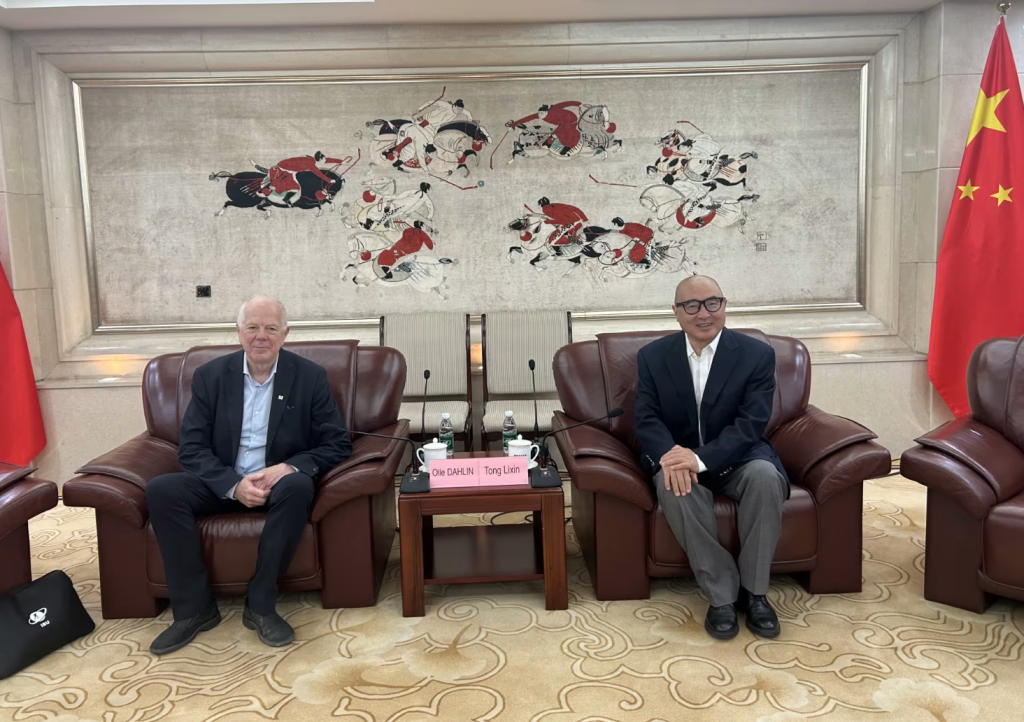
“We are too European a sport. In endurance sport it’s such a long-term project. It’s a ten-year journey.”
At the same time, the IBU is competing for something every sport increasingly needs: attention.
Dahlin wants biathlon to grow its worldwide fanbase while maintaining its competitive position in a rapidly changing entertainment market.
That means closer relationships with commercial partners, greater investment in streaming and social media and continued innovation with broadcasters.
The IBU is moving towards a hybrid marketing model that brings it closer to partners rather than simply outsourcing commercial activity.
“The history where the partner just wants a banner at an event is changing” Dahlin said.
Increasingly, partnerships must create value for both sides through marketing, communication and shared objectives.
“The history where the partner just wants a banner at an event is changing"
The next frontier: competing for fans
Technology is also changing how biathlon reaches audiences.
Working with broadcast partners, the IBU has developed camera systems allowing broadcasters to follow athletes specifically relevant to their national audience – even when those competitors are nowhere near the podium.
For emerging biathlon nations, that could prove important.
The successful Munich event, which attracted around 50,000 spectators, has meanwhile demonstrated the potential for taking the sport into different environments and attracting new host cities.
But Dahlin recognises that the competition for fans – and for young people deciding which sports to participate in – is becoming increasingly intense.
“We used to say in the past we could read the results a day after in the newspaper,” he reflected.
Today, sport competes continuously across streaming platforms, social media and digital entertainment.
For the IBU, the challenge is no longer simply staging compelling biathlon. It is ensuring people can find it, follow it and feel connected to it.
“We used to say in the past we could read the results a day after in the newspaper,”
A governance model for international sport?
Perhaps the most significant part of Dahlin’s legacy may ultimately extend beyond biathlon.
Asked whether international sport gives presidents too much power – and whether other federations should consider separating integrity from their political governance structures – his answer is unequivocal.
“I think that’s a low-hanging fruit and really a must to separate this,” he said.
“There are two reasons. The board can focus on the sport, and then have professionals who work with the wrongdoing.
“I don’t really see an alternative here.”
“I think that’s a low-hanging fruit and really a must to separate this. ... There are two reasons. The board can focus on the sport, and then have professionals who work with the wrongdoing ... I don’t really see an alternative here.”
There is an important nuance to the IBU model.
Independence did not mean placing the integrity function somewhere remote from the sport. The BIU remains within the wider biathlon ecosystem while operating independently.
That proximity, Dahlin believes, has helped it establish relationships and earn trust.
“They are inside the biathlon family in an independent way, and they have gained the trust,” he explained.
That matters because reporting wrongdoing ultimately depends upon people being willing to come forward.
“They are inside the biathlon family in an independent way, and they have gained the trust,”
“If it is people that you don’t have a clue who they are, then it’s not so easy to just pick up the phone or send an email. So there is transparency and trust here, and I think that was so important.”
Two lessons therefore stand out for the future governance of sport.
The first is that integrity needs structural independence, not simply promises of independence. Presidents and boards should not ultimately police themselves. Independent professional integrity structures create both expertise and checks on executive power.
The second is perhaps even more fundamental: successful governance reform should make the individual leader less important, not more important. Term limits, professional management, athlete representation, active members, stakeholder engagement and independent oversight create institutions capable of surviving changes of leadership.
That may ultimately be the strongest test of the reforms Dahlin helped introduce.
“If it is people that you don’t have a clue who they are, then it’s not so easy to just pick up the phone or send an email. So there is transparency and trust here, and I think that was so important.”
“My heart is in biathlon”
Dahlin will leave the presidency following the IBU elections on 19 September, although he is unlikely to disappear from the sport.
Plans are being discussed for him to become an honorary president and ambassador, with an overlap period allowing him to transfer relationships and contacts to his successor.
There may also be opportunities to take his experience into other international federations, particularly around integrity and sustainability.
“I will not move to the moon,” he joked.
“My heart is in biathlon, so I’m there. Whatever they want me to support.”
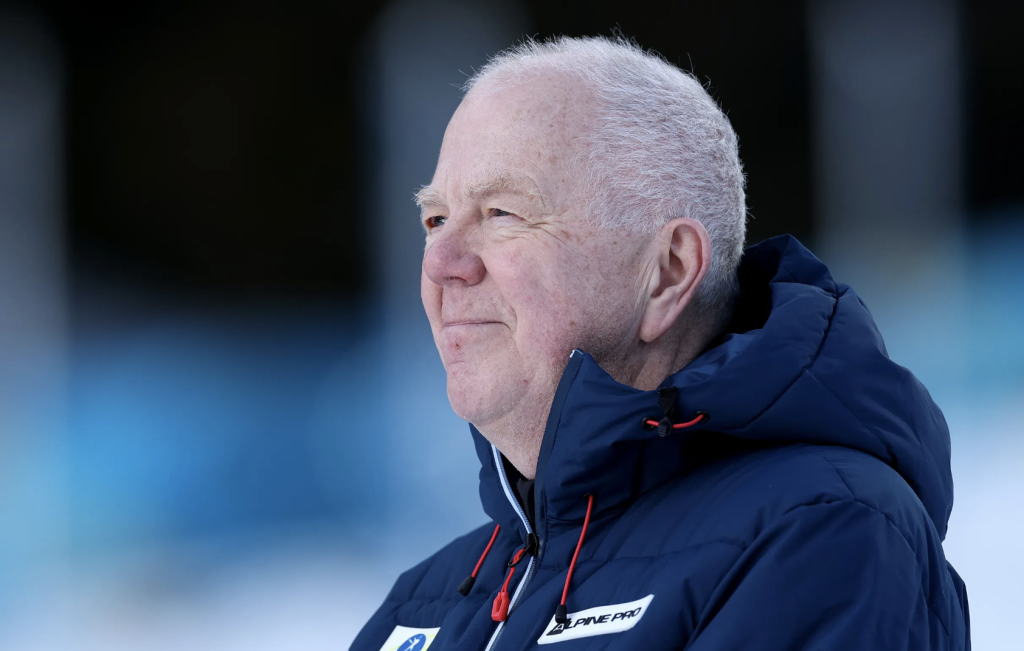
“I will not move to the moon. My heart is in biathlon, so I’m there. Whatever they want me to support.”
He also sees a wider role for sport – and particularly its athletes – in sustainability.
“There is a lot to do for sport,” he said. “The athletes have such a good position to speak up around sustainability because they are so well known and respected.”
“There is a lot to do for sport. The athletes have such a good position to speak up around sustainability because they are so well known and respected.”
Eight years ago, the immediate challenge facing Olle Dahlin was restoring credibility to an international federation emerging from crisis.
The longer-term achievement may prove more significant.
Rather than simply repairing the IBU, the reforms have sought to create an organisation in which integrity is independent, presidents are time-limited, athletes have a voice, members have responsibilities and boards increasingly concentrate on strategy rather than operational control.
For international sport, that raises a much bigger question.
The challenge is no longer simply who governs the governors of sport?
Perhaps it is whether sports organisations can build governance systems strong enough that, ultimately, it matters less who the governor happens to be.
Read moreInternational Biathlon Union (IBU)













Join the GSS Alliance Partners programme today
Stay ahead of the game with our FREE weekly newsletter, delivering the latest sport and sustainability news from around the globe straight to your inbox


11th Hour Racing
Join the GSS Network programme today

15-16 October, 2026
Gtech Community Stadium,
London (UK)
The SPX Purpose League Summit is a working summit for decision-makers interested in activating sport in a purpose-led way. Attendees will leave with an aligned peer network, data-backed insights, and the strategic commercial toolkits to transform sponsorship from an outsourced marketing expense into the single greatest driver of value.



Register for GSS Workshops today
Join the GSS Education programme today