
To access our unique news archive of over 1,400 articles with insights on over 500+ sustainable sports organisations, join the GSS Network today.
Login here if you are a registered network subscriber.
News article
From Birmingham to the World: 700 Organisations Unite Behind Gender Equity in Sport
Two months after the global women and sport community gathered in Birmingham, the momentum generated by the IWG Global Summit on Women & Sport is continuing to spread. More than 700 organisations worldwide have now signed the Brighton Plus Helsinki Declaration, creating an increasingly powerful coalition committed to advancing equity and equality for women and girls across sport and physical activity.
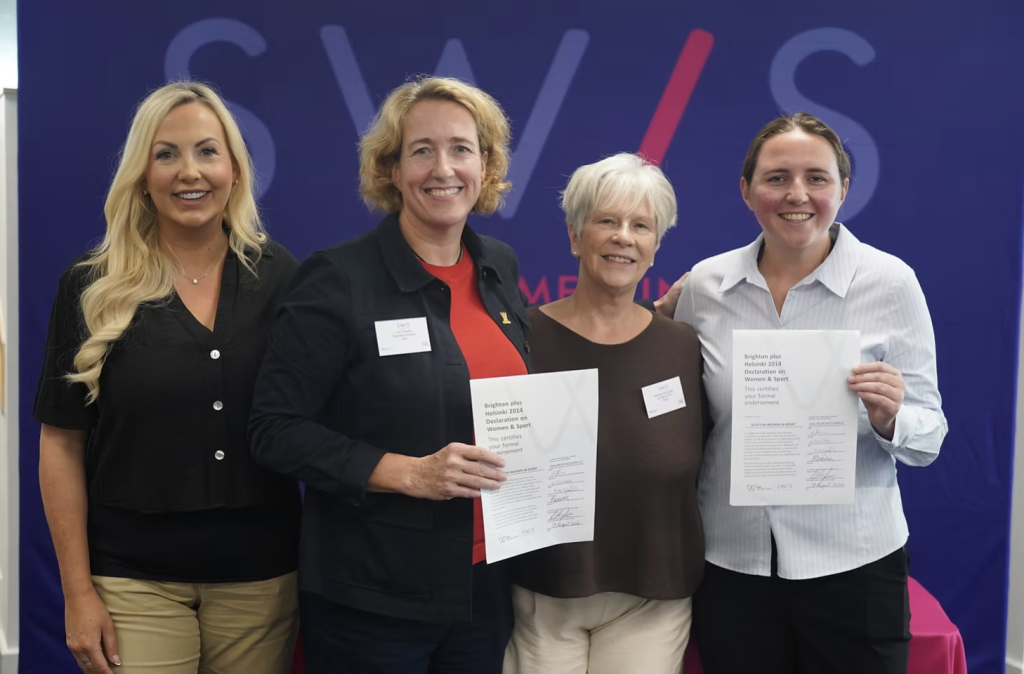
Held from 9–11 July, the Birmingham Summit brought together the International Working Group (IWG) on Women & Sport’s global “network of networks” for its once-every-four-years gathering, combining international leaders, regional perspectives and sessions addressing some of the most pressing questions surrounding gender equity in sport.
But perhaps the more important measure of Birmingham’s impact is what has happened since.
Recent additions including British Fencing, England Athletics, the Bangladesh Women’s Sports Federation and Fujairah Martial Arts Club, alongside three Catalan sports federations that signed during the Summit itself, illustrate both the geographical reach and growing diversity of the movement.
From commitment to action
At the heart of the network is the Brighton Plus Helsinki Declaration, through which organisations make a commitment towards equity and equality for women and girls in sport and physical activity.
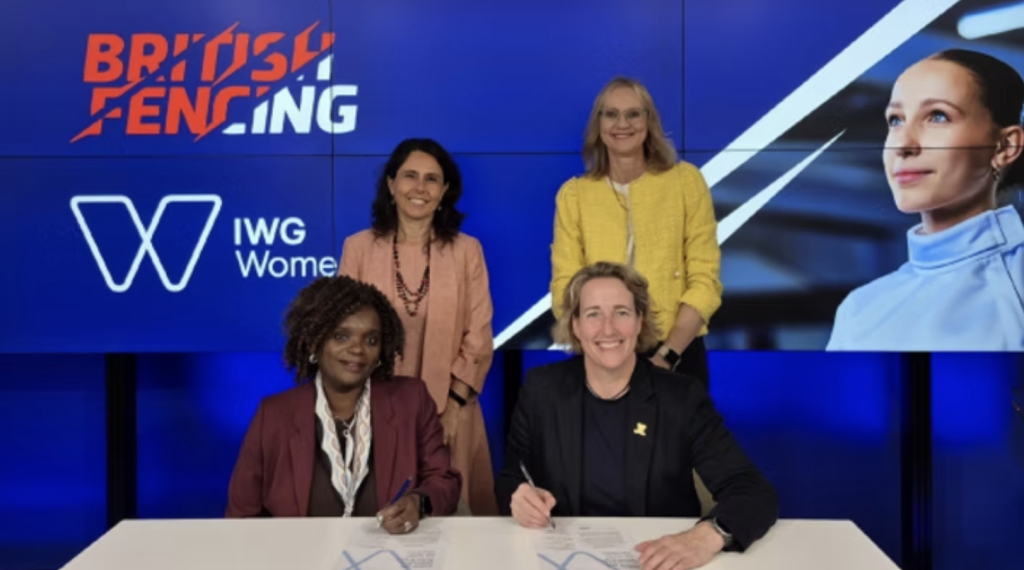
British Fencing became one of the latest organisations to join on 14 September, connecting the Declaration directly with its En Garde for the Future 2030 Strategy.
Its commitment is already translating into practical interventions, including a grant scheme designed to remove barriers preventing women entering coaching. Support covers costs including travel, meals and accommodation, while applications from ethnically diverse communities, disabled women and those from lower socio-economic backgrounds receive additional weighting.
Pat Aiyenuro BEM, President of British Fencing, said:
“We know how powerful it is for women and young girls to see other women coaching at their clubs, providing strong role models and empowering other women to participate.”
She added that bringing more women into the workforce could create pathways into refereeing and leadership at club, national and international federation level.
That emphasis on action matters. Signing declarations can be relatively straightforward; changing structures, investment, representation and opportunities is considerably harder.
"We know how powerful it is for women and young girls to see other women coaching at their clubs, providing strong role models and empowering other women to participate."
A genuinely global network
The scale of the IWG network is particularly striking when its composition is examined.
The international signatories include the International Olympic Committee, International Paralympic Committee, Association of Summer Olympic International Federations, FISU and SportAccord, alongside major international federations covering sports from badminton and football to cycling, hockey, gymnastics, judo, sailing, tennis and triathlon.
National Olympic Committees provide another significant layer. The European list alone includes committees from Britain, France, Denmark, Finland, Germany, Norway, Switzerland, Ukraine and numerous other countries. Across the Americas, signatories include the Olympic committees of Brazil, Argentina, Chile, Colombia, Jamaica, Mexico and many more.
Africa, Asia, the Middle East and Oceania extend that footprint further, demonstrating that gender equity is increasingly being positioned not as an initiative belonging to one region or sport, but as an issue cutting across the entire global sporting system.
Birmingham’s expanding legacy
Some of the newest commitments demonstrate how that network is continuing to evolve.
Three Catalan federations — volleyball, athletics and modern pentathlon — signed the Declaration at the Birmingham Summit, supported by the Union of Sports Federations of Catalonia and the Catalan Government. Their commitments include increasing opportunities for women in leadership and officiating, improving visibility and tackling participation barriers.
England Athletics has subsequently joined, linking its commitment with initiatives including Women in Coaching, the Women’s Throws Coach Group and its Let’s Lift the Curfew campaign, alongside plans to address female athlete health and strengthen pathways into officiating.
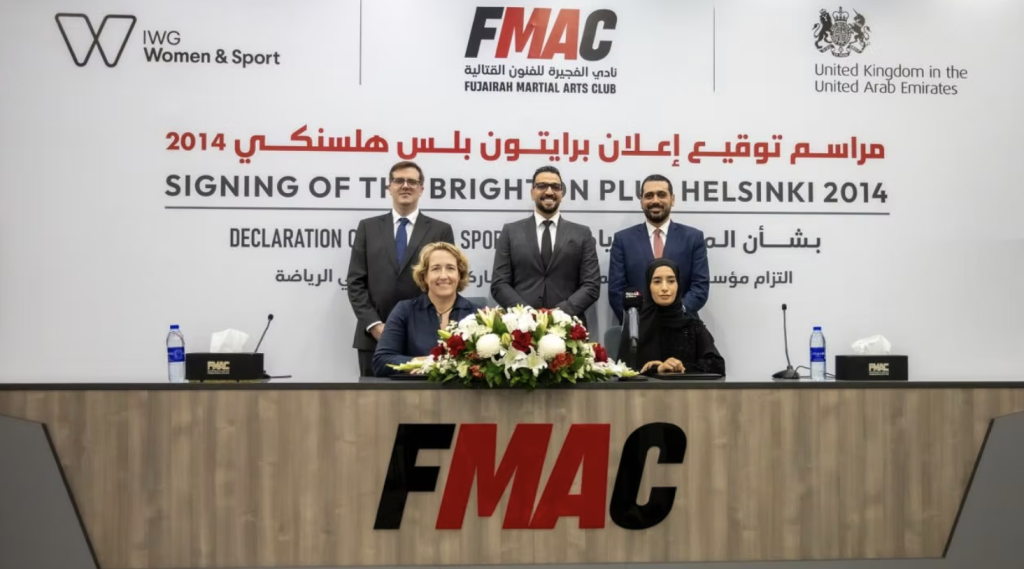
Further afield, Fujairah Martial Arts Club has become the first sports club in the Gulf Cooperation Council to sign. Women currently represent 28% of its athletes, with the club targeting 35% female participation by 2028.
Its executive leadership summed up the ambition: “Empowering women in sports is not just our goal; it is a fundamental pillar of our club’s future and international legacy. Our dedication to women and girls in sport is not a destination, but an ongoing journey of empowerment, equality and excellence”
"Empowering women in sports is not just our goal; it is a fundamental pillar of our club's future and international legacy. Our dedication to women and girls in sport is not a destination, but an ongoing journey of empowerment, equality and excellence"
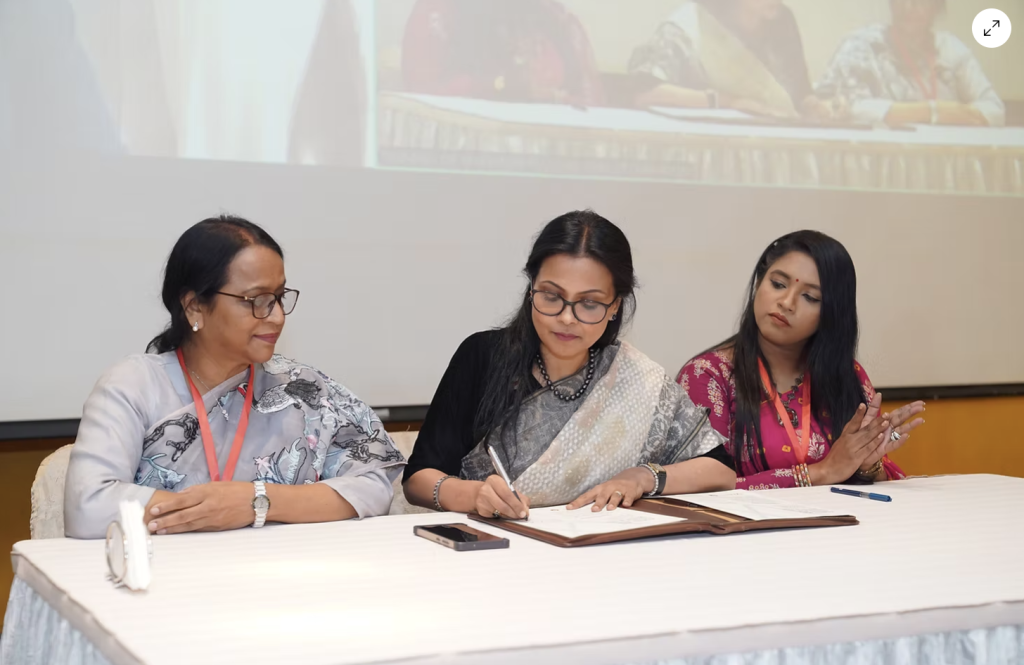
Meanwhile, the Bangladesh Women’s Sports Federation is using sport to create opportunities particularly for women and girls in rural communities, including athlete development, training, welfare and access to safe sporting environments.
President Sarwat Siraj put the principle more simply: “Equality is not a favour – it is the foundation of sporting excellence. As an IWG signatory, the Bangladesh Women’s Sports Federation pledges to champion every woman and girl who dares to dream, compete and lead.”
"Equality is not a favour – it is the foundation of sporting excellence. As an IWG signatory, the Bangladesh Women's Sports Federation pledges to champion every woman and girl who dares to dream, compete and lead."
The power of 700
The significance of more than 700 signatories lies less in the headline number than in the breadth of the movement behind it. The IWG network now stretches from the IOC and IPC through international federations and National Olympic Committees to national governing bodies, clubs, government agencies and organisations working directly with women and girls.
Perhaps most striking is the depth of engagement within the Olympic movement. Across the regional lists are dozens of National Olympic and Paralympic Committees, while the international signatories include many of the world’s major sports federations. It gives the Brighton Plus Helsinki Declaration considerable reach across the structures responsible for governing and developing global sport.
The recent additions also suggest that Birmingham was not an end point. New signatories are continuing to emerge from very different sporting and geographical environments, from British Fencing and England Athletics to Bangladesh and the Gulf, while the three Catalan federations signed during the Summit itself.
IWG Secretary General Lisa O’Keefe captured the underlying philosophy when welcoming British Fencing: “The Brighton Plus Helsinki Declaration is built on the premise that collective action drives the most meaningful change.”
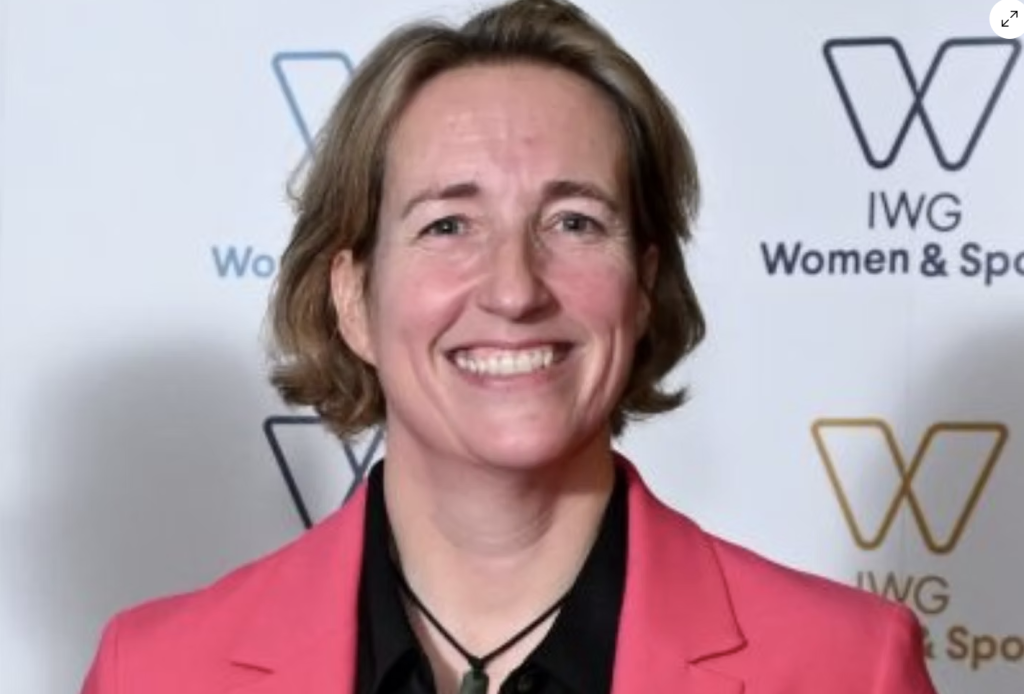
"The Brighton Plus Helsinki Declaration is built on the premise that collective action drives the most meaningful change."
Two months on from Birmingham, that collective action is continuing to grow. The challenge now is to convert the extraordinary reach of a 700-strong global network into demonstrable progress – more women participating, coaching and leading, fewer structural barriers, and greater equality in the decisions that shape sport.
That is ultimately where the legacy of Birmingham, and the real value of the Brighton Plus Helsinki Declaration, will be measured.
Read more The International Working Group (IWG) on Women and Sport
Join the GSS Alliance Partners programme today
Stay ahead of the game with our FREE weekly newsletter, delivering the latest sport and sustainability news from around the globe straight to your inbox
11th Hour Racing
Join the GSS Network programme today
15-16 October, 2026
Gtech Community Stadium,
London (UK)
The SPX Purpose League Summit is a working summit for decision-makers interested in activating sport in a purpose-led way. Attendees will leave with an aligned peer network, data-backed insights, and the strategic commercial toolkits to transform sponsorship from an outsourced marketing expense into the single greatest driver of value.

Register for GSS Workshops today
Join the GSS Education programme today