
To access our unique news archive of over 1,400 articles with insights on over 500+ sustainable sports organisations, join the GSS Network today.
Login here if you are a registered network subscriber.
News article
From Purpose to Performance: Sport’s Business Case for Creating Lasting Impact
The relationship between purpose and commercial performance is changing. Across the global sports industry, organisations are increasingly recognising that sustainability, social impact and commercial success are not competing priorities but interconnected elements of long-term business value.
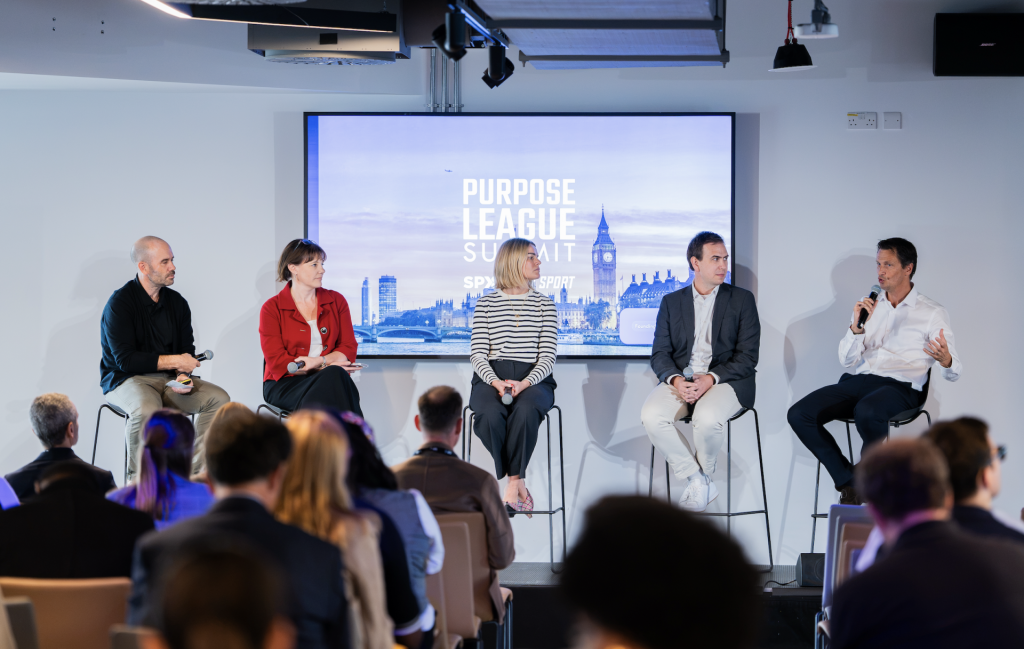
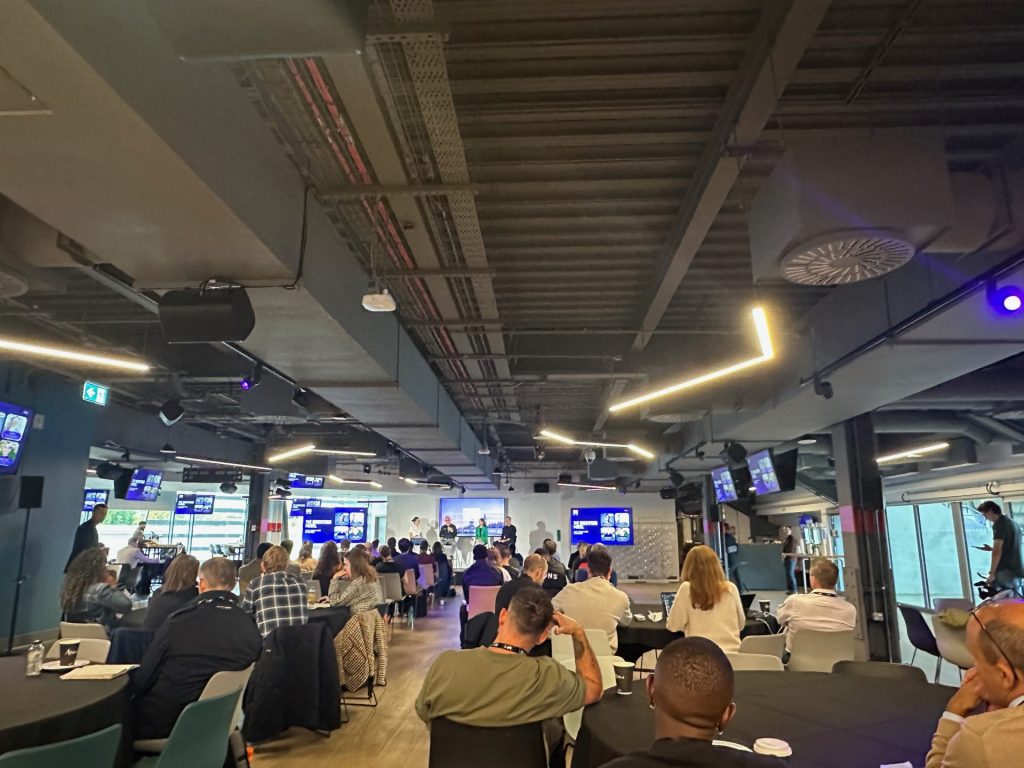
That was the central message emerging from the SPX Purpose League Summit, powered by 17 Sport, held at Brentford FC’s Gtech Community Stadium in London on 15–16 October.
Bringing together leaders from sports organisations, governing bodies, commercial brands, sponsors, agencies and investment businesses, the two-day summit explored how sport can move beyond traditional sponsorship and corporate social responsibility towards partnerships that create measurable commercial, environmental and social impact.
Under the theme The Business Case for Purpose, the discussions demonstrated how purpose is increasingly moving from the margins of organisational strategy to the heart of commercial decision-making.
Making the improbable inevitable
Opening the summit, Sebastian Buck, Co-Founder of ENSO, set the scene with a thought-provoking presentation on sport’s extraordinary potential to inspire societal change.
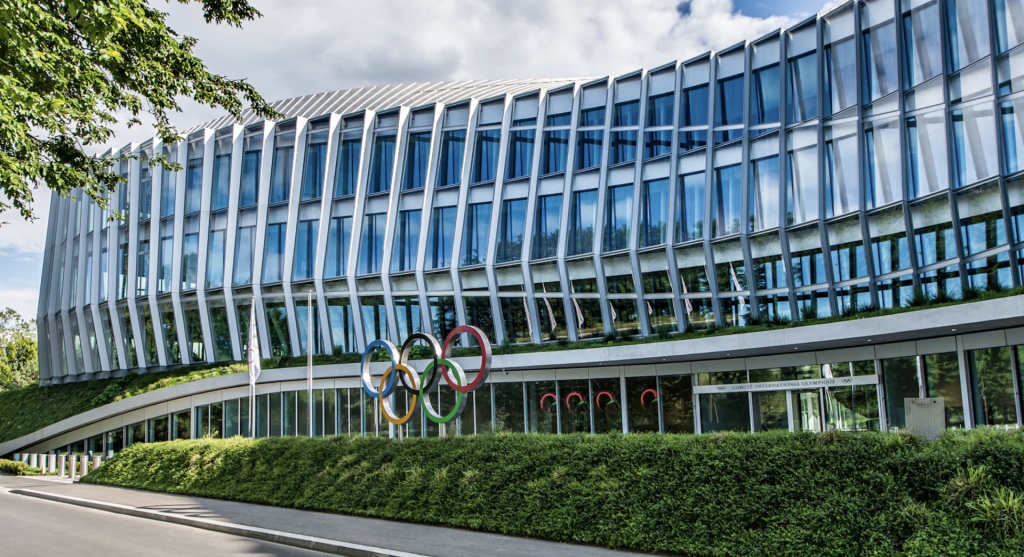
Drawing on the history of the modern Olympic movement and examples of social innovation, Buck challenged delegates to consider how sport could help create futures that currently appear improbable.
Reflecting on growing public pessimism about the future, he argued that organisations must look beyond conventional expectations.
“People think the probable future is bleak, therefore it’s only rational and logical to look for improbable futures.”
Buck drew on the vision of Pierre de Coubertin, founder of the modern Olympic movement, to illustrate how one individual’s ambition could develop into a global movement capable of connecting people across nations and cultures.
“I’m going to argue today that sport is the very best place to find improbable futures,” he told delegates.
"People think the probable future is bleak, therefore it's only rational and logical to look for improbable futures ... I'm going to argue today that sport is the very best place to find improbable futures,"
His presentation established a central theme for the two days: sport’s greatest value lies not simply in the audiences it attracts or the commercial opportunities it generates, but in its unique ability to influence attitudes, change behaviour and create lasting societal impact.
A new sponsorship paradigm
Neill Duffy, Group CEO and Co-Founder of 17 Sport, challenged the industry’s traditional approach to commercial partnerships.
“Why are we so fixated as an industry on renting moments?” he asked, questioning why sponsorship continues to focus heavily on signage, hospitality and short-term exposure.
“It’s all about how you show up as opposed to how you show off.”
"Why are we so fixated as an industry on renting moments? ... It's all about how you show up as opposed to how you show off."
Dana O’Donovan, Purpose Leader at Deloitte, reinforced the commercial argument, suggesting that businesses have historically created an artificial separation between commercial performance and positive societal outcomes.
“The return is in that messy middle, right where the mission meets the market,” she explained.
O’Donovan argued that organisations achieve greater impact when their social ambitions are connected to their commercial capabilities.
“If you’re doing something adjacent, nice to have, off to the side, you’re never going to have the impact that you could have if you’re doing something that is core to your capabilities.”
The discussion established a central theme that continued throughout the summit: purpose must be embedded within the business rather than treated as an additional responsibility.
"The return is in that messy middle, right where the mission meets the market ... If you're doing something adjacent, nice to have, off to the side, you're never going to have the impact that you could have if you're doing something that is core to your capabilities."
Purpose as a driver of commercial value
One of the strongest examples came from UEFA, where Guillaume Sabran, Chief of Sponsorship and Licensing, described how changing expectations among commercial partners are reshaping the organisation’s approach.
Recalling a sponsorship renewal discussion during UEFA EURO 2024, Sabran explained how a commercial partner challenged UEFA to consider what both organisations could achieve together beyond conventional marketing objectives.
“What could we do together that none of us can do alone?” became the defining question.
Sabran explained how this changing commercial environment had encouraged UEFA to develop new partnership models, including its strategic corporate partnership with Schwarz Group, connecting innovation, sustainability and corporate social responsibility.
“Purpose is not separate from business, but it’s actually a catalyst for better business,” he told delegates.
"What could we do together that none of us can do alone? ... Purpose is not separate from business, but it's actually a catalyst for better business,"
The importance of connecting purpose to commercial performance was also explored by Thomas Bulitta of Lidl International, Kathryn Wilson of Two Circles and Joanne Deponio of UK & Ireland 2028.
Together, these discussions highlighted an evolving sponsorship market in which brands increasingly expect partnerships to deliver meaningful value beyond traditional media exposure.
Brentford: Putting community at the heart of the business
As hosts of the summit, Brentford FC provided a practical example of how community engagement and commercial ambition can work together.
Lee Doyle, CEO of Brentford FC Community Sports Trust described the breadth of the club’s community activities, including programmes supporting young carers, employment opportunities, education and grassroots participation.
The Trust works with thousands of young people across approximately 100 schools and has developed initiatives addressing the specific needs of its local communities.
“We try and think differently. We’re ambitious. We take calculated risks, but we really think about how we respond to local need,” Doyle explained.
"We try and think differently. We're ambitious. We take calculated risks, but we really think about how we respond to local need,"
Richard Morris, Partnerships Director of Brentford FC described how the club approaches commercial partnerships through clearly defined and measurable objectives.
“We spend and invest a lot of time really getting to know and getting under the bonnet of our partner businesses, understanding their objectives, the challenges they face, and importantly, what we can do to help solve them.”
"We spend and invest a lot of time really getting to know and getting under the bonnet of our partner businesses, understanding their objectives, the challenges they face, and importantly, what we can do to help solve them."
Claire Petzal, Senior Manager, Partnerships and Activation of Indeed reinforced the importance of understanding community needs, arguing that successful partnerships require “real clear intention” and a genuine commitment to contributing something useful.
The Brentford example demonstrated that community engagement can strengthen commercial relationships while generating meaningful social value.
Sustainability in action
Moving from ambition to implementation was another central theme.
A panel featuring Richard Ames, Head of Commercial Acquisitions of The FA, Daniel Matson, Commercial Director of Yorkshire County Cricket Club and Fiona Morgan, Chief Brand Officer of Whisper explored how sustainability can become embedded within organisational strategy.
Ames highlighted The FA’s Greener Game programme, developed with E.ON, which supports grassroots football clubs through practical energy interventions.
He explained that participating clubs were achieving energy bill savings of approximately 40–50%, demonstrating how environmental improvements can also deliver direct financial benefits.
Asked what advice he would offer organisations trying to balance commercial success with meaningful impact, Ames emphasised the importance of building the right foundations.
“Focus on the three Ps: Purpose, Positioning, Platform. So start with your purpose, find out how you’re going to position it, to turn it into a marketing story… that adds value to the brand… to that business category, and then thread it into the platform that you’re trying to sell… and don’t go with platform first.”
His message reinforced a recurring theme throughout the summit: purpose should shape the commercial proposition rather than simply be added to an existing sponsorship platform.
"Focus on the three Ps: Purpose, Positioning, Platform. So start with your purpose, find out how you're going to position it, to turn it into a marketing story… that adds value to the brand… to that business category, and then thread it into the platform that you're trying to sell… and don't go with platform first."
Matson discussed Yorkshire County Cricket Club’s ten-year strategy, Chasing Glory, which places environmental sustainability, community leadership and social impact at the heart of the organisation’s future development.
“Environmental sustainability, community leadership, and social impact is sort of right at the core of that. It’s right at the heart of how we’re operating as a business going forward, and it’s already starting to drive commercial value,” he explained.
Drawing on his previous experience at Envision Racing, Matson also described how a clear environmental purpose had helped differentiate the Formula E team and attract significant commercial partnerships.
"Environmental sustainability, community leadership, and social impact is sort of right at the core of that. It's right at the heart of how we're operating as a business going forward, and it's already starting to drive commercial value,"
Morgan drew on her experience of SailGP to demonstrate how investment in opportunities for female athletes can overcome barriers to participation.
“The only gap is experience,” she argued, explaining how partners could help create opportunities for women to develop the skills and experience needed to compete at the highest level.
"The only gap is experience,"
Women’s sport: From opportunity to necessity
The commercial transformation of women’s sport featured prominently throughout the summit.
In a discussion involving Kelly Simmons OBE of the Kelly Simmons Sports Consultancy, Tammy Parlour, CEO and co-founder of the Women’s Sport Trust and Tom Corbett, Managing Director, Sponsorships and Client Experience of Barclays, the panel explored why women’s sport should no longer be viewed primarily through the lens of corporate social responsibility.
Simmons argued that women’s sport offers an opportunity to embed purpose directly within its commercial proposition.
“There’s a real opportunity to step in and drive that transformational change,” she explained, emphasising the importance of clear strategies and meaningful investment.
However, she warned that sponsorship arrangements which fail to provide meaningful activation or fair recognition of women’s sport do little to create genuine change.
"There's a real opportunity to step in and drive that transformational change,"
Parlour highlighted the distinction between communicating a commitment to inclusion and actually creating opportunities for participation.
“The storytelling is just saying that girls and women belong in sport. The doing is creating the environment for them to be in it, to participate in it, for it to grow.”
"The storytelling is just saying that girls and women belong in sport. The doing is creating the environment for them to be in it, to participate in it, for it to grow."
Corbett reinforced the commercial argument, suggesting that women’s sport is increasingly moving beyond being viewed simply as an emerging opportunity.
“I’m starting to think of it less as being an opportunity and more of as a necessity,” he explained.
"I'm starting to think of it less as being an opportunity and more of as a necessity," he explained.
Athletes as agents of change
The role of athletes in driving social impact was explored by Gary Bansor, Head of Euro 2028 Sponsorship of BT Group, filmmaker Jermain Raffington and Jordan Guard, Founder and Managing Director of the Women’s Sports Alliance.
Bansor highlighted EE’s football partnerships and campaigns addressing issues affecting young people, including online isolation and harmful digital influences.
Campaigns such as Everyone Needs a Squad and Yes Boys demonstrated how footballers can help brands engage with important social issues.
Bansor emphasised the importance of athletes as role models, particularly for younger audiences, pointing to players such as Harry Kane and Lucy Bronze.
Raffington described how his experience in documentary filmmaking had shaped his approach to communicating athlete stories.
“The human element really intrigued me, and I love people, and that’s why I do a lot of documentary work,” he explained.
The discussion reinforced the importance of authenticity, ensuring that athlete-led campaigns reflect genuine commitments rather than simply generating publicity.
"The human element really intrigued me, and I love people, and that's why I do a lot of documentary work,"
Investing in youth sport: Building future fans and creating measurable impact
Stuart McReynolds, CEO of Canadian Tire Jumpstart Charities, demonstrated how investment in community sport can generate significant social and commercial returns.
Jumpstart has invested more than C$353 million in Canadian communities, removing barriers to participation through facilities, equipment and youth development programmes. With an ambition to reach 10 million children by 2030, the charity is increasingly focused on measuring long-term outcomes rather than simply participation.
Its research estimates that active children contribute C$12.5 billion in cumulative economic value to Canadian society, while the connection between Jumpstart and Canadian Tire demonstrates how community investment can strengthen brand trust and commercial performance.
McReynolds challenged the industry to think more ambitiously about sport’s wider contribution.
“How do we cement sport as a lever for nation building? How do we rally national pride? How do we really position sport as a tool to unlock community benefit and individual potential around health and well-being, education, employment?”
His concluding message captured one of the summit’s central themes: “The question is no longer whether purpose creates value, but whether we’re built to scale and prove it.”
"How do we cement sport as a lever for nation building? How do we rally national pride? How do we really position sport as a tool to unlock community benefit and individual potential around health and well-being, education, employment? ... the question is no longer whether purpose creates value, but whether we're built to scale and prove it."
Making the business case for purpose
Perhaps the most commercially significant discussion came in the session examining how sustainability and purpose influence financial valuation.
Neill Duffy was joined by Filippo Veglio, Chief of Social and Environmental Sustainability of UEFA and Charlotte Peyraud, Co-Head of Sustainability Advisory Services at Houlihan Lokey, to explore how organisations can justify investment in purpose-led activities.
Peyraud challenged the industry to translate sustainability ambitions into the language understood by financial decision-makers.
“Understanding where sustainability links to the costs, the revenues, and the brand value” was essential, she argued.
She warned that organisations cannot rely solely on storytelling when presenting investment proposals.
“If you come to the CFO without those metrics or the understanding or the way that they’re talking about things, and that is through the lens of costs, it’s through the lens of revenue.”
"Understanding where sustainability links to the costs, the revenues, and the brand value ... If you come to the CFO without those metrics or the understanding or the way that they're talking about things, and that is through the lens of costs, it's through the lens of revenue."
Veglio reinforced the need to position sustainability as part of an organisation’s long-term ability to operate, innovate and grow.
He challenged the traditional approach to sustainability, arguing that it had sometimes been presented too narrowly as a moral responsibility rather than an essential component of organisational performance.
“I think there was a moment in which perhaps sustainability was too much phrased around let’s do our part to save the world, and I think that is actually backfiring slowly but surely.”
For Veglio, the more compelling argument was to demonstrate how sustainability contributes to an organisation’s long-term licence to operate, innovate and grow.
The discussion highlighted the importance of robust measurement and financial evidence, particularly as private equity and institutional investment become increasingly influential across global sport.
"I think there was a moment in which perhaps sustainability was too much phrased around let's do our part to save the world, and I think that is actually backfiring slowly but surely."
Sport, people and planet: The trillion-dollar case for redefining prosperity
Closing the summit, Tony Simpson, Partner and Sport Entertainment Lead from Oliver Wyman presented findings from the World Economic Forum-commissioned Sports for People and Planet report, revealing that the global sports economy is worth approximately US$2.3 trillion, making it larger than the pharmaceutical and defence industries.
However, Simpson warned that physical inactivity, climate change and environmental degradation could threaten substantial future economic value, with potential losses reaching US$1.6 trillion.
He argued that sport’s economic significance provides a powerful opportunity to attract investment in positive social and environmental outcomes.
“The global sports economy is bigger than the global pharmaceutical industry… bigger… than the global defence industry… and yet sport has social outcomes, health outcomes, and it’s socially cohesive.”
Using Luton Town’s stadium development as an example of sport-led urban regeneration, Simpson outlined three pathways towards sustainable prosperity: directing capital towards positive impact, placing sport at the heart of communities and championing responsible environmental stewardship.
His presentation reinforced the summit’s overarching message: sport’s long-term commercial prosperity depends increasingly on its ability to deliver meaningful benefits for people, communities and the planet.
"The global sports economy is bigger than the global pharmaceutical industry… bigger… than the global defence industry… and yet sport has social outcomes, health outcomes, and it's socially cohesive."
Recognising leadership across global sport
Several of the sports organisations represented at the summit are also among the leading performers in the Global Sustainable Sport Sustainable, Purposeful and Impactful (SPI) Index, reflecting their progress in embedding sustainability, purpose and impact within their organisations.
Their presence on the GSS Purpose Podiums reflects the breadth of sustainability activity taking place across different levels of sport, from international and national governing bodies to professional clubs and regional sporting organisations.
From awareness to measurable impact
The discussions throughout the summit reflect a wider shift across global sport towards more evidence-based approaches to sustainability, purpose and impact.
The GSS SPI Index contributes to this evolving landscape by assessing sports organisations across Seven Sustainable Pillars of Sport: Partnerships, Participation, People, Planet, Power, Profile and Prosperity. These pillars reflect the interconnected issues discussed throughout the summit, from commercial partnerships and financial resilience to community participation, environmental responsibility and governance.
The challenge for the sports industry is no longer simply to demonstrate that purpose matters. It is to provide credible evidence that purpose is embedded within organisational strategy, translated into meaningful activity and delivering measurable outcomes.
The SPX Purpose League Summit demonstrated that the commercial case for purpose is becoming increasingly compelling.
But the next stage of the industry’s development will depend on its ability to move beyond compelling stories and individual initiatives towards consistent measurement, accountability and lasting change.
Ultimately, the greatest opportunity for sport is not simply to become more commercially successful or more socially responsible. It is to demonstrate that the two can be mutually reinforcing – creating organisations that are more sustainable, more purposeful and, ultimately, more impactful.
Read moreSPX Purpose League Summit
















Join the GSS Alliance Partners programme today
Stay ahead of the game with our FREE weekly newsletter, delivering the latest sport and sustainability news from around the globe straight to your inbox

11th Hour Racing
Join the GSS Network programme today
15-16 October, 2026
Gtech Community Stadium,
London (UK)
The SPX Purpose League Summit is a working summit for decision-makers interested in activating sport in a purpose-led way. Attendees will leave with an aligned peer network, data-backed insights, and the strategic commercial toolkits to transform sponsorship from an outsourced marketing expense into the single greatest driver of value.



Register for GSS Workshops today
Join the GSS Education programme today