
To access our unique news archive of over 1,400 articles with insights on over 500+ sustainable sports organisations, join the GSS Network today.
Login here if you are a registered network subscriber.
News article
UCI launches new Cycling for All Manifesto as sport embraces UN Decade of Sustainable Transport
The Union Cycliste Internationale (UCI) has launched its 2026 Cycling for All Manifesto, setting out an ambitious vision to make cycling safer, more accessible and integral to everyday life. The announcement coincided with discussions at the recent Sport Positive Summit, where international sports federations explored how sport can help transform global transport systems during the United Nations Decade of Sustainable Transport (2026–2035).
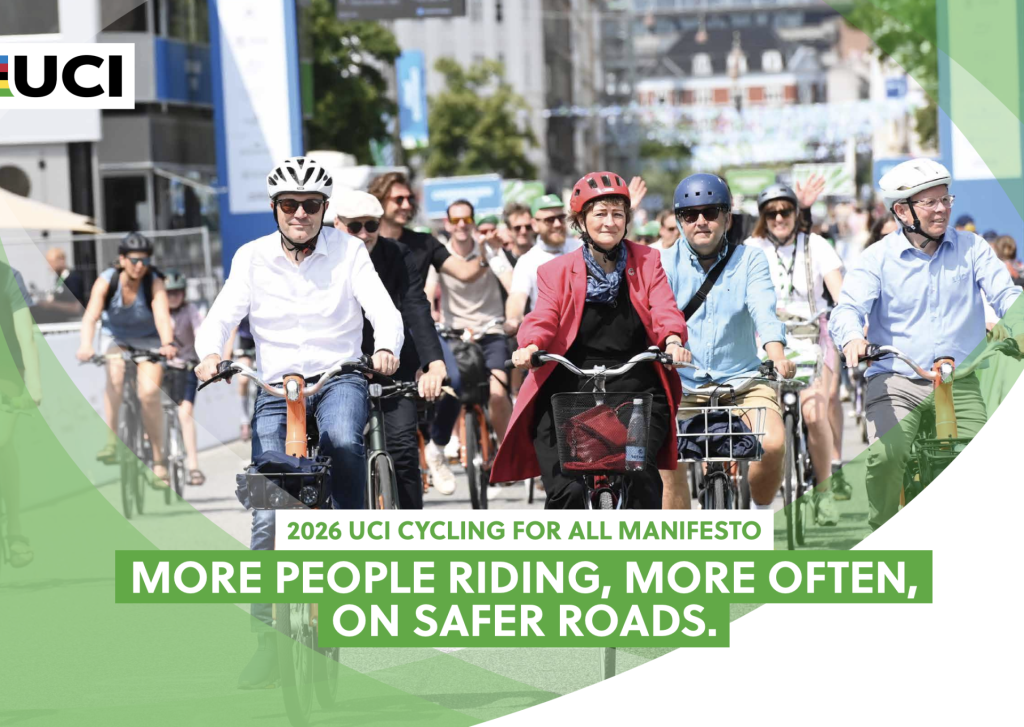
From sporting participation to sustainable mobility
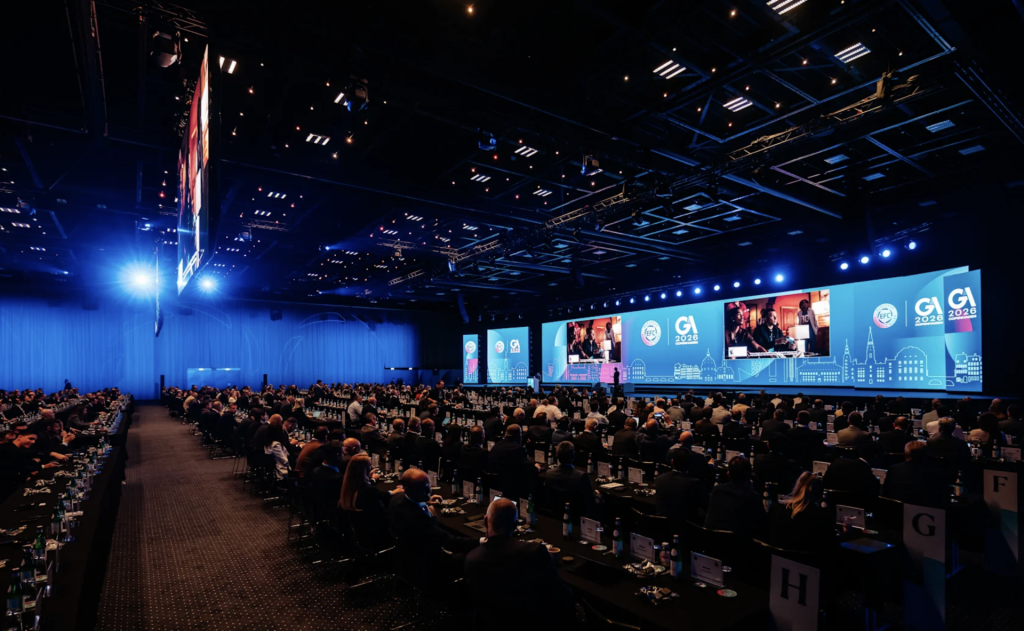
Adopted at the UCI Congress in Montréal on 23 September, the new Manifesto replaces the original 2017 document and establishes a clear ambition: “More people riding, more often, on safer roads.”
The framework focuses on seven principles and four pillars – Advocate, Inspire, Educate and Collaborate – recognising cycling’s contribution to climate action, public health, social inclusion and economic development.
UCI President David Lappartient explained:
“Cycling is at once a global sport and an everyday mode of transport, and that dual nature is its greatest strength. With this Manifesto, the UCI sets out clearly what we stand for and what we are asking of others: more people riding, more often, on safer roads. Our role is to connect the inspiration of our sport to the everyday journeys that shape people’s lives.”
The UCI Bike City Label, established in 2016, now encompasses 31 cities and regions across 16 countries and five continents, demonstrating how major sporting events can support lasting improvements in urban mobility.
“Cycling is at once a global sport and an everyday mode of transport, and that dual nature is its greatest strength. With this Manifesto, the UCI sets out clearly what we stand for and what we are asking of others: more people riding, more often, on safer roads. Our role is to connect the inspiration of our sport to the everyday journeys that shape people's lives.”
Sport Positive: moving beyond events
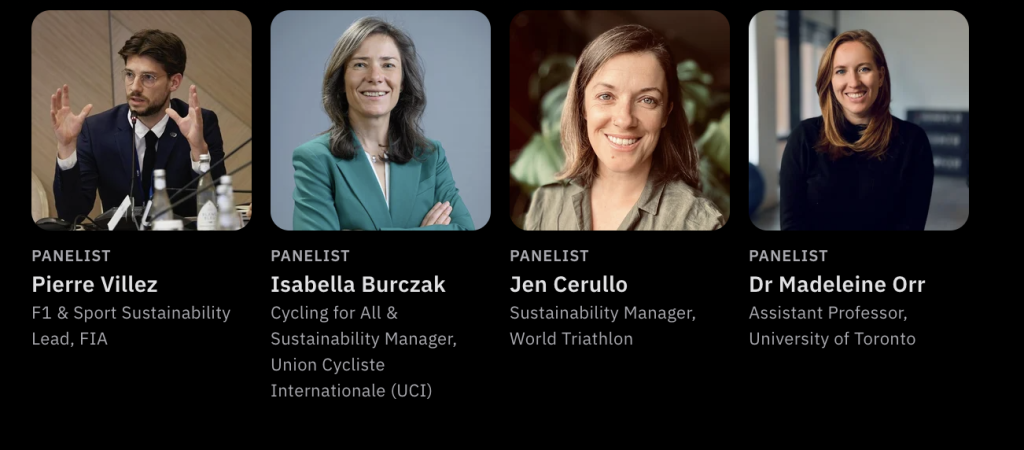
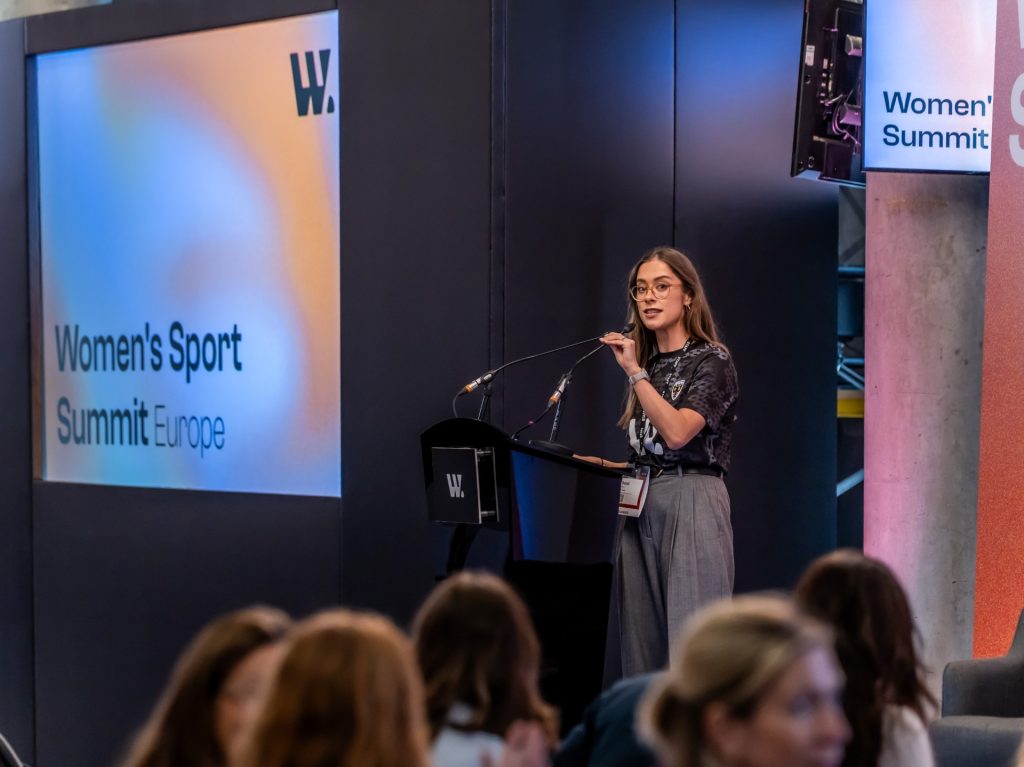
Speaking at the Sport Positive Summit session, UN Decade of Sustainable Transport: Rethinking How Sport Moves, Isabella Burczak, UCI Cycling for All & Sustainability Manager, highlighted the importance of the new Manifesto.
“We’ve launched this new manifesto, which really sets the principles and framework that we have to make cycling a part of everyday life for everyone.”
Burczak emphasised that the UCI’s ambitions extend beyond competitive cycling, requiring collaboration with governments, transport authorities and international organisations.
“We've launched this new manifesto, which really sets the principles and framework that we have to make cycling a part of everyday life for everyone.”
Discussing the Bike City Label, she explained:
“The label isn’t the end result, especially not for us. It’s really the start of a relationship.”
The initiative encourages host cities to establish long-term cycling strategies, improve infrastructure, promote road safety and measure their progress.
“The label isn't the end result, especially not for us. It's really the start of a relationship.”
Collaboration across international sport
The session, moderated by Dr Madeleine Orr, Assistant Professor at the University of Toronto, also featured Pierre Villez, F1 & Sport Sustainability Lead at the Fédération Internationale de l’Automobile (FIA), and Jen Cerullo, Sustainability Manager at World Triathlon.
Cerullo highlighted the importance of sports organisations working collectively with host cities to establish sustainable transport infrastructure.
“Our requests are going to go a lot further when we’re making the same asks.”
“Our requests are going to go a lot further when we're making the same asks.”
She also suggested developing shared sustainable transport standards and potentially a collective sporting pledge supporting the UN Decade.
Villez emphasised motorsport’s potential to accelerate technological innovation, particularly sustainable fuels, electrification and transport logistics.
From awareness to lasting impact
The discussions highlighted a significant opportunity for sport to move beyond reducing emissions associated with events towards influencing how communities travel every day.
For the UCI, the challenge is translating its Manifesto into measurable improvements in cycling participation, accessibility and infrastructure.
The GSS SPI Index provides an additional perspective on the sustainability performance of the three international federations participating in the discussion.
These assessments reflect the organisations’ publicly available evidence of sustainability, purpose and impact, highlighting both their progress and opportunities for further development.
The wider opportunity is for international sport to use its collective influence to help reshape transport policies, investment and behaviour.
The real measure of success will not simply be how sustainably sporting events move people, but how sport changes the way people move long after those events have finished.
Read moreUCI









Join the GSS Alliance Partners programme today
Stay ahead of the game with our FREE weekly newsletter, delivering the latest sport and sustainability news from around the globe straight to your inbox
11th Hour Racing
Join the GSS Network programme today
15-16 October, 2026
Gtech Community Stadium,
London (UK)
The SPX Purpose League Summit is a working summit for decision-makers interested in activating sport in a purpose-led way. Attendees will leave with an aligned peer network, data-backed insights, and the strategic commercial toolkits to transform sponsorship from an outsourced marketing expense into the single greatest driver of value.



Register for GSS Workshops today
Join the GSS Education programme today