
To access our unique news archive of over 1,400 articles with insights on over 500+ sustainable sports organisations, join the GSS Network today.
Login here if you are a registered network subscriber.
News article
Top storyFrom European Voice to Global Ambition: EFC Sets Out a New Future for Football Clubs
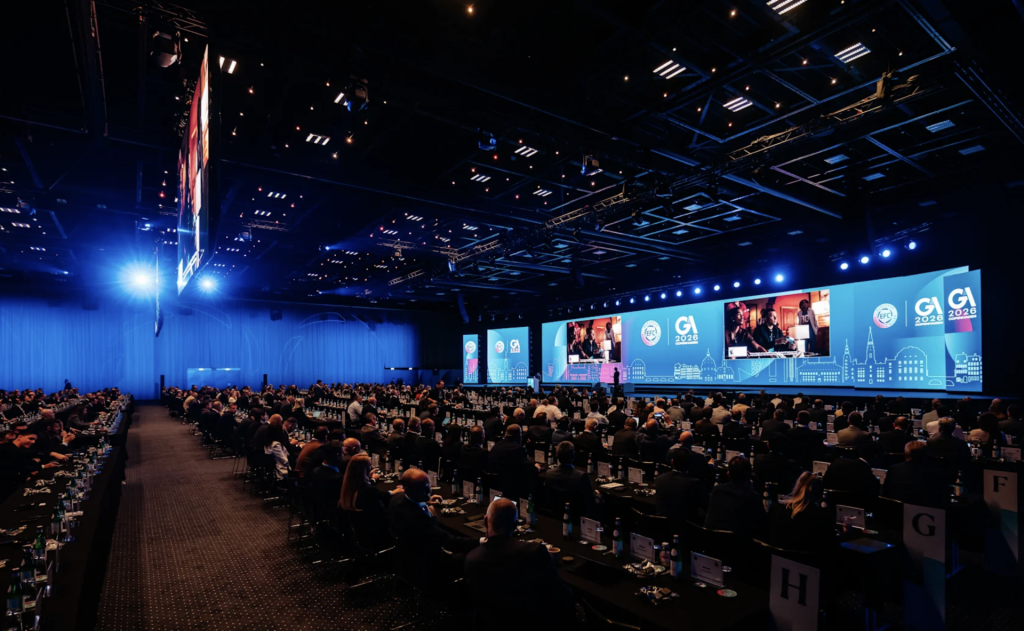
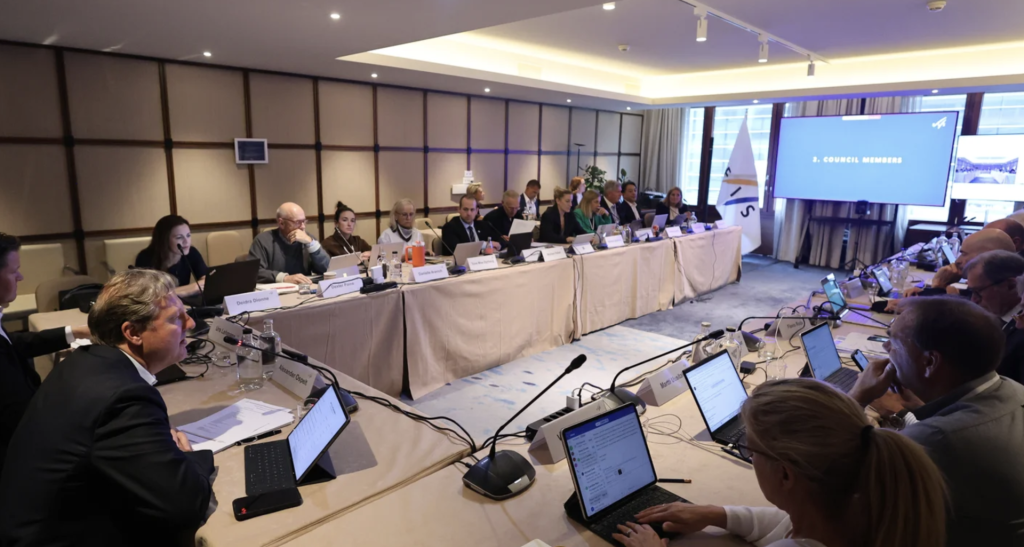
European Football Clubs used its 33rd General Assembly in Copenhagen to demonstrate just how dramatically the organisation has changed – and how much further its ambitions now extend. Governance reform, greater representation, innovation, community, commercial growth and a proposed new global organisation for clubs all featured across an agenda that increasingly positions EFC as one of the most influential voices within football.
From 14 clubs to more than 900
Perhaps the clearest indication of EFC’s transformation is scale.
The organisation traces its origins to the G-14 group of 14 clubs established in 1998. The European Club Association was formed with 103 clubs in 2008 and had grown to 247 by 2021. Today, following its rebrand as European Football Clubs, membership has reached 920 clubs across 55 countries and territories, with an ambition to reach 1,000.
For EFC Chairman Nasser Al-Khelaïfi, that diversity is becoming central to the organisation’s identity.
“Our diversity is not a headache; it is not our weakness. It is our strength. It is our super power. A club with 5,000 fans can teach something to a club with 50 million fans.”
“Our diversity is not a headache; it is not our weakness. It is our strength. It is our super power. A club with 5,000 fans can teach something to a club with 50 million fans.”
It represents an important shift in a football landscape where influence has traditionally been concentrated among a relatively small group of major European clubs.
Reforming governance as membership grows
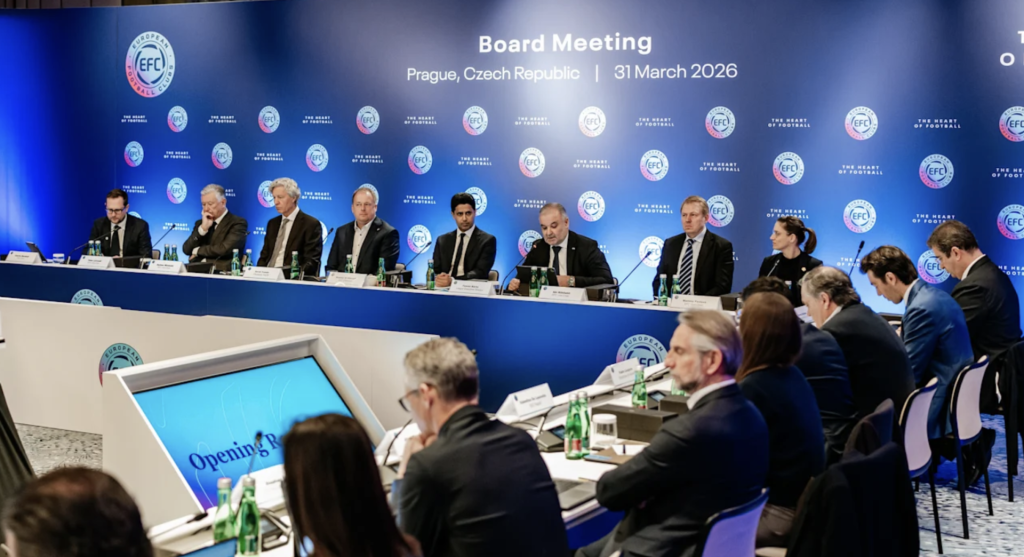
Expansion, however, creates its own governance challenge. EFC responded in Copenhagen with reforms unanimously approved by its members and taking effect from 1 October.
The new structure includes a 33-member Board in which every representative will have voting rights, at least five and potentially seven positions guaranteed for Associated Member Clubs, provisions for stronger female representation and the opportunity for all 900-plus member clubs to represent EFC on UEFA and FIFA committees. A new Medical and Performance Working Group will also be established.
The significance is not simply the size of the Board. The test will be whether a rapidly expanding membership translates into meaningful participation for clubs of different sizes, resources, geographies and sporting profiles.
Al-Khelaïfi acknowledged the connection between growth and governance directly:
“As our membership grows and changes, our governance and our structures must change too.”
“As our membership grows and changes, our governance and our structures must change too.”
That principle matters. Representation is not ultimately measured by the number of organisations within a network, but by whether those organisations can genuinely influence the decisions being made on their behalf.
Football’s global club voice
The biggest announcement in Copenhagen potentially takes EFC far beyond Europe.
Following agreement by its Board, EFC will undertake a feasibility study into creating a World Football Clubs organisation, responding to growing interest from clubs outside Europe and what it describes as the need for meaningful global club representation.
Al-Khelaïfi set out the ambition clearly:
“EFC has become a global network and platform for clubs to connect to anyone. We create benefits for clubs inside and outside of Europe. That is why now is the time to create World Football Clubs. Because every club around the world deserves to be represented; to have a voice, and a better chance to succeed.”
“EFC has become a global network and platform for clubs to connect to anyone. We create benefits for clubs inside and outside of Europe. That is why now is the time to create World Football Clubs. Because every club around the world deserves to be represented; to have a voice, and a better chance to succeed.”
EFC already has significant global influence. Its agreement with FIFA will see $355 million distributed to clubs through the Club Benefits Programme, while it also secured a $250 million solidarity fund for clubs that did not participate in the 2025 FIFA Club World Cup.
A global body would nevertheless represent a significant new development in football governance – and raise important questions about how clubs from different continents, financial environments and levels of the game would be represented.
Innovation must remain human
Governance was only one part of the Copenhagen conversation.
Sessions explored AI, performance data, stadium development, digital commerce and storytelling. Yet an interesting theme connected many of them: technology and commercial innovation work best when they remain rooted in people, communities and identity.
When Arsenal Chief Communications Officer Kate Laurens asked Mikel Arteta for his view on fan engagement, his answer was one word:
“Authenticity.”
“Authenticity.”
That concept surfaced repeatedly. Wrexham’s experience demonstrated how a club’s community can become part of its global story, while discussions around stadiums examined how venues can become smarter and more sustainable without losing their identity. Digital discussions similarly warned against confusing followers with genuine fandom.
As EFC’s own account concluded, commercial success begins with understanding supporters rather than simply monetising an audience.
Growth with purpose
There was also evidence of a broader conception of what a club organisation can deliver.
EFC says its advisory team supported more than 1,000 legal, financial and brand-protection cases during the past season, with 70% involving clubs in its lower subdivisions. Almost 200 country meetings have been held, while its Women on Board programme has trained more than 150 female football leaders. Its Foundation, meanwhile, is supporting clubs to develop their social and community impact.
That may ultimately be the more important story emerging from Copenhagen.
European Football Clubs is becoming larger, commercially stronger and potentially global. But scale alone will not define its success. The real measure will be whether greater power produces broader representation, whether commercial growth generates shared value, and whether clubs large and small genuinely gain a stronger voice.
The ambition to become the global voice of clubs is significant. The challenge now is ensuring that, as that voice becomes louder, it also becomes more representative.
Read moreEFC







Join the GSS Alliance Partners programme today
Stay ahead of the game with our FREE weekly newsletter, delivering the latest sport and sustainability news from around the globe straight to your inbox
11th Hour Racing
Join the GSS Network programme today
15-16 October, 2026
Gtech Community Stadium,
London (UK)
The SPX Purpose League Summit is a working summit for decision-makers interested in activating sport in a purpose-led way. Attendees will leave with an aligned peer network, data-backed insights, and the strategic commercial toolkits to transform sponsorship from an outsourced marketing expense into the single greatest driver of value.



Register for GSS Workshops today
Join the GSS Education programme today