
To access our unique news archive of over 1,400 articles with insights on over 500+ sustainable sports organisations, join the GSS Network today.
Login here if you are a registered network subscriber.
News article
Manchester City: The Problem or the Symptom?
Manchester City may have been found guilty of almost all the financial charges brought against it by the Premier League, but the biggest governance question facing football is no longer simply what City did or how it should be punished. It is why a system designed to regulate one of the world’s richest and most powerful clubs has taken the best part of a decade to reach this point – and whether the organisations governing football have either the power or the ability to prevent it happening again.
City may be the most immediate case, but it is hardly an isolated warning. Barcelona, Juventus and Paris Saint-Germain have all faced significant regulatory or governance controversies of their own, while the Premier League, UEFA and FIFA operate overlapping systems intended to control clubs whose financial, commercial and institutional power has grown enormously.
England has now added an Independent Football Regulator to that architecture. But another regulator does not necessarily mean better regulation.
Is Manchester City therefore the problem, or is it the most visible symptom of a football governance system that has failed to keep pace with the organisations it is supposed to govern?
Eight years and counting
That question starts with the extraordinary City timeline.
The allegations first emerged publicly through Football Leaks in 2018. UEFA launched an investigation in 2019 and subsequently imposed a two-year European ban and €30 million fine. City appealed and the ban was overturned by the Court of Arbitration for Sport (CAS) in 2020.
The Premier League investigation continued. City were eventually charged in February 2023 following a four-year investigation and an independent hearing began in September 2024. Now, in September 2026, reports say the club has been found guilty of the majority of the 115 charges.
But there is still no final resolution.
No official announcement has been made by the Premier League, sanctions have not yet been determined and City are expected to appeal. The club has consistently denied wrongdoing and, following the latest reports, chairman Khaldoon Al Mubarak told supporters: “The Premier League process still has a long way to run, and our confidence and intent in proving the Club’s innocence is just as strong as when this began.”
That distinction matters. Due process matters. So does the right of an organisation facing serious allegations to defend itself and appeal decisions against it.
But so does time.
The original charges included 54 alleged failures to provide accurate financial information, 14 concerning player and manager payments, five involving UEFA rules, seven concerning Premier League profit and sustainability rules and 35 relating to co-operation with the Premier League investigation.
There is, however, another side to the extraordinary length of the case.
The largest football clubs are now sophisticated international businesses with access to substantial financial resources and specialist legal, accounting and advisory expertise. Regulators must be able to withstand challenges not only to their decisions, but potentially to the rules and processes behind them.
That creates a difficult balance. Regulators need to act quickly enough for their decisions to remain relevant to the competitions they oversee, while investigating thoroughly enough to respect due process and withstand subsequent appeals. City’s successful appeal against UEFA’s two-year European ban demonstrates what can happen when regulatory decisions are challenged.
Due process is not an obstacle to good governance; it is part of good governance. The problem arises when the system cannot deliver both due process and timely enforcement.
The question is therefore whether football’s regulators have the financial resources, investigative capacity and specialist expertise to match the increasingly powerful organisations they are expected to regulate.
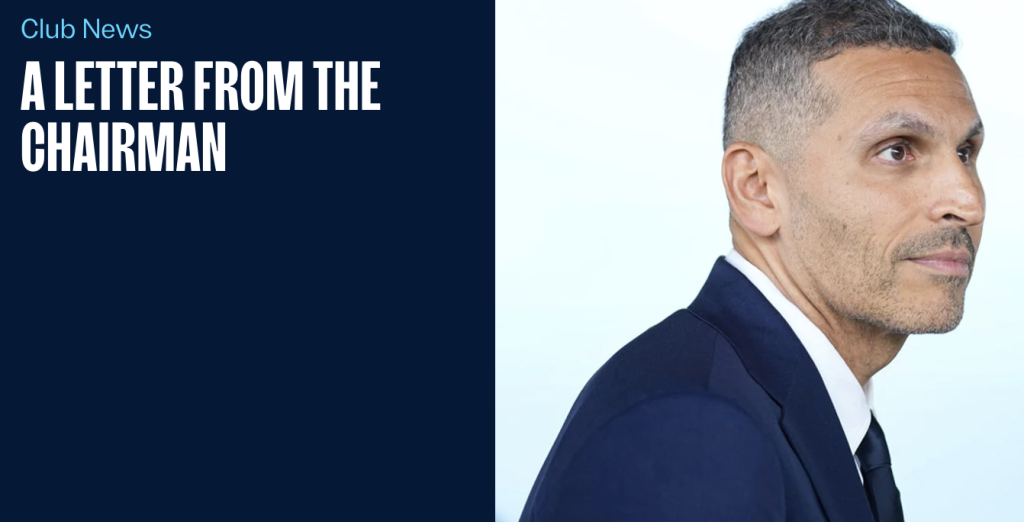
“The Premier League process still has a long way to run, and our confidence and intent in proving the Club’s innocence is just as strong as when this began.”
When governance arrives too late
Whatever the eventual outcome of the complete City process, football should surely be asking whether a regulatory system that can take the best part of a decade to resolve allegations of this significance is functioning effectively.
The consequences extend far beyond Manchester City.
During the period covered by the allegations, City won Premier League titles and domestic cups and established themselves among the dominant forces in European football.
Other clubs finished second. Others lost cup finals. Clubs missed European qualification, prize money and commercial opportunities. Supporters watched their teams lose matches and trophies that became part of football history.
There are potentially financial consequences too. Premier League clubs have reportedly sought legal advice over possible compensation claims, with former Liverpool managing director and Aston Villa chief executive Christian Purslow arguing that the losses could extend across clubs and seasons.
But financial compensation cannot recreate sporting history.
If a trophy were ever retrospectively reassigned, the supporters of the new ‘winner’ would not suddenly experience the moment their team lifted it. Players would not receive their missing lap of honour. Careers, contracts and investment decisions made on the basis of league positions cannot simply be rewound.
It raises a fundamental governance principle.
Governance delayed can become governance denied, not simply for the organisation being investigated, but for every stakeholder affected while the process continues.
Rules struggling to keep pace
Manchester City’s transformation following its 2008 takeover belongs within a much longer change in European football.
The arrival of Roman Abramovich at Chelsea in 2003 accelerated a new era of external capital. City’s Abu Dhabi-backed transformation pushed that model further.
Financial regulations followed.
UEFA introduced Financial Fair Play from 2011, while the Premier League developed its own financial regulations. But regulation created another battle: who determines what constitutes legitimate revenue, investment and expenditure – and how quickly can regulators establish when rules have been breached?
The leaked documents at the centre of the original City allegations included claims around sponsorship revenues and payments which were subsequently investigated by UEFA and the Premier League. City and the companies involved have strongly denied breaking financial rules.
The wider governance issue goes beyond those specific allegations.
Modern elite clubs can generate revenues of hundreds of millions of pounds, employ some of the world’s leading lawyers and advisers, operate across multiple jurisdictions and form part of ownership groups spanning countries and continents.
They have evolved from predominantly domestic sporting institutions into sophisticated international businesses.
Has the governance system evolved with them?
Not just Manchester
Looking beyond England suggests this cannot simply be characterised as a Manchester City problem.
Juventus faced investigations concerning capital gains and player salary arrangements. The Italian club ultimately received a ten-point Serie A deduction and was excluded from UEFA competition for the 2023/24 season.
Barcelona continues to face the Negreira affair surrounding payments made to companies associated with the former vice-president of Spain’s referees’ committee, alongside wider financial difficulties and regulatory scrutiny.
Paris Saint-Germain, owned by Qatar Sports Investments, has repeatedly been at the centre of debates around football finance, sponsorship and the effectiveness of UEFA’s financial regulations.
The ownership structures are very different.
Barcelona is member-owned. Juventus has historically been controlled by the Agnelli family’s Exor holding company. PSG is Qatari-owned. Manchester City forms part of City Football Group.
Different models. Different countries. Different controversies.
That matters because it suggests the fundamental issue cannot simply be attributed to one particular ownership structure or one league.
The deeper question is whether football’s governance has evolved sufficiently to control the extraordinary concentration of financial and institutional power at the top of the game.
Who regulates the regulators?
That question connects directly with another governance battle currently taking place.
The Premier League, Bundesliga, LALIGA and Lega Serie A have jointly challenged FIFA over the governance of world football, calling for stronger checks and balances and questioning the concentration of regulatory, commercial and political power.
Among the reforms being sought are meaningful stakeholder involvement in decisions, independent impact assessments for major proposals and greater separation between FIFA’s regulatory responsibilities and its commercial interests.
These are significant demands.
But Manchester City allows the question to be turned around.
If the Premier League is questioning whether FIFA’s governance is fit for purpose, how effectively does its own governance model withstand the same scrutiny?
There is an inherent tension in the structure. The Premier League is ultimately a competition owned by the clubs it regulates. Independent commissions provide separation at the adjudication stage, but the wider question remains whether a member-owned competition provides sufficient structural independence when regulatory and commercial interests collide.
The City case demonstrates that the Premier League’s mechanisms can be activated against even one of its largest members.
But a Governance Stress Test asks something more demanding.
Not whether the mechanisms exist.
Do they work effectively when placed under maximum pressure?
Who has the power – and the ability?
Football does not suffer from a shortage of governing organisations.
Club boards govern clubs. Domestic leagues establish competition rules. National associations govern national football. UEFA regulates European competition. FIFA sits at the top of the international game.
Now English football has another institution: the Independent Football Regulator.
Created through the Football Governance Act 2025, the IFR has significant powers around club licensing, financial planning, corporate governance and the suitability of owners and directors. It also has information-gathering and investigatory powers, including the ability to appoint expert reporters and, in specified circumstances, impose substantial financial penalties or ultimately suspend or revoke a club’s operating licence
Those are not insignificant powers.
But the regulator’s statutory purpose is focused primarily on club financial soundness, systemic financial resilience and heritage. It is not an all-purpose football regulator and cannot impose sporting sanctions such as points deductions or transfer bans. Those areas remain within football’s existing regulatory structures.
That raises another uncomfortable question.
If a Manchester City-type situation began tomorrow, what would the Independent Football Regulator actually be able to do differently?
Its information-gathering and investigative powers could potentially enable earlier scrutiny of issues falling within its remit. But would that prevent years of dispute over competition rules? Where would the IFR’s responsibility end and the Premier League’s begin? And what happens when financial sustainability, regulatory compliance and sporting integrity overlap?
The Football Governance Act may therefore address important weaknesses without resolving the fundamental problem exposed by City.
Football has numerous bodies capable of regulating different pieces of the system. It is less obvious who is responsible for protecting the integrity of the system as a whole.
Evidence versus reality
There is another dimension to the debate.
Manchester City currently sits inside the Global Top 5 of the GSS SPI Index and is one of only four organisations to achieve a B rating. Barcelona sits inside the Global Top 15 with a C+, Juventus the Global Top 25 with a C+, while Paris Saint-Germain sits inside the Global Top 175 with a C.
Those positions are based on publicly available evidence across the Seven Sustainable Pillars of Sport. But the City case highlights an important distinction in assessing governance: evidence that good governance structures exist is not necessarily the same as evidence that an organisation is well governed in practice.
There is a difference between what can be evidenced from outside an organisation and what may ultimately be revealed about how it operates internally.
That distinction is becoming increasingly important across sport. Governance cannot ultimately be judged simply by the policies, structures and commitments an organisation can demonstrate. It must also be judged by what happens when those structures are tested.
Putting governance under pressure
That is where the concept of a Governance Stress Test becomes relevant.
Good governance should not simply be measured by the existence of structures. It should examine how those structures perform under pressure.
Do boards challenge owners? Are conflicts identified and managed? Is financial information independently scrutinised? Do regulators have access to the information required to regulate? Do they possess sufficient expertise and resources to challenge the organisations they oversee? Can investigations be completed rapidly enough to protect competitions? Are sanctions meaningful and enforceable? Can regulators themselves be held accountable?
That takes governance beyond compliance.
It moves from asking ‘Have you got the right structures?’ to asking ‘What happens when those structures are tested?
A problem bigger than ownership
There will inevitably be renewed debate about foreign ownership, sovereign wealth and state influence in European football.
Those are legitimate governance questions.
But Barcelona and Juventus demonstrate why simply restricting one form of ownership would not solve football’s governance problems.
Perhaps the more important issue is accountability.
Whatever the ownership model – private investor, listed company, member ownership, billionaire, private equity or state-linked capital – there must be clear limits around what owners can do and effective mechanisms capable of enforcing those limits.
Ownership tests therefore cannot simply ask who is permitted to buy a club.
They should also ask how owners behave once they control one.
And governance cannot end when an acquisition is approved.
Will City burst football’s bubble?
English football has spent more than three decades building one of the most successful sports businesses in the world.
At the centre of that success is the Premier League.
But its commercial value ultimately depends upon something remarkably simple: people believing in the competition.
Supporters must believe that league positions matter. Clubs must believe their competitors operate under the same rules. Players must believe success and failure are determined on the pitch. Broadcasters, sponsors and investors must believe the competition possesses integrity.
The Manchester City case therefore represents something much bigger than the fate of one club.
City must be allowed to complete the process available to it, including any appeal. The final judgment and evidence will need to be examined before definitive conclusions can be reached about the club’s conduct.
But football does not need to wait for the final appeal to examine its governance.
The real test of football governance is not whether regulators can eventually win a case. It is whether they can investigate, adjudicate and enforce their rules quickly enough for those rules still to matter to the competition they are protecting.
That requires more than another set of regulations. It requires earlier detection, access to information, independent scrutiny, sufficient investigative resources, clear and enforceable rules, timely adjudication, meaningful sanctions and robust appeal mechanisms.
None of those requirements removes the need for due process. The challenge is to create a system capable of delivering both.
And that returns football to the questions running through this case.
Why did the process take so long? Could potential breaches have been identified earlier? Are regulators sufficiently resourced? Can rules be enforced in anything approaching real time? Could the Independent Football Regulator deal more effectively with a comparable situation? How should clubs be governed as they become larger, wealthier and increasingly international?
Who has the power to change the system?
And perhaps most importantly, who has the will?
Manchester City may eventually be held accountable for its actions
The more difficult question is who is accountable for a football governance system that has taken the best part of a decade to reach this point.
Manchester City may be the immediate problem. The greater risk for football is that it is merely a symptom. A symptom without a solution.
Read moreVarious















Join the GSS Alliance Partners programme today
Stay ahead of the game with our FREE weekly newsletter, delivering the latest sport and sustainability news from around the globe straight to your inbox
11th Hour Racing
Join the GSS Network programme today
15-16 October, 2026
Gtech Community Stadium,
London (UK)
The SPX Purpose League Summit is a working summit for decision-makers interested in activating sport in a purpose-led way. Attendees will leave with an aligned peer network, data-backed insights, and the strategic commercial toolkits to transform sponsorship from an outsourced marketing expense into the single greatest driver of value.



Register for GSS Workshops today
Join the GSS Education programme today