
To access our unique news archive of over 1,400 articles with insights on over 500+ sustainable sports organisations, join the GSS Network today.
Login here if you are a registered network subscriber.
News article
Smart Cities & Sport 2026: From hosting major events to transforming communities
The relationship between sport and cities is undergoing a fundamental transformation. Where once the focus was on bidding for and hosting major sporting events, attracting international visitors and generating economic returns, the conversation is increasingly shifting towards the social value of sport and its ability to transform communities.
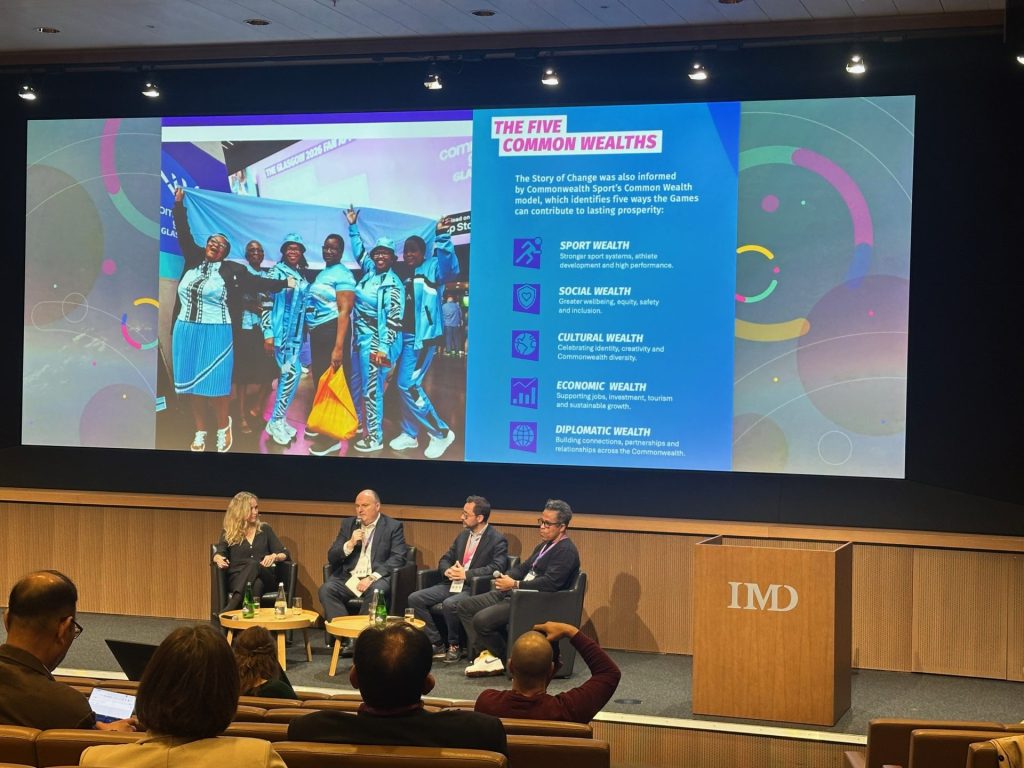
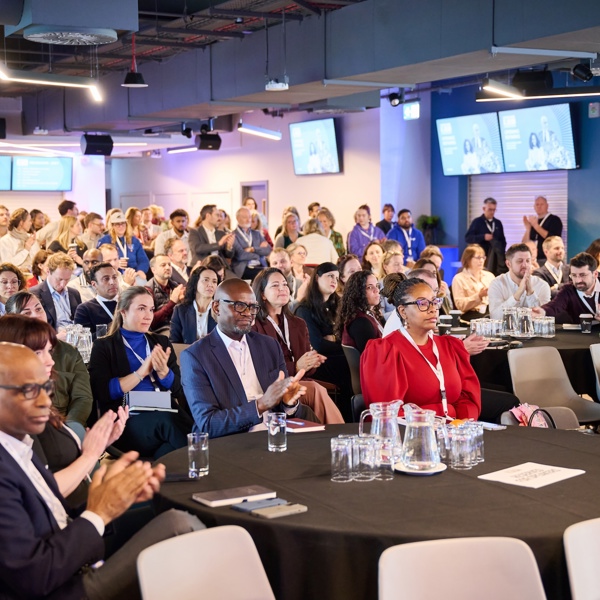
This evolution was evident at last week’s Smart Cities & Sport Summit, held at the International Institute for Management Development (IMD) in Lausanne, Switzerland, on 17–18 November. Under the theme ‘Move to Impact’, the summit brought together city representatives, international federations, academics, sporting organisations and community leaders to explore how sport can deliver meaningful and lasting social change.
In a welcome message from Dakar, International Olympic Committee (IOC) President Kirsty Coventry set the tone for the conference, highlighting the ambitions of the IOC’s Fit for the Future initiative to engage more people in sport, increase its impact and develop stronger evidence of what works.
The power of everyday sport
Opening the discussions, Emmanuel Rivat, Scientific Director and Co-founder of Res Sportiva, challenged delegates to consider how sport’s social impact could move beyond ambition and become effective action.
Tahina Booth, Founder and Managing Director of the Grass Skirt Project, illustrated this through her organisation’s work in Papua New Guinea, where sport is being used to address gender inequality, improve education and create safer environments for girls.
“Fund the whole net: the people, the place, the programme,” said Booth, emphasising the importance of understanding communities before developing facilities and interventions.
“Fund the whole net: the people, the place, the programme,”
Oleksiy Soldatenko, Founding Partner and Methodology Creator of FC Phoenix Kharkiv, and Iryna Soldatenko, Co-organiser of FC Phoenix Kharkiv and Associate Professor at V.N. Karazin Kharkiv National University, presented their work using futsal to support children’s personal development in Ukraine.
“Football was actually never really the goal for us,” explained Oleksiy Soldatenko. “We don’t prepare professional athletes.”
Joris Wils, Director of Sports for the City of Antwerp, explored how cities can encourage less active citizens to participate, shifting the emphasis from traditional sports provision towards improving people’s lives.
“Football was actually never really the goal for us ... We don’t prepare professional athletes.”
Designing cities around people
The importance of urban design was explored in a session moderated by Thomas Knights, Social Impact Lead at Strava, examining how everyday public spaces can become drivers of health, inclusion and community cohesion.
Leon Legeland, Senior Project Manager at international urban design consultancy Gehl, highlighted Copenhagen’s transformation of its industrial harbour into a destination for swimming, recreation and social interaction.
“The real value of a place lies in what they allow people to do together,” said Legeland.
“The real value of a place lies in what they allow people to do together,”
Rhyl Jones McCoy, Higher Degree Researcher at Queensland University of Technology, explored the importance of accessible urban blue spaces, while Bally Bagayoko, Mayor of Saint-Denis, presented a vision for a swimmable city, connecting access to water with social equity, wellbeing and climate adaptation.
Knights also demonstrated how Strava Metro provides anonymised, aggregated activity data from its global community to help cities understand movement patterns, evaluate infrastructure and inform investment decisions.
“When infrastructure works, more people ride, more people run, walk, and play,” he said.
“When infrastructure works, more people ride, more people run, walk, and play,”
Measuring what matters
One of the most significant challenges facing sport is demonstrating its social value in a way that influences public policy and investment.
Professor Larissa Davies, Professor of Applied Sports Economics at Manchester Metropolitan University, explored the development of Social Return on Investment (SROI) methodologies, highlighting how research undertaken for Sport England has demonstrated the substantial economic value generated through participation, particularly in relation to subjective wellbeing.
“There’s a strong emphasis on stakeholder engagement and measuring what matters to people, what matters to the beneficiaries of your programmes and of your activities,” explained Davies.
“There’s a strong emphasis on stakeholder engagement and measuring what matters to people, what matters to the beneficiaries of your programmes and of your activities,”
However, her research in New Zealand also challenged the assumption that every social outcome should be monetised, with Māori participants preferring to describe their experiences through their own stories of change.
The challenge is not simply to establish a financial return, but to understand who benefits and whether existing inequalities are being addressed.
Embedding social impact into investment
A panel moderated by Nick Keller, Executive Chair of Think Beyond and Founder of Beyond Sport, explored how social impact could become embedded within governance, funding, procurement and event delivery.
Joseph Hewitt, Senior Consultant at love.fútbol and Special Advisor to U.S. Soccer’s Soccer Forward Communities, presented his organisation’s work developing safe spaces for children to play, including in disadvantaged communities in Philadelphia.
“The mission of love.fútbol is that every child in every community has a safe space to play,” said Hewitt.
“The mission of love.fútbol is that every child in every community has a safe space to play,”
Iva Figueiredo-Ackroyd, Head of Programme at Go! London, discussed London’s approach to funding community programmes through its £22.5 million sports fund, while Stuart McReynolds, Chief Operating Officer at Canadian Tire Jumpstart Charities, outlined efforts to expand access to sport and play across Canada.
“Funding is a great start, but good partnerships are what make impact,” said McReynolds.
The discussion highlighted the importance of partnerships, community engagement and supporting grassroots organisations to demonstrate their impact.
“Funding is a great start, but good partnerships are what make impact,”
Sports clubs as agents of social change
Geoff Wilson, Director of Geoff Wilson Consultancy and author of ‘Leading a Grassroots Sports Club’, opened a session with a personal account of how his father established sports clubs that brought Catholic and Protestant communities together in Northern Ireland during the Troubles.
“If you have the right ethos, the right values, and the right culture, your club can make an impact that you can never, ever, ever put a figure on,” said Wilson.
“If you have the right ethos, the right values, and the right culture, your club can make an impact that you can never, ever, ever put a figure on,”
Aditi Chauhan, former Indian international goalkeeper and Founder of She Kicks and the Aditi Chauhan Foundation, presented her work creating opportunities for girls through football.
Aurélie Lemouzy, Impact Trustee at rugby mental health charity LooseHeadz and Head of Diversity, Inclusion and Social Impact at the FIA, outlined efforts to establish mental health champions within rugby clubs.
Ricardo Carvalho, President and Founder of Social Innovation Sports, explored how cities, businesses and communities can work together to make sport and public spaces more accessible, particularly for underserved communities, migrants and refugees.
Scaling successful initiatives and redefining sporting cities
The second day opened with a session moderated by Daniel Cade, Founder and Principal Consultant at Responsible Sport, examining how successful community initiatives can be adapted and replicated internationally.
Helen Yu, City Practice Lead at the Mayors Migration Council, presented the Global Cities Fund for Migrants and Refugees, which has supported 44 city projects across 31 countries, providing approximately $12 million in direct funding and unlocking a further $38 million.
Yu emphasised the importance of lowering barriers to participation and building bridges between communities, using sport as an entry point to wider social support services.
Aydin Sarrafzadeh, Director of Community Recreation for the City of Toronto, highlighted Toronto’s Play Mobile for Newcomers initiative, which currently engages approximately 15,000 young people annually, with ambitions to reach 21,000 across 31 communities with greater needs.
“We’re coming to you in open spaces, and we’re engaging you in sports and recreational activities to make sure that no one’s left behind,” said Sarrafzadeh.
“We’re coming to you in open spaces, and we’re engaging you in sports and recreational activities to make sure that no one’s left behind,”
Tassilo Kaiser, Head of the Sports Department for the City of Innsbruck, explained how the city has worked with its university, citizens and sporting organisations to develop an evidence-based sports strategy, identifying gaps in provision, establishing priorities, securing budgets and monitoring progress.
Responding to a question from Global Sustainable Sport about how a sports city should be defined today, Sarrafzadeh shifted the emphasis away from traditional measures of event hosting towards accessibility and participation.
“I think for us it’s really about inclusion in sport activities and the openness for people to come and participate,” he said.
“I think for us it’s really about inclusion in sport activities and the openness for people to come and participate,”
Kaiser echoed this sentiment, highlighting the difficulty of applying a universal definition to sporting cities with different characteristics, cultures and priorities.
“I think it’s the people who make a city,” he said.
“I think it’s the people who make a city,”
The discussion reflected a changing definition of what constitutes a successful sporting city, with the emphasis increasingly placed on the opportunities it creates for its citizens rather than simply the international sporting events it attracts.
Los Angeles: Building a legacy across generations
The experience of Los Angeles demonstrated how major sporting events can generate social benefits extending far beyond the closing ceremony.
Renata Simril, President and CEO of the LA84 Foundation and Founder and President of the Play Equity Fund, explained how the financial surplus from the 1984 Olympic Games established an enduring financial model that has subsequently invested $460 million in Southern California, supported more than four million young people and trained over 200,000 coaches.
“Legacy isn’t what happens after the event. Legacy is what you intentionally designed before the event,” said Simril.
“Legacy isn’t what happens after the event. Legacy is what you intentionally designed before the event,”
Erikk Aldridge, Vice President of Impact and Legacy at LA28, outlined the organising committee’s commitments to youth sport, economic empowerment and community engagement.
Jose Alvarez, Deputy Chief of Legacy and Impact at the City of Los Angeles’ Office of Major Events, explained how the city is connecting major event delivery with longer-term social and economic programmes.
Rethinking the major event hosting model
The final panel, moderated by Erin Andrews, Consultant at the Lausanne Olympic Capital Foundation, explored how sporting rights holders are embedding social impact into their relationships with host cities.
Hugo Viseu, Senior Event and Infrastructure Sustainability Manager at UEFA, emphasised the importance of embedding social impact into every stage of event planning, from the initial bidding process through to delivery and legacy.
Looking ahead to UEFA EURO 2028, Viseu explained how stakeholder consultations, a human rights advisory board and a dedicated community programme would help shape the tournament’s sustainability strategy, with activities extending beyond the host cities themselves.
“UEFA has put in place the framework, but the priorities come from the host country, and they are extremely connected to the realities of the host,” said Viseu.
“UEFA has put in place the framework, but the priorities come from the host country, and they are extremely connected to the realities of the host,”
Sergei Aschwanden, President of the Swiss Judo & Ju-Jitsu Federation and Olympic bronze medallist, brought the perspective of inclusive event delivery, having organised the Lausanne Judo Grand Slam, bringing elite and para-judo athletes together.
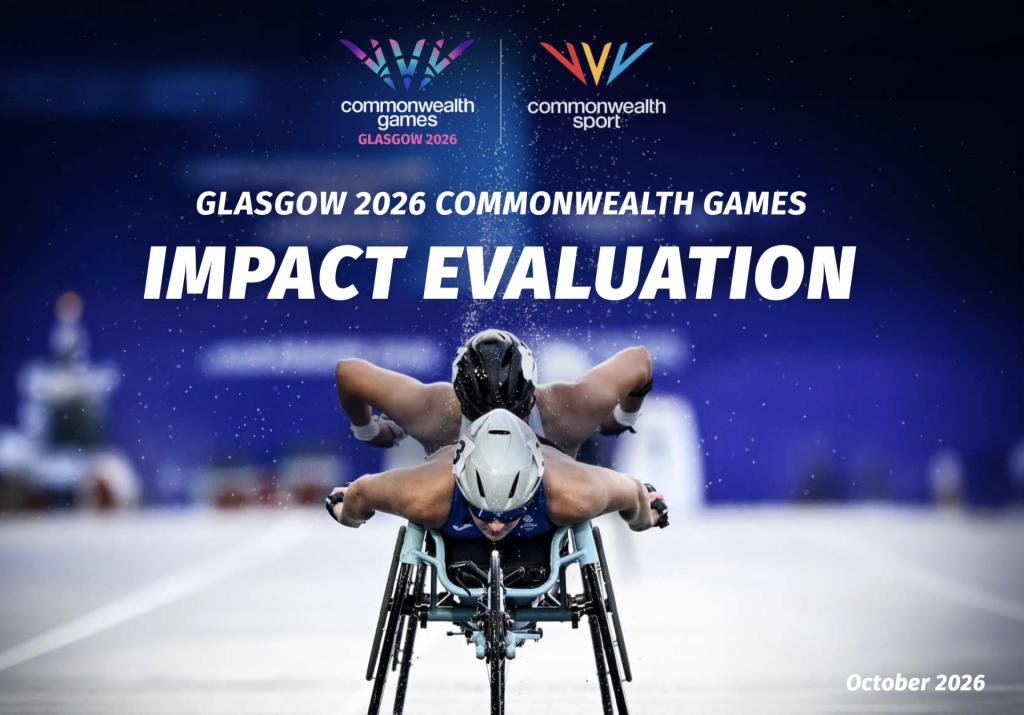
Darren Hall, Director of Games and Assurance at Commonwealth Sport, explained how the organisation had fundamentally reassessed its hosting proposition following Victoria’s withdrawal from the 2026 Commonwealth Games, moving from a traditional host city contract to a host collaboration agreement and placing five forms of wealth, sporting, social, cultural, economic and diplomatic, at the heart of its new approach.
“It can’t just be an add-on; it needs to be a must-have, and it needs to be prioritised right up front when we’re looking at awarding games to certain cities,” said Hall, referring to the importance of embedding social impact into hosting agreements.
“It can’t just be an add-on; it needs to be a must-have, and it needs to be prioritised right up front when we’re looking at awarding games to certain cities,”
Drawing on the experience of Glasgow 2026, Hall explained how Commonwealth Sport had consulted more than 170 key stakeholders, adapting its hosting model to reflect the ambitions, existing infrastructure and long-term priorities of the city.
“We cannot dictate to a city how these Games will be run. A host has to have all of the responsibility, but also all of the opportunity, and really be able to benefit from hosting these Games.”
“We cannot dictate to a city how these Games will be run. A host has to have all of the responsibility, but also all of the opportunity, and really be able to benefit from hosting these Games.”
Recognising cities delivering social impact
The changing priorities of sporting cities were also reflected in the 2026 Smart Cities & Sport Awards, with Bogotá taking the top honour for its long-term approach to integrating cycling, sport and physical activity into urban development.
The Colombian capital’s strategy connects public health, equity, social cohesion and environmental sustainability, supported by community engagement, cross-sector partnerships and impact measurement.
Innsbruck took second place for its Sports Development Plan, with Wollongong in Australia completing the podium for its Cycling Strategy 2030.
From sporting cities to socially sustainable cities
The summit raised a broader question about how cities value sport and how its contribution to society should be funded.
As Cade reflected afterwards: “If sport’s contribution to health, inclusion and belonging is so widely recognised, why does so much of this work still rely on grants and foundations?”
“If sport’s contribution to health, inclusion and belonging is so widely recognised, why does so much of this work still rely on grants and foundations?”
Summit presenter and master of ceremonies Catie Friend captured the central message in her closing remarks: “Social impact is a choice we can make right from the very start.”
Social impact is a choice we can make right from the very start.”
For cities, the challenge is increasingly not simply how many major sporting events they can attract, but how effectively they can harness sport, from everyday participation to international competition, to create healthier, more inclusive and more sustainable communities.
The next Smart Cities & Sport Summit will take place in Los Angeles from 15–17 November 2027, providing an opportunity to explore how these ambitions are being translated into action ahead of the 2028 Olympic and Paralympic Games.
Read moreSmart Cities







Join the GSS Alliance Partners programme today
Stay ahead of the game with our FREE weekly newsletter, delivering the latest sport and sustainability news from around the globe straight to your inbox
11th Hour Racing
Join the GSS Network programme today


Register for GSS Workshops today
Join the GSS Education programme today