
To access our unique news archive of over 1,400 articles with insights on over 500+ sustainable sports organisations, join the GSS Network today.
Login here if you are a registered network subscriber.
News article
Sporting Chance Forum 2026: Putting human rights at the heart of the future of sport
The Sporting Chance Forum 2026 brought together leaders from sport, government, business and civil society in London for two days of discussions on responsible sport, human rights, governance and social impact. Held on 10–11 November at Brentford FC's Gtech Community Stadium and Sky's London headquarters, the Forum highlighted both the progress being made and the challenges facing the global sports industry.
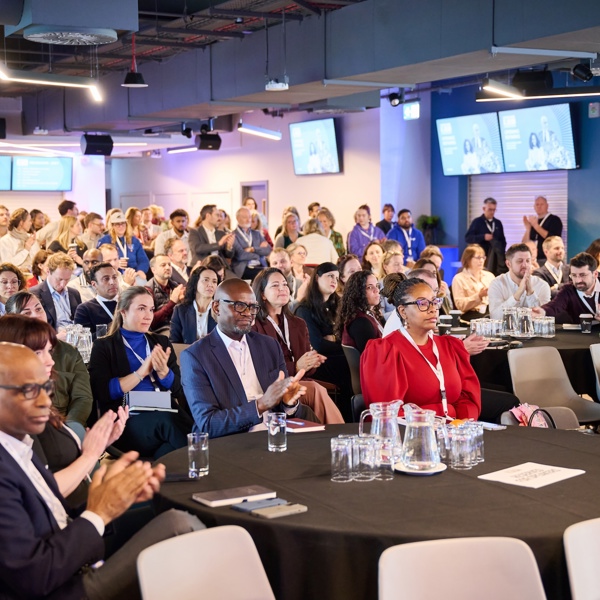
Organised by the Centre for Sport and Human Rights (CSHR) and co-hosted by founding partner Sky, the Forum explored athlete welfare, women’s sport, human rights in governance, environmental justice, major event hosting and the relationship between sporting organisations and their communities. Delegates also received an overview of Sky’s work in responsible sport, while UEFA signed a new cooperation agreement with the Centre and a new framework for responsible event hosting was launched.
Opening the Forum, Epsy Campbell Barr, Honorary Chair of the Centre for Sport and Human Rights, challenged sporting organisations to demonstrate leadership: “Let us govern with courage and transparency and invest with intention. Sport gave many of us our first lesson in fairness – that the rules should be the same for everyone and that everyone deserves a chance to play. Our task is to make sure sport lives up to those lessons.”
"Let us govern with courage and transparency and invest with intention. Sport gave many of us our first lesson in fairness – that the rules should be the same for everyone and that everyone deserves a chance to play. Our task is to make sure sport lives up to those lessons."
A shared responsibility for the future of sport
A central theme throughout the Forum was the need to embed human rights within the everyday operation of sport rather than treating them as an additional commitment alongside commercial and competitive priorities.
Mary Harvey, CEO of the Centre for Sport and Human Rights, reinforced the importance of collective responsibility.
“We cannot build responsible sport alone, it is a shared agenda. Make respect for human rights a reality throughout the world of sport – but ownership has to be yours.”
"We cannot build responsible sport alone, it is a shared agenda. Make respect for human rights a reality throughout the world of sport – but ownership has to be yours."
Former Irish President and founding Chair of the Centre, Mary Robinson, emphasised that sport should be held to the same standards as other industries.
“Sport is not different from other sectors in terms of responsibility. Sports organisations have to recognise that they must think through their responsibilities.”
The discussions examined how sporting organisations can move beyond policy commitments to demonstrate meaningful progress through stronger governance, accountability and engagement with the people affected by their activities.
Sport is not different from other sectors in terms of responsibility. Sports organisations have to recognise that they must think through their responsibilities."
UEFA strengthens its commitment to human rights
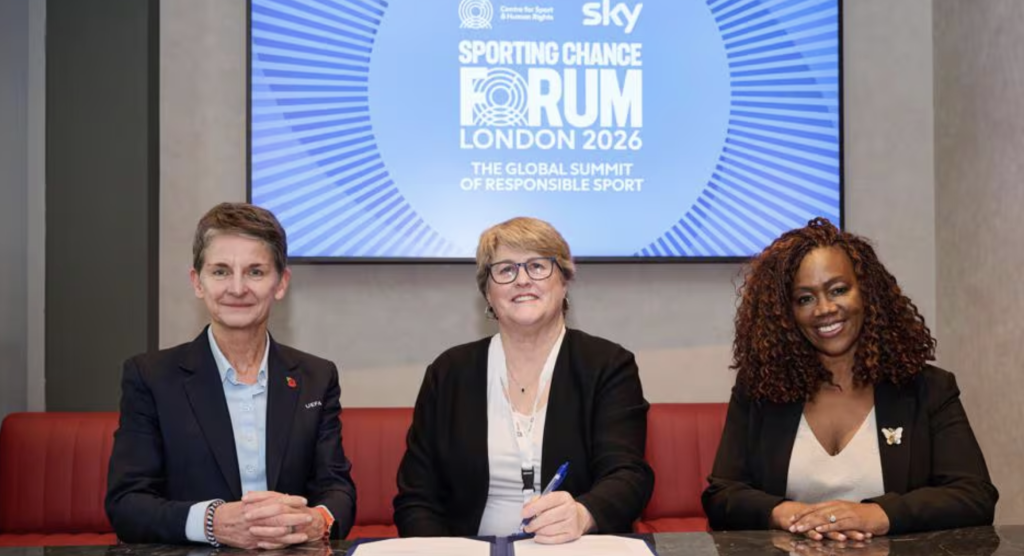
One of the Forum’s most significant developments was the signing of a new Cooperation Protocol between UEFA and the Centre for Sport and Human Rights.
The agreement, running until the end of 2028, builds on existing cooperation surrounding UEFA EURO 2024 and UEFA Women’s EURO 2025.
Signed on behalf of UEFA by general secretary Theodore Theodoridis and vice-president Laura McAllister, and by Mary Harvey for the Centre, it establishes further collaboration on human rights due diligence, responsible event hosting and stakeholder engagement.
Speaking during a discussion on sports governance, McAllister acknowledged that progress had been made but that significant challenges remained.
“We’ve started to not only embed the language of human rights and the expectations around delivery and implementation, but we’ve also started to shift the culture somewhat.”
"We've started to not only embed the language of human rights and the expectations around delivery and implementation, but we've also started to shift the culture somewhat."
She emphasised that progress remained uneven across European and international football, highlighting the importance of leadership, accountability and implementation.
Sky’s role in advancing responsible sport
As a founding partner of the Centre for Sport and Human Rights, Sky played a central role in the Forum, both as co-host and through its contributions to discussions on women’s sport, athlete welfare, broadcasting, inclusion and environmental responsibility.
On the second afternoon, delegates visited Sky Central, where they were given an overview of how the broadcaster is integrating responsible sport into its activities, alongside tours of its studios and a series of practical workshops.
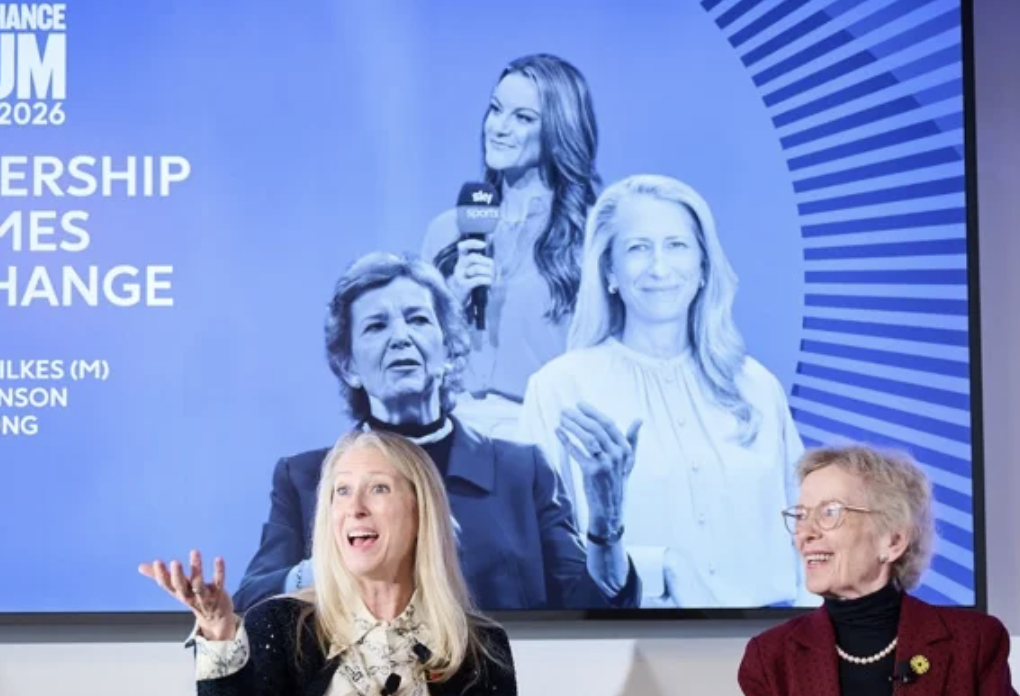
Sky Group CEO Dana Strong had earlier joined Mary Robinson in a discussion about leadership, investment and the responsibilities of major businesses in shaping the future of sport.
Strong emphasised the importance of collaboration between broadcasters, sporting organisations, governments and commercial partners, particularly in developing women’s sport.
“We need policy from the government; we need support to invest to elevate women’s participation – we can do a lot but cannot do it alone.”
"We need policy from the government; we need support to invest to elevate women's participation – we can do a lot but cannot do it alone."
Sky’s investment in women’s sport was highlighted by Jo Osborne, Head of Women’s Sport at Sky Sports, who explained how sustained investment and greater visibility have helped transform audiences and opportunities over more than three decades.
However, Osborne also highlighted Sky’s Game Changing research, which found that girls in the UK miss out on 280 million hours of sport compared with boys every year.
“Seeing elite women’s sport and feeling that sport is somewhere that you belong aren’t, as we know, always the same thing.”

"Seeing elite women's sport and feeling that sport is somewhere that you belong aren't, as we know, always the same thing."
Sky’s responsibilities also extend to how sport is presented and reported. Workshops at Sky Central explored the treatment of child athletes in sports broadcasting, including privacy, identity, safeguarding and the potential impact of media narratives on young people’s wellbeing.
The broadcaster’s involvement in discussions on environmental justice, online abuse and athlete welfare further demonstrated the breadth of issues facing media organisations operating within the sports industry.

Women’s sport: Growth must deliver wider opportunities
The rapid commercial growth of women’s sport was another major theme, with speakers examining whether increasing investment, audiences and media exposure are translating into lasting structural change.
Ebru Köksal, Chair of Women in Football, argued that women’s sport presents an opportunity to develop a different model, one that places greater emphasis on communities, participation and social outcomes.
“I think women’s sport and especially women’s football is so much more about 360 degrees; serving the community.”
"I think women's sport and especially women's football is so much more about 360 degrees; serving the community."
However, discussions also raised concerns that commercial investment remains concentrated at the elite level, while coaching, officiating, grassroots development and athlete pathways continue to face significant resource challenges.
The challenge is to ensure that the growth of women’s sport benefits the wider sporting ecosystem, creating opportunities for future generations rather than simply developing another commercially successful media product.
Responsible event hosting: Moving from ambition to action
The organisation of major sporting events was another central topic, particularly the responsibilities of governing bodies, host cities and commercial partners towards workers, athletes, supporters and local communities.
The Centre launched its new Responsible Event Hosting Framework and Guidance for Event Organisers, designed to help organisations identify and manage human rights risks throughout the event lifecycle.
The framework covers bidding, planning, delivery and legacy, providing practical guidance on responsibilities, minimum standards and implementation.
During the discussion, Ambet Yuson, General Secretary of Building and Wood Workers’ International, highlighted the continuing problems of wage theft, unsafe working conditions and exploitation of migrant workers.
He argued that the people who build and deliver major sporting events must be recognised as an integral part of sport.
The discussions emphasised that responsible event hosting should not simply involve managing reputational risks. It should create lasting benefits for communities, workers and the wider economy, with human rights and social outcomes considered from the earliest planning stages.
The social contract between sport and communities
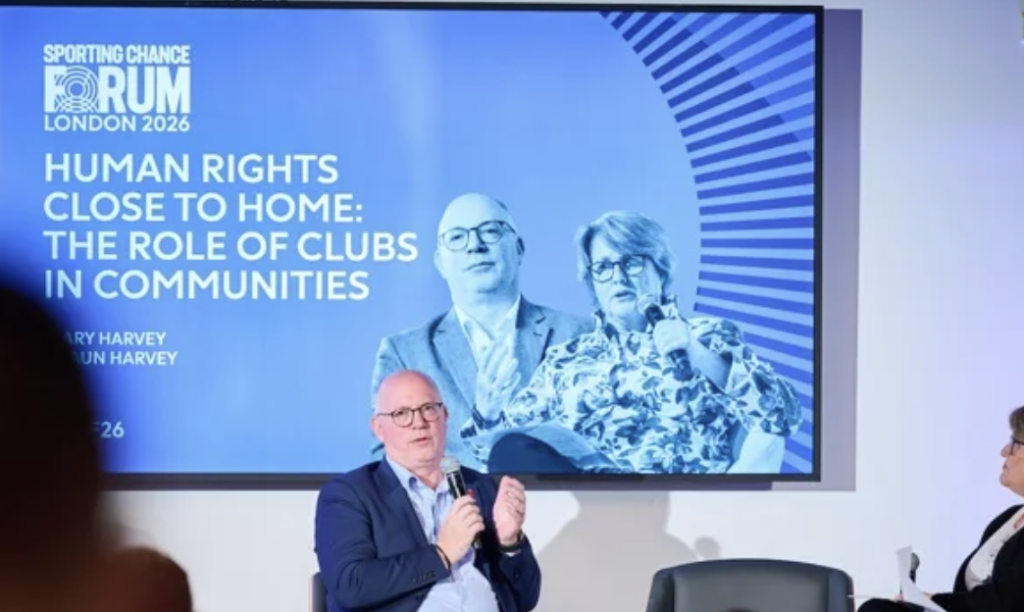
One of the Forum’s most interesting discussions examined the relationship between football clubs and the communities they represent.
Mary Harvey was joined by Shaun Harvey, interim CEO of Wrexham AFC, to explore the concept of a social contract between clubs, supporters and local communities.
Harvey argued that football clubs should be regarded as community institutions, with shareholders acting as custodians rather than simply owners.
“It’s actually owned by the fans. It’s owned by the local community, the community from which the club takes its name.”
This perspective challenges the increasingly commercial nature of professional sport, suggesting that clubs have responsibilities extending well beyond their performance on the pitch.
The discussion highlighted how community engagement, inclusion, accessibility and local economic development can become central elements of responsible sporting organisations.
Athlete welfare, safeguarding and accountability
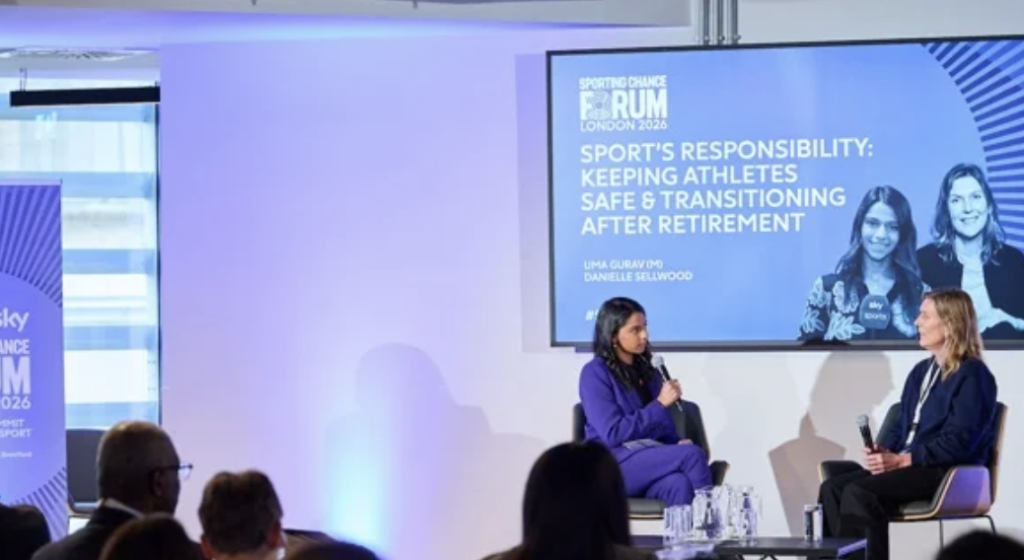
Athlete welfare featured prominently throughout the Forum, with discussions examining safeguarding, gender eligibility, online abuse and the responsibilities of sporting organisations to protect athletes.
A screening and discussion around Elise Christie: No Filter, a documentary about the British short-track speed skater, illustrated the personal consequences of intense sporting pressure and online harassment.
The documentary explored Christie’s experiences of public scrutiny, abuse and the challenges faced by athletes beyond competition.
Other sessions examined the need for independent reporting mechanisms, meaningful consultation with athletes and stronger accountability within sporting governance.
The recurring message was that athletes must have a genuine voice in decisions affecting their lives, careers and wellbeing.
Climate justice: Connecting people and planet
Environmental justice provided another important dimension to the discussions.
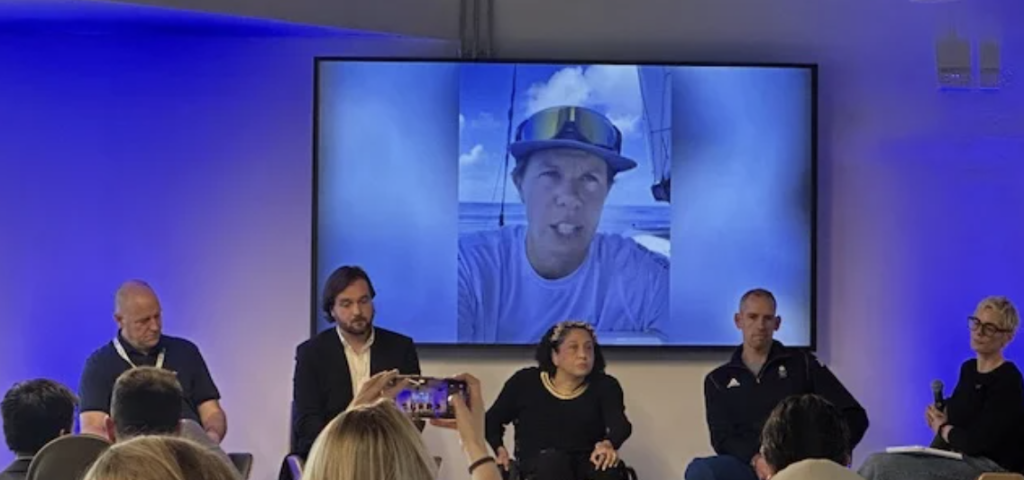
A panel featuring representatives from sport, broadcasting and environmental advocacy examined how climate change affects athletes, communities and access to sporting opportunities.
Extreme weather, rising temperatures and environmental degradation are increasingly affecting participation, facilities and sporting events.
The discussions also explored how athletes and sporting organisations can use their influence to advocate for environmental action while ensuring that vulnerable communities are not excluded from decision-making.
The emphasis was on connecting environmental sustainability with social justice, recognising that climate change is not simply an operational challenge for sport but a wider human rights issue.
A lasting legacy for the FIFA Women’s World Cup 2027
Looking ahead, the Forum examined the opportunity presented by the FIFA Women’s World Cup 2027 in Brazil, the first edition of the tournament to be hosted in South America.
Andrea Florence, Executive Director of the Sport & Rights Alliance, joined Raquel Ribeiro, General Coordinator for the tournament within the Brazilian government, to discuss how the event could deliver lasting social change.
Florence argued that the ambition should extend beyond sporting infrastructure and economic benefits.
“We have a chance in 27 to do differently, not a legacy measured in stadiums and airports, but a legacy measured in safety, equity, and inclusion, especially for women and girls.”
The discussion focused on tackling gender-based violence, improving safeguarding, strengthening participation pathways and ensuring that women and girls benefit long after the tournament concludes.
"We have a chance in 27 to do differently, not a legacy measured in stadiums and airports, but a legacy measured in safety, equity, and inclusion, especially for women and girls."
From commitments to collective action
Closing the two-day Forum, Mary Harvey reflected on the breadth of discussions and the importance of maintaining momentum.
“Over the last two days we’ve heard so many incredibly moving and informative stories … about where we stand in our collective work to harness the power and potential of sport to advance human rights around the world.”
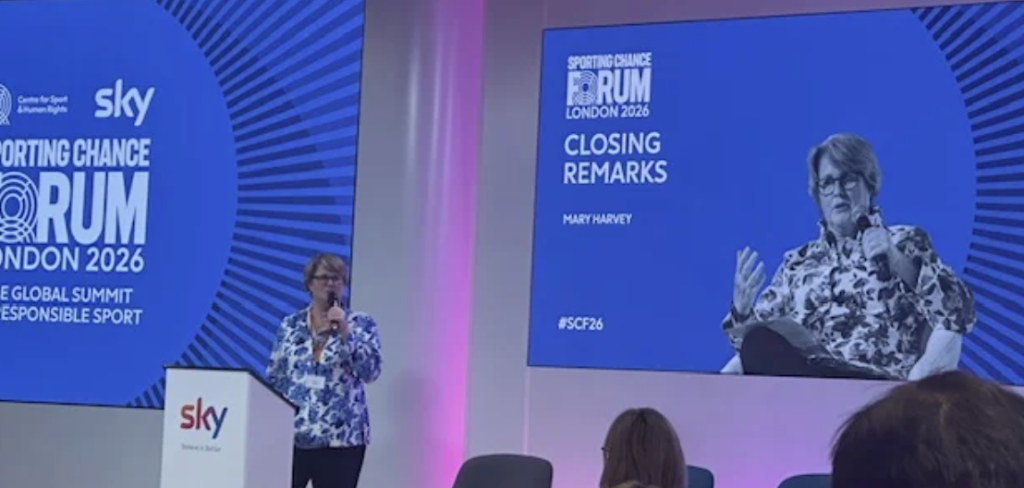
"Over the last two days we've heard so many incredibly moving and informative stories ... about where we stand in our collective work to harness the power and potential of sport to advance human rights around the world."
The Forum demonstrated how the conversation around responsible sport is evolving from broad commitments towards more practical questions of governance, accountability, investment and measurable outcomes.
The UEFA agreement, Sky’s ongoing commitment to responsible sport and the new Responsible Event Hosting Framework provided tangible examples of this shift.
However, the wider challenge remains ensuring that commitments made at international forums translate into meaningful changes throughout sport, from global federations and major events to local clubs and grassroots participation.
The Sporting Chance Forum 2026 reinforced a fundamental principle: sport’s success should not be judged solely by its commercial growth, audiences or sporting achievements, but also by how it treats people and the lasting benefits it creates for society.
Read moreCentre for Sport and Human Rights (CSHR)














Join the GSS Alliance Partners programme today
Stay ahead of the game with our FREE weekly newsletter, delivering the latest sport and sustainability news from around the globe straight to your inbox
11th Hour Racing
Join the GSS Network programme today



Register for GSS Workshops today
Join the GSS Education programme today