
To access our unique news archive of over 1,400 articles with insights on over 500+ sustainable sports organisations, join the GSS Network today.
Login here if you are a registered network subscriber.
News article
A generation missing out: Can sport become a driving force in tackling the global physical inactivity crisis?
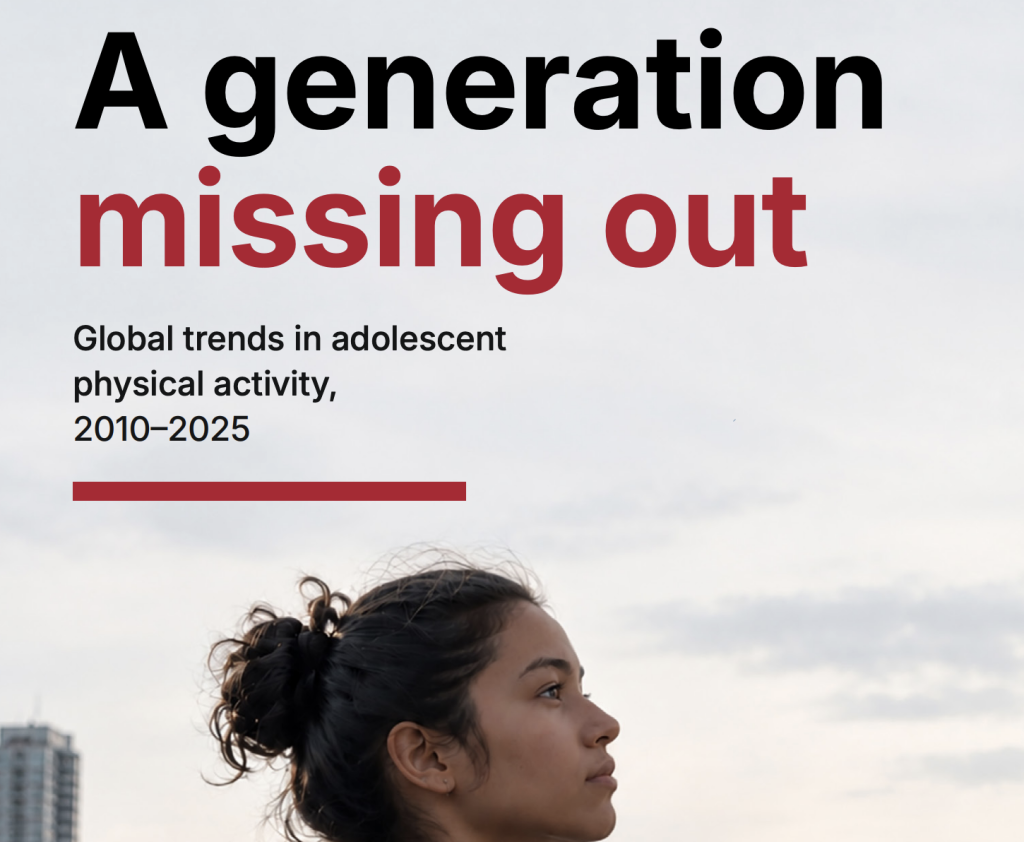
New research from the World Health Organization has revealed that 86% of adolescents worldwide are failing to meet recommended physical activity levels. As governments confront a growing public health challenge, could a fundamental rethink of sport's priorities – moving beyond performance, profile and profit towards participation, people and health – create one of the industry's greatest opportunities?
A global health crisis hiding in plain sight
One in four adolescents worldwide report not achieving a single day of at least 60 minutes of moderate-to-vigorous physical activity during a typical week.
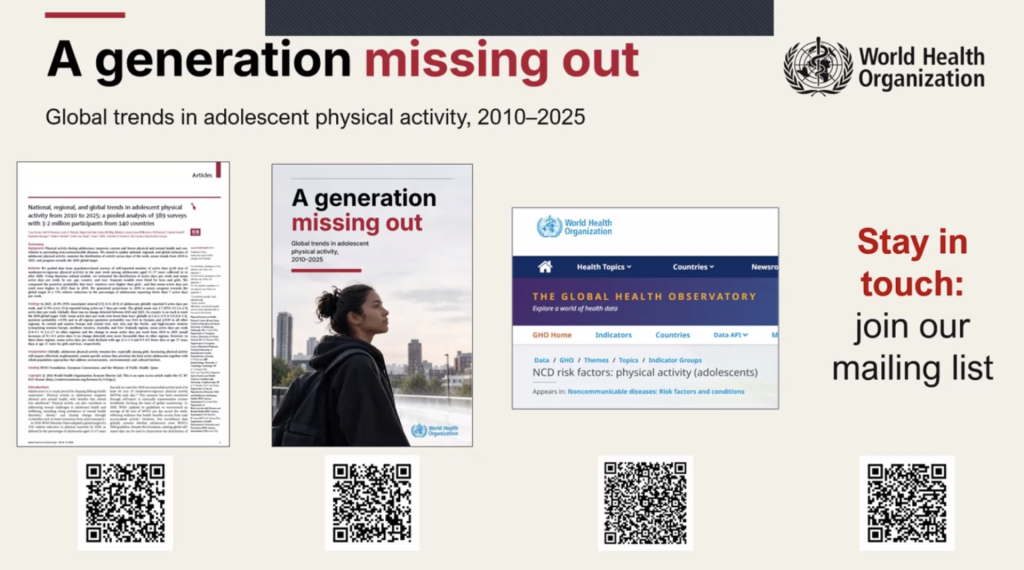
That is the alarming finding from new research published by the World Health Organization (WHO) and The Lancet Global Health, examining physical activity among more than 3.2 million adolescents aged 11–17 across 140 countries and territories.
The research, presented at a WHO workshop on 6 November, revealed that just 14% of adolescents achieve the recommended activity threshold on all seven days of the week.
Perhaps most concerning is that virtually no progress has been made over the past 15 years.
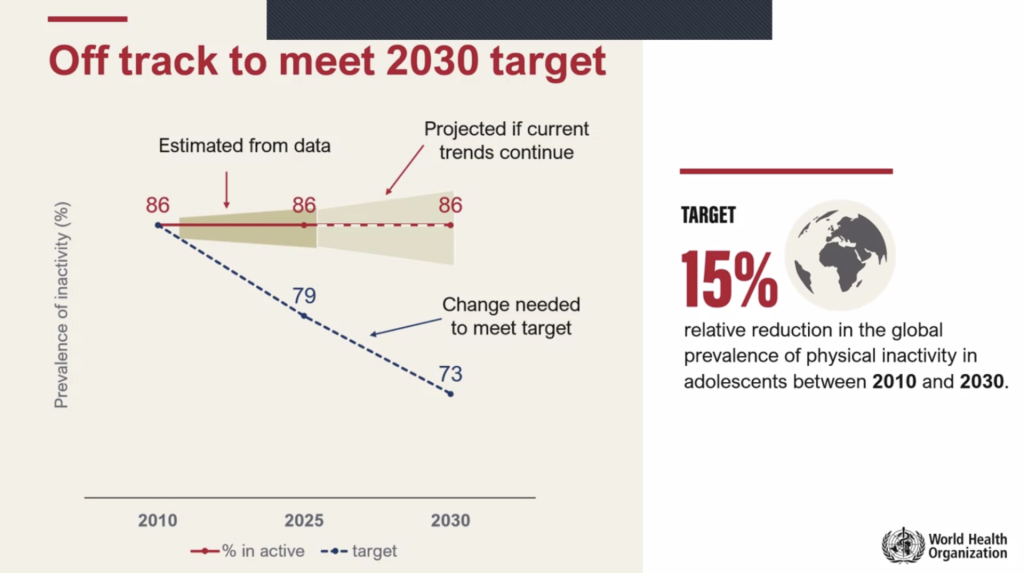
In 2010, 86% of adolescents were classified as insufficiently active. By 2025, that figure remained unchanged, leaving the world significantly off track to achieve its target of a 15% relative reduction in inactivity by 2030.
Girls are particularly disadvantaged, averaging just 2.4 active days per week compared with three for boys.
Dr Fiona Bull of WHO highlighted the fundamental challenge facing policymakers:
“We’ve treated physical inactivity as a personal choice, when in fact it requires a whole system of change.”
The findings raise an important question for the global sports industry: if sport is fundamentally about physical activity, why is it not playing a more central role in addressing one of the world’s most significant public health challenges?
"We've treated physical inactivity as a personal choice, when in fact it requires a whole system of change."
Has sport become too focused on performance?
For decades, the global sports industry has built its commercial success around elite performance, major events, broadcasting, sponsorship and entertainment.
This model has created enormous economic value, global audiences and highly successful sporting organisations.
But has it also resulted in the industry undervaluing its wider role in society?
Most sporting organisations operate participation programmes, community initiatives and grassroots development activities. Yet these often sit alongside, rather than at the centre of, their strategic and commercial models.
Success continues to be measured primarily through competitive performance, audience engagement and financial returns.
During the WHO workshop, the discussion highlighted how traditional sporting structures frequently favour children who already enjoy competition and demonstrate sporting ability.
For the millions of adolescents who do not consider themselves sporty, these structures can become barriers rather than opportunities.
The challenge is not simply to encourage more young people to play organised sport. It is to help more young people become active people, developing habits that continue throughout their lives.
That requires a different understanding of sport’s purpose.
Australia’s Play Well strategy offers a different model
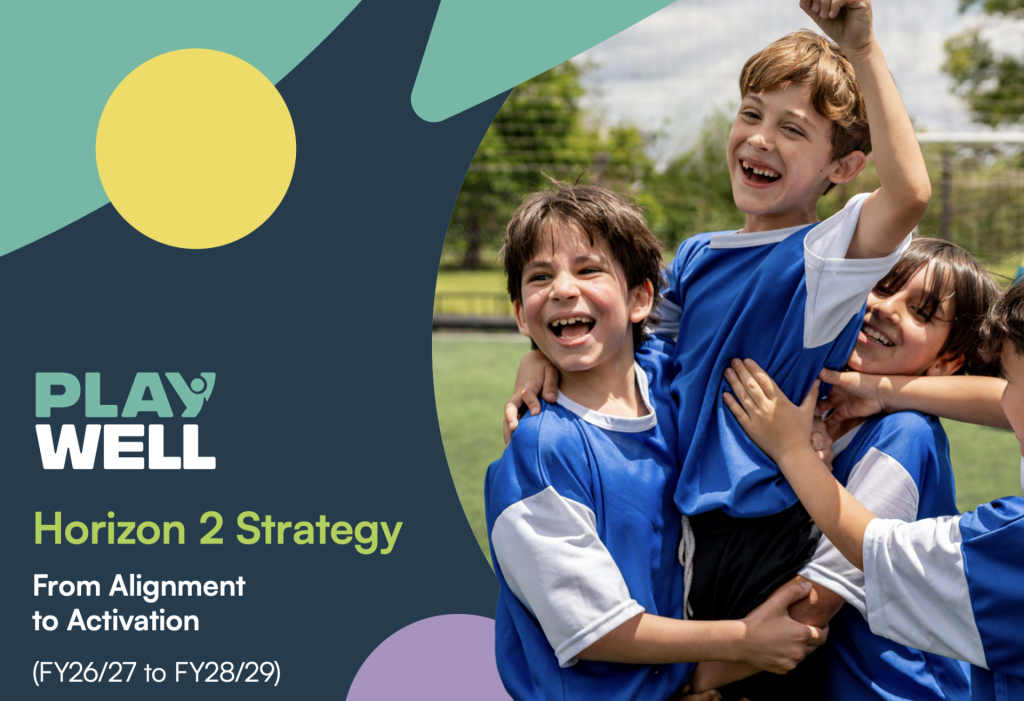
One of the most compelling contributions came from Dr Richard McInnes of the Australian Sports Commission, who outlined Australia’s national Play Well strategy.
Developed through extensive consultation involving more than 7,000 survey responses, Play Well seeks to create a sporting system in which everyone has a place, regardless of age, background, ability or experience.
McInnes explained:
“A lot of our sporting systems are designed for the people that are good at sport and consider themselves sporty.”
"A lot of our sporting systems are designed for the people that are good at sport and consider themselves sporty."
The strategy represents a significant departure from traditional talent identification and performance-driven development models.
Instead, it prioritises the quality of the participant experience, enjoyment and long-term engagement.
As McInnes observed:
“We know through human behaviour that people will repeatedly do what they enjoy doing.”
"We know through human behaviour that people will repeatedly do what they enjoy doing."
Crucially, Australia is beginning to connect this philosophy to investment decisions.
The Australian Sports Commission has collected approximately 88,000 responses across two waves of participant experience surveys, with the quality of the sporting experience now contributing to investment assessments.
This could represent a fundamental shift in how sporting organisations are evaluated.
Rather than simply measuring how many participants enter a programme, sporting organisations can increasingly be assessed on whether people enjoy their experiences, remain involved and develop lifelong participation habits.
It also demonstrates that participation and elite performance need not be competing priorities. A broader, more inclusive participation base can ultimately strengthen the talent pathway.
Schools, health services and sport: connecting the system
The WHO workshop also highlighted the importance of connecting sport more effectively with education, healthcare and local communities.
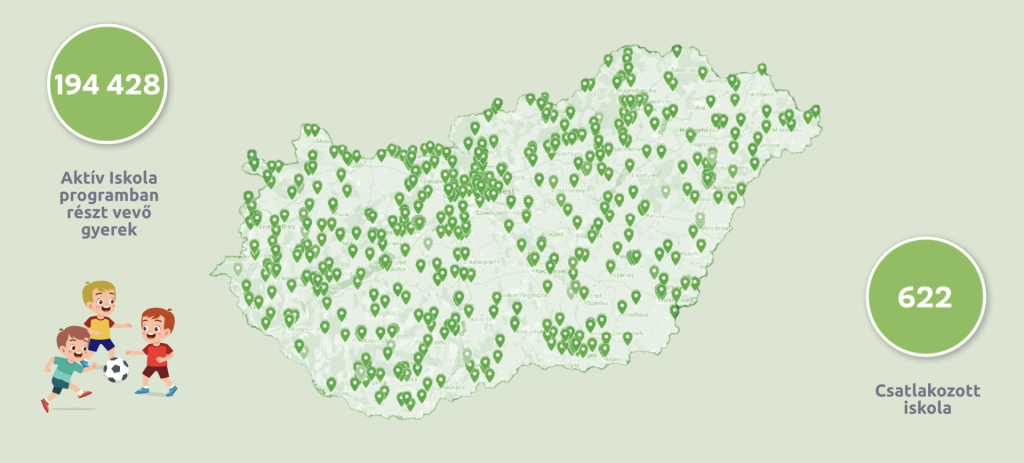
Hungary’s Active School programme provides an example of how this could work.
Led by the Hungarian Student Sports Association, the programme reaches approximately 194,000 children across 622 schools.
Its central principle is that physical activity should become part of everyday school life rather than being confined to physical education lessons or organised sporting competitions.
The programme incorporates physical education, school sport, active environments, student engagement and partnerships.
As Dr Monika Kaj from the Hungarian Schoolsport Federation explained:
“We realised that we needed to think beyond PE lessons and create more opportunities for movement throughout the entire school day.”
"We realised that we needed to think beyond PE lessons and create more opportunities for movement throughout the entire school day."
This approach aligns with WHO’s whole-of-school physical activity toolkit and UNESCO’s Quality Physical Education initiative.
But it also creates opportunities for sporting organisations.
National federations, professional clubs and community sports organisations could become delivery partners for schools, local authorities and health services, helping create accessible physical activity opportunities for adolescents who might otherwise never engage with organised sport.
The objective would not be to identify the next generation of elite athletes, but to develop the next generation of active people.
Understanding the barriers to participation
The workshop also demonstrated why increasing participation requires more than providing additional sporting opportunities.
Young ambassadors involved in the #AndSheCycles initiative described how safety, poor lighting, inadequate cycling infrastructure and social pressures can discourage girls from becoming active.
These challenges are not necessarily solved through additional sports programmes.
WHO’s guidance on walking and cycling emphasises the importance of safe infrastructure, inclusive urban planning and coordinated public policy.
The message is that physical activity must become accessible, affordable, enjoyable and safe.
For sporting organisations, this means working beyond traditional sporting boundaries and listening to the people they are trying to reach.
A new commercial opportunity for global sport
The commercial implications are potentially significant.
Following publication of the WHO research, the World Federation of the Sporting Goods Industry (WFSGI) announced that 84 sporting goods companies and federations had signed an open letter committing to stronger collective action on youth inactivity.
Signatories include adidas, ASICS, Decathlon, New Balance and Nike.
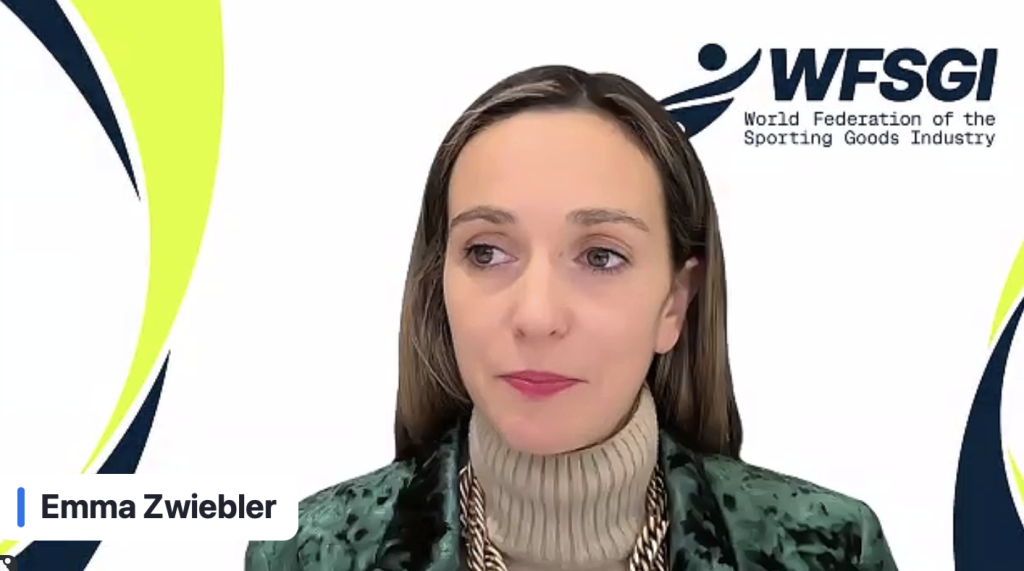
Emma Zwiebler, CEO of WFSGI, captured the opportunity:
“Our biggest competitor is inactivity. Our greatest opportunity is participation.”
"Our biggest competitor is inactivity. Our greatest opportunity is participation."
The initiative recognises that increasing physical activity is not simply a public health responsibility. It is also fundamental to the long-term future of the sporting goods industry.
The same argument could apply to the wider sports industry.
If sporting organisations can demonstrate that their activities improve participation, health and wellbeing, they could develop new partnerships with governments, healthcare organisations, education providers and commercial brands.
This would create a broader value proposition extending beyond traditional sponsorship, broadcasting and event revenues.
However, unlocking this opportunity requires credible evidence of impact, rather than simply reporting participation numbers.
Measuring sport’s contribution to global health
Participation and the ability to get people active are among sport’s most valuable and unique assets, yet their importance is frequently undervalued by the sports industry.
It is this broader value of sport that led Global Sustainable Sport (GSS) to develop its Seven Sustainable Pillars of Sport, by adding Participation as a separate pillar, recognising that sport’s contribution to society extends well beyond performance, profile and profit.
The WHO findings reinforce the importance of recognising and measuring this contribution, particularly sport’s ability to engage inactive populations, reduce inequalities and support lifelong physical activity.
For sporting organisations, demonstrating this impact could unlock new relationships with governments, health organisations and commercial partners, creating a broader economic and social value proposition for sport.
From performance to participation: a new purpose for sport?
The WHO research presents a challenge, but also an extraordinary opportunity.
Sport has spent decades developing a highly successful global entertainment industry, built around performance, profile and profit.
There is no reason to abandon that success.
But the next stage of the industry’s development could involve recognising that its greatest untapped value lies in helping people become more active.
The infrastructure, expertise, brands, communities and influence already exist.
What is missing is a coordinated model connecting sporting organisations with schools, healthcare systems, governments and commercial partners around a shared objective.
The question is no longer simply how sport can attract more participants. It is how sport can become an essential partner in improving global health.
And perhaps the most important measure of success should not be how many young people become elite athletes, but how many become active people for life.
Read moreWorld Health Organization (WHO)








Join the GSS Alliance Partners programme today
Stay ahead of the game with our FREE weekly newsletter, delivering the latest sport and sustainability news from around the globe straight to your inbox
11th Hour Racing
Join the GSS Network programme today

Register for GSS Workshops today
Join the GSS Education programme today