
To access our unique news archive of over 1,400 articles with insights on over 500+ sustainable sports organisations, join the GSS Network today.
Login here if you are a registered network subscriber.
News article
Human rights at the heart of major sporting events: New guidance sets out responsibilities for national federations
A new international guidance framework is calling on national sports federations to place human rights at the centre of major sporting events, recognising that responsible hosting must extend beyond sporting success and economic benefits to protect athletes, workers, volunteers and local communities.
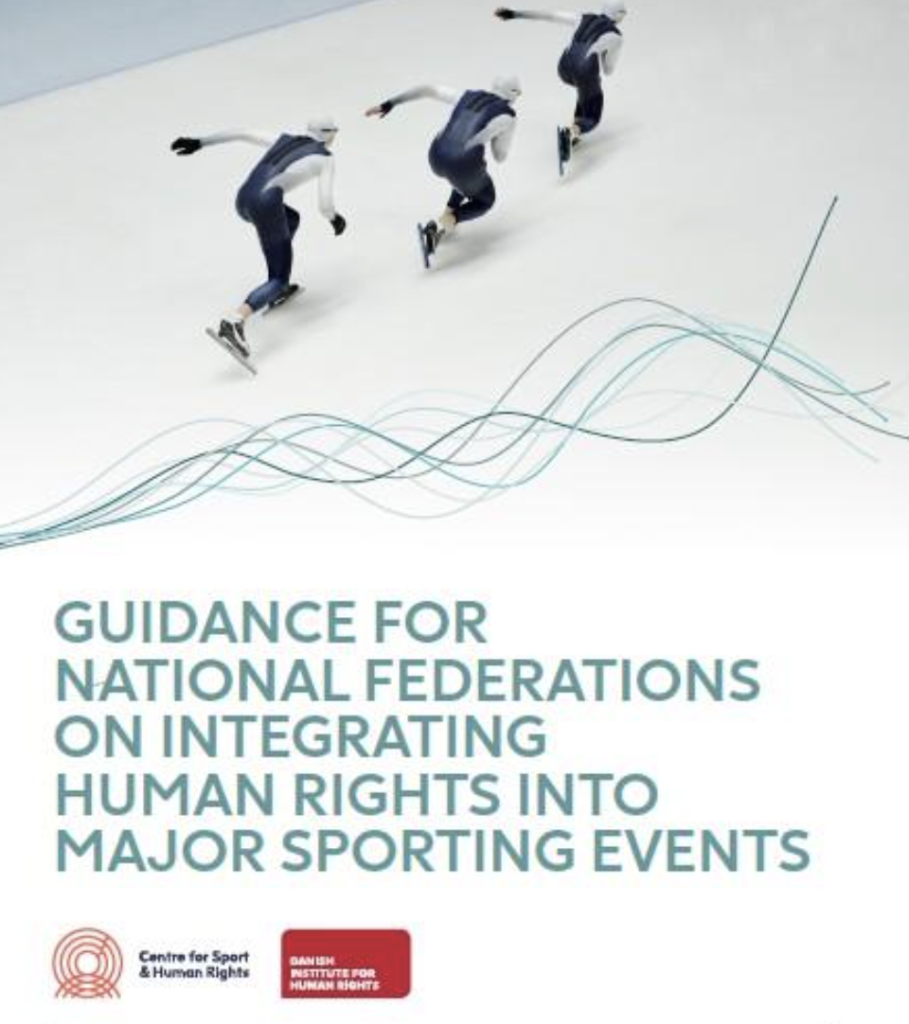
Developed by the Centre for Sport and Human Rights (CSHR) and the Danish Institute for Human Rights (DIHR), the guidance is the result of a collaborative initiative involving six European national sporting organisations, with the participation of the International Olympic Committee (IOC).
The initiative brings together sporting bodies from Denmark, Sweden, Norway, Finland, Germany and the Netherlands to establish practical approaches to managing human rights risks throughout the lifecycle of major sporting events.
From sporting spectacle to social responsibility
Major sporting events generate enormous opportunities for host nations, cities and communities. However, their scale and complexity can also create significant human rights challenges.
The guidance highlights risks ranging from discrimination, safeguarding and labour conditions to accessibility, freedom of expression, environmental damage and the treatment of vulnerable communities.
As the report explains:
“While MSEs can contribute to the fulfilment of human rights, they can also create negative impacts on local communities, workers, athletes, volunteers, and fans.”
The document emphasises that national federations have responsibilities even when they are not directly organising an event.
“While MSEs can contribute to the fulfilment of human rights, they can also create negative impacts on local communities, workers, athletes, volunteers, and fans.”
A practical framework for responsible hosting
Built around the United Nations Guiding Principles on Business and Human Rights, the guidance introduces practical checklists covering four stages: bidding, planning, event delivery and post-event legacy.
Central to the framework is human rights due diligence, requiring organisations to identify risks, engage affected stakeholders, implement preventative measures and provide effective remedies when problems arise.
The report makes an important distinction between conventional organisational risk management and protecting people:
“To assess risks, you need to focus on risks to people, which may look different to other risk assessment processes which often centre on risks to your organisation or to the operations of the event.”
“To assess risks, you need to focus on risks to people, which may look different to other risk assessment processes which often centre on risks to your organisation or to the operations of the event.”
European sporting organisations leading change
The guidance highlights several examples of emerging good practice.
The Netherlands has developed a national hosting strategy prioritising human rights, integrity and sustainability alongside opportunities to create wider social value.
Germany is considering minimum human rights standards during the bidding process, while Copenhagen has adopted a values-based approach that prioritises community benefits alongside economic considerations.
UEFA EURO 2024 is also highlighted as an example of collaboration between sporting organisations, governments and host cities, including the establishment of a Human Rights Board.
Creating a lasting social legacy
Beyond preventing harm, the guidance encourages sporting organisations to consider how events can deliver meaningful benefits long after competitions conclude.
Its central message distinguishes between two responsibilities:
“The primary focus should be on identifying and addressing risks to people and ensuring that the MSE ‘does no harm’.”
However, the report also recognises opportunities to “do good” through positive legacy programmes addressing wider human rights challenges.
“The primary focus should be on identifying and addressing risks to people and ensuring that the MSE ‘does no harm’.”
For national federations, the implications extend beyond compliance. Integrating human rights into governance, partnerships and event planning can strengthen organisational credibility, improve stakeholder relationships and demonstrate the wider contribution sport makes to society.
Ultimately, the success of major sporting events should be measured not simply by sporting achievements, commercial revenues or spectator numbers, but by the lasting benefits they create for the people and communities involved.
Read moreDanish Institute for Human Rights (DIHR),












Join the GSS Alliance Partners programme today
Stay ahead of the game with our FREE weekly newsletter, delivering the latest sport and sustainability news from around the globe straight to your inbox


11th Hour Racing
Join the GSS Network programme today




Register for GSS Workshops today
Join the GSS Education programme today