
To access our unique news archive of over 1,400 articles with insights on over 500+ sustainable sports organisations, join the GSS Network today.
Login here if you are a registered network subscriber.
News article
Top storyFrom FIFA to the Leagues: Football’s Governance Battle Moves to the Next Level
The debate over the governance of world football has entered a new phase.
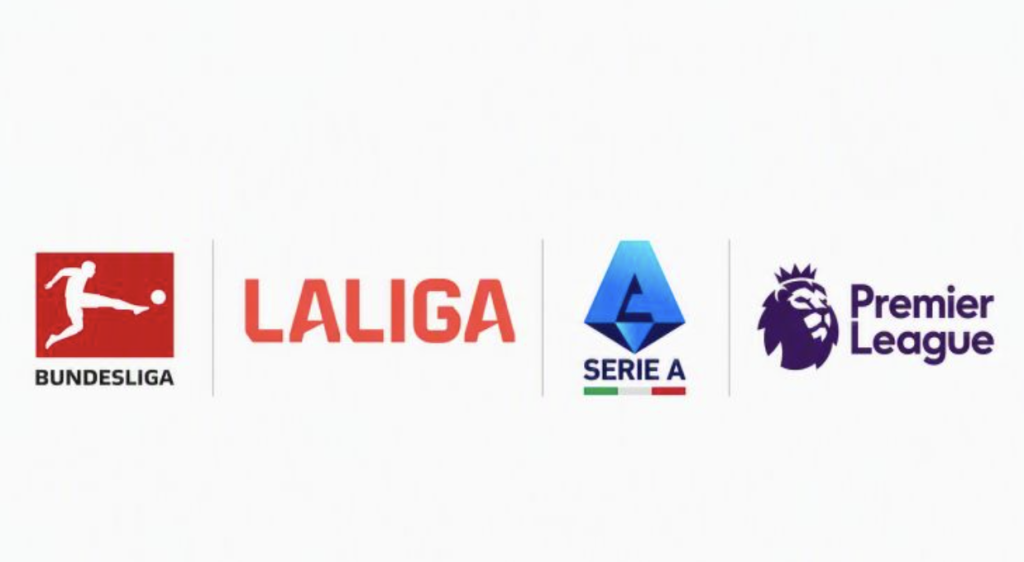
What began with the collapse of FIFA Forward Enterprise (FFE), developed into an unprecedented challenge from UEFA and has now spread directly into the domestic game, with four of Europe’s most powerful leagues calling for fundamental reform of FIFA.
The Bundesliga, LALIGA, Lega Calcio Serie A and the Premier League have issued a joint statement arguing that football’s problems extend beyond FIFA President Gianni Infantino and questioning whether regulatory, commercial and political power should be concentrated within the same office without stronger checks and balances.
It is another significant moment in a governance debate that Global Sustainable Sport has been following throughout the summer – and one which increasingly raises questions not simply about FIFA, but about how power is controlled throughout football.
From presidential power to institutional reform
The leagues’ intervention builds directly upon the controversy surrounding FFE, the abandoned proposal to introduce private investment into interests linked to FIFA’s flagship competitions.
Global Sustainable Sport previously argued that the fundamental issue was bigger than Infantino. Fifty years of FIFA history, from João Havelange through Sepp Blatter to the current presidency, illustrates how institutional structures can allow extraordinary influence to accumulate around individual leaders.
The four leagues have now reached a similar structural question.
“A FIFA governance that concentrates unchecked regulatory, commercial and political power in a single office, while relegating affected stakeholders to mere advisory status, is not fit for purpose,” their statement says.
That represents an important development. The argument is no longer primarily about what happened with FFE. It is about whether FIFA’s governance model itself needs redesigning.
“A FIFA governance that concentrates unchecked regulatory, commercial and political power in a single office, while relegating affected stakeholders to mere advisory status, is not fit for purpose,”
Three demands for change
The leagues have proposed three core reforms.
First, they want affected stakeholders – including associations, leagues, clubs and players – given a meaningful role in decisions affecting areas such as the international calendar, competitions, employment and football’s core assets.
Second, major proposals should be supported by evidence and independent impact assessments published before decisions are taken.
Third, and perhaps most significantly, they want FIFA’s regulatory responsibilities separated more clearly from its commercial interests, with ethics, financial oversight and electoral bodies possessing genuinely independent appointments, budgets and powers.
This goes considerably further than demanding improved consultation. It challenges the architecture through which world football is governed.
Who governs the governors?
That question sits at the heart of Global Sustainable Sport’s recent feature, Who Governs the Governors of Sport?
FIFA already possesses statutes, ethics rules, committees and defined responsibilities. Its statutes place strategic responsibility with the Council and define the President’s responsibilities separately. Yet the FFE controversy raised the question of what happens when formal structures are subjected to pressure from the very top of an organisation.
That led Global Sustainable Sport to introduce the Governance Stress Test: moving beyond asking whether governance mechanisms exist to examining whether they remain effective when challenged.
Independence is particularly important.
UEFA subsequently sharpened that argument by demanding an independent external investigation into FFE, declaring:
“FIFA cannot investigate itself and expect the football community simply to accept its conclusions.”
The leagues are now extending the same principle from investigation to institutional design.
“FIFA cannot investigate itself and expect the football community simply to accept its conclusions.”
Regulator and competitor
There is another dimension to their intervention which could have consequences far beyond FIFA.
The leagues argue that FIFA occupies two potentially conflicting positions: regulating global football while simultaneously operating and expanding commercial competitions.
Their statement points specifically to the International Match Calendar, arguing that FIFA can use regulatory authority in ways that advance its own commercial interests while affecting domestic competitions.
This is ultimately a question about checks and balances.
Who scrutinises the regulator when the regulator is also a major commercial participant in the market it regulates?
Governance under pressure
That question is increasingly relevant at every level of football.
Global Sustainable Sport is separately examining the governance structures surrounding Manchester City and the ability of the Premier League and UEFA to regulate organisations of enormous sporting, financial and institutional power.
The circumstances are very different and should not be equated. But the underlying governance test is remarkably similar.
Having regulations, committees, independent panels, ethics codes and disciplinary processes is one thing. Demonstrating that those structures can operate independently, transparently and effectively when confronted by the most powerful actors in the system is another.
The four leagues conclude that FIFA needs to be a strong institution, but that strength must be accompanied by accountability, shared responsibility and scrutiny. Their statement argues that FIFA’s authority can ultimately only be sustained by “sharing responsibility, accepting scrutiny and earning trust”.
That distinction is also reflected in the Global Sustainable Sport SPI Index. The Premier League currently sits in the Global Top 5 with a C+: Purpose Advanced, while the Bundesliga and LALIGA are both in the Global Top 100 and Serie A in the Global Top 175, all achieving C: Purpose Established.
Those positions reflect substantial evidence of governance policies, structures and processes across the organisations. But the developing debate around FIFA – and the wider questions currently confronting football governance – illustrates why the existence of policies can never be the end of the assessment.
The real measure of governance is what happens when those policies are tested: whether independent processes remain independent, whether rules can be enforced consistently, whether conflicts of interest can be managed and whether organisations are prepared to accept scrutiny when difficult decisions involve powerful interests.
That is the connection between the FIFA debate and the questions being explored in Global Sustainable Sport’s separate examination of Manchester City. In both cases, the issue ultimately moves beyond governance on paper to governance in practice.
Perhaps that is the wider lesson emerging from football in 2026.
Good governance is not simply about having the right rules, policies and structures in place. It is about whether they still work when under pressure.
Read moreLa Liga




Join the GSS Alliance Partners programme today
Stay ahead of the game with our FREE weekly newsletter, delivering the latest sport and sustainability news from around the globe straight to your inbox
11th Hour Racing
Join the GSS Network programme today
15-16 October, 2026
Gtech Community Stadium,
London (UK)
The SPX Purpose League Summit is a working summit for decision-makers interested in activating sport in a purpose-led way. Attendees will leave with an aligned peer network, data-backed insights, and the strategic commercial toolkits to transform sponsorship from an outsourced marketing expense into the single greatest driver of value.


Register for GSS Workshops today
Join the GSS Education programme today