
To access our unique news archive of over 1,400 articles with insights on over 500+ sustainable sports organisations, join the GSS Network today.
Login here if you are a registered network subscriber.
News article
Top storyEuropean Football Clubs reaches 850 members as influence continues to grow
European Football Clubs (EFC) has reached a significant milestone with its membership growing to 850 clubs, underlining the increasing reach of an organisation seeking to place clubs of every size at the heart of decision-making across European and international football.
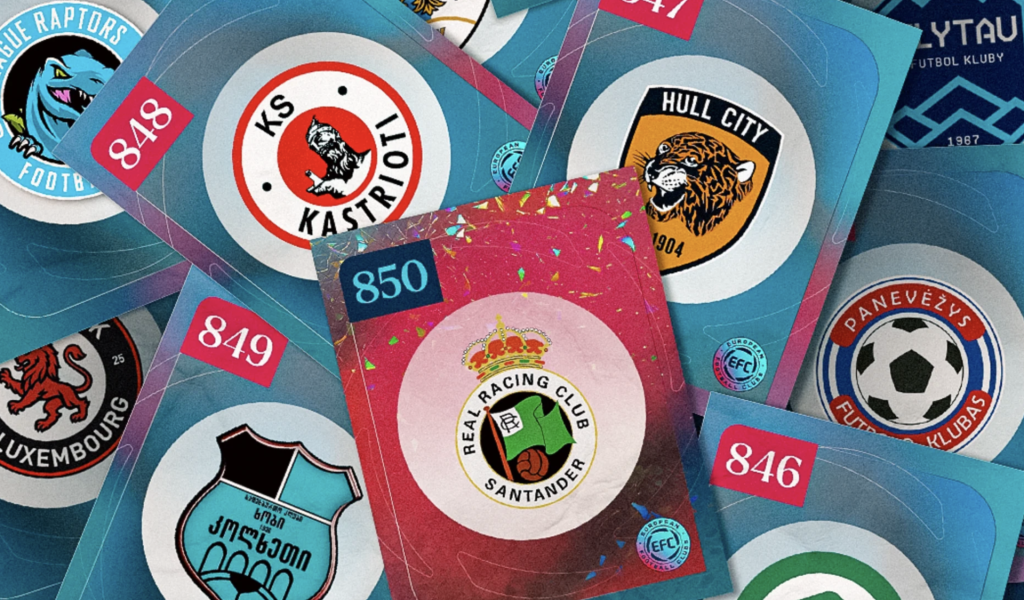
More than 80 clubs have joined EFC during the past 12 months, with its membership now spanning 55 countries and territories. The latest addition, Spain’s Real Racing Club, follows KS Kastrioti of Albania, FC Groningen from the Netherlands, Georgia’s FC Kolkheti Khobi and England’s Hull City AFC.
A broader voice for European clubs
Formerly known as the European Club Association, EFC is recognised by both UEFA and FIFA as the sole representative body for football clubs in Europe. Its growth therefore has significance beyond simply increasing membership numbers.
As the commercial, social and environmental responsibilities of football clubs continue to expand, representation within the structures governing the game is becoming increasingly important. EFC provides a mechanism through which clubs can contribute to discussions and decisions affecting the future direction of European and international club football.
EFC Chairman Nasser Al-Khelaïfi said: “Reaching 850 members is another fantastic milestone for EFC and reflects our continued mission to represent and provide significant benefits and services to clubs of all shapes and sizes across Europe.”
“Reaching 850 members is another fantastic milestone for EFC and reflects our continued mission to represent and provide significant benefits and services to clubs of all shapes and sizes across Europe.”
Building capacity across football
Representation is only part of EFC’s expanding role. Membership gives clubs access to expert-led development initiatives, strategic knowledge sharing, working groups, executive education and opportunities to participate directly within football’s decision-making structures.
Importantly from a sustainability and purpose perspective, EFC also provides support across areas including governance, strategic finance, sustainability, medical and performance, legal affairs and youth development.
That breadth reflects the changing expectations being placed on football organisations. Clubs are increasingly required to demonstrate responsible governance and financial management alongside their contribution to communities, environmental sustainability and the development and wellbeing of players.
For smaller clubs in particular, access to shared expertise, education and collective representation can provide resources that would otherwise be difficult to develop independently.
Strength in collective representation
The 850-club milestone also demonstrates the diversity EFC is attempting to bring together. Its membership encompasses some of the biggest names in European football alongside clubs operating in much smaller markets and competitions.
Al-Khelaïfi added: “We are proud that EFC works positively and hand-in-hand with all stakeholders, ensuring our members have a voice in decisions that shape the future of European and international club football and collectively building a better ecosystem for all.”
“We are proud that EFC works positively and hand-in-hand with all stakeholders, ensuring our members have a voice in decisions that shape the future of European and international club football and collectively building a better ecosystem for all.”
The growing reach of EFC is also reflected in the latest Global Sustainable Sport SPI Index. More than 55 European football clubs feature among the 150-plus sports organisations currently recognised on the GSS Purpose Podiums, meaning clubs account for roughly one third of all organisations reaching this level of sustainability, purpose and impact.
The strength of Europe’s leading leagues is particularly evident. 15 German clubs feature from Bundesliga 1, alongside 14 clubs from the English Premier League and 11 from Spain’s La Liga. Together, those three leagues account for the clear majority of European clubs currently on the Purpose Podiums with a wide spread across the rest of Europe.
With more than 80 clubs joining in just a year, EFC’s continued expansion strengthens its claim to provide a collective voice for European club football. The challenge will be ensuring that greater scale translates into meaningful representation for the full diversity of its membership – and that the organisation can use that collective influence to help shape a more sustainable, purposeful and impactful future for the game.
Read moreEuropean Football Clubs (EFC)




Join the GSS Alliance Partners programme today
Stay ahead of the game with our FREE weekly newsletter, delivering the latest sport and sustainability news from around the globe straight to your inbox


11th Hour Racing
Join the GSS Network programme today




Register for GSS Workshops today
Join the GSS Education programme today