
To access our unique news archive of over 1,400 articles with insights on over 500+ sustainable sports organisations, join the GSS Network today.
Login here if you are a registered network subscriber.
News article
Beyond Reinvention: Why Glasgow 2026 Could Change the Way the World Measures Major Sporting Events
When Glasgow stepped forward to host the 2026 Commonwealth Games after Victoria's withdrawal, the immediate objective was simple: save the Games. Eighteen months later, the ambition has changed.

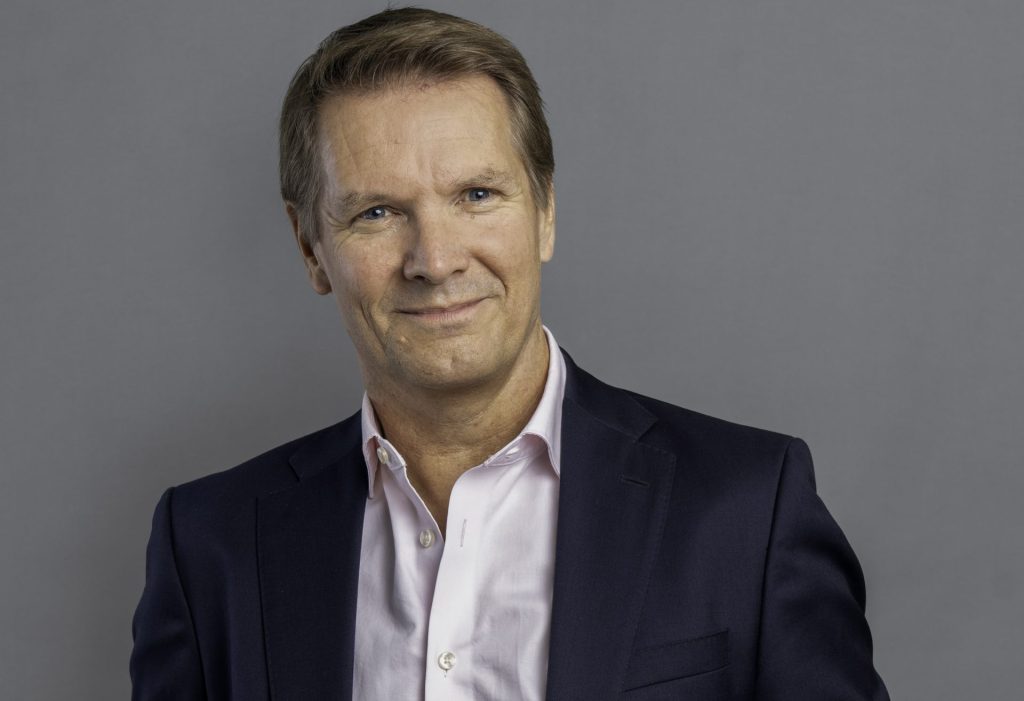
Speaking exclusively to Global Sustainable Sport following the conclusion of Glasgow 2026, Chief Executive Phil Batty believes the Games have done something far more significant than rescue a sporting event. They have demonstrated that major international events can be designed differently, delivered differently and—perhaps most importantly—judged differently.
Together with Glasgow’s “Reimagined Games” strategy and Trivandi’s innovative embedded delivery model, the event may represent the beginning of a new chapter for global sport—one where sustainability, purpose and long-term impact become the primary measures of success rather than the economic impact, television audiences or medal tables.
Reinvention with a Purpose
Batty rejects the idea that Glasgow simply preserved an existing model.
Instead, he argues the Games have been fundamentally rethought.
“Whilst saving the Games was important, you need to save it with a purpose,” he told Global Sustainable Sport.
“The unifying goal for us was to create a framework for the Games where any nation in the Commonwealth believes at some stage in the next hundred years it could host a version of the Games.”
"Whilst saving the Games was important, you need to save it with a purpose ... the unifying goal for us was to create a framework for the Games where any nation in the Commonwealth believes at some stage in the next hundred years it could host a version of the Games."
That ambition represents perhaps the biggest shift in the Commonwealth Games movement since its creation.
For decades, hosting has largely rotated between a small number of wealthy nations capable of absorbing ever-growing costs. Glasgow sought to demonstrate that future editions could instead adapt to the strengths of each host rather than expecting every host to conform to one increasingly expensive blueprint.
As Batty explained, the question is no longer whether the Games should survive, but what kind of Games they should become.
“It has ended that conversation of should there be a Games. It should be what type of Games do we all want?”
"It has ended that conversation of should there be a Games. It should be what type of Games do we all want?"
Building Around Place, Not Scale
One of the strongest themes emerging from the interview is that future Games should be designed around the character and assets of their host city.
Rather than imposing a standard model, Glasgow sought to embrace its existing sporting infrastructure, cultural ecosystem, volunteer networks and community partnerships.
“It’s designing to a place’s natural strengths,” Batty explained.
“A Games that could only take place in Glasgow because of what Glasgow’s strengths are.”
That philosophy echoes themes explored earlier this year by Glasgow 2026’s Lead for Sustainability and Accessibility, Selina Donald, who described the event as the “Reimagined Games”—a model built around financial responsibility, inclusion, accessibility and long-term impact rather than simply scale.
Using existing venues, temporary infrastructure and a compact footprint, Glasgow demonstrated that delivering more meaningful Games does not necessarily require building more infrastructure.
"It's designing to a place's natural strengths ... a Games that could only take place in Glasgow because of what Glasgow's strengths are."
Reinventing Delivery
If Glasgow reimagined hosting, it also quietly transformed delivery.
Last week, Trivandi CEO James Bulley told Global Sustainable Sport that Glasgow had abandoned the traditional client-contractor relationship in favour of an embedded delivery partnership, integrating experienced Games professionals directly into the organising committee from day one.
Batty believes this collaborative approach proved equally important.
“Far too often you build an organising company, you build a supply chain and manage them as client and supplier,” he said.
“We leaned into a blended workforce… one integrated workforce.”
“That allowed us to find not only more efficiency, it allowed us to find more agility and more pace in the way that we worked.”
"Far too often you build an organising company, you build a supply chain and manage them as client and supplier. We leaned into a blended workforce... one integrated workforce. That allowed us to find not only more efficiency, it allowed us to find more agility and more pace in the way that we worked."
Perhaps more importantly, Glasgow also changed how risk was managed.
“If you share risk more equitably across the supply chain and across the partnership, you have more tendency to take bolder, braver, more courageous decisions because you’re taking them together.”
Those observations closely reinforce Bulley’s view that institutional knowledge should travel with events rather than disappearing every time a new organising committee is established.
Together, the two interviews point towards a delivery model that could significantly reduce duplication, accelerate decision-making and improve long-term capability across international sport.
"If you share risk more equitably across the supply chain and across the partnership, you have more tendency to take bolder, braver, more courageous decisions because you're taking them together."
Sustainability Beyond Carbon
Although Glasgow has rightly received recognition for delivering a compact Games using existing venues, renewable electricity, circular procurement and reused infrastructure, Batty’s interview suggests sustainability extends far beyond environmental performance.
For him, the real achievement lies in reconnecting elite sport with communities.
“The joy of a major event is where elite sport intersects with community pride… cultural celebration,” he explained.
“If you can do that in the streets and the public squares and the parks and the community centres and the schools, you can root a major event firmly in the fabric of a city.”
That broader interpretation of sustainability—combining environmental responsibility with social inclusion, cultural identity and financial realism—may ultimately prove Glasgow’s most important contribution.
"The joy of a major event is where elite sport intersects with community pride... cultural celebration. If you can do that in the streets and the public squares and the parks and the community centres and the schools, you can root a major event firmly in the fabric of a city."
A New Measure of Success?
Yet perhaps the biggest opportunity now lies beyond Glasgow itself.
If major sporting events are being reimagined, then the way they are evaluated also needs to evolve.
For decades, success has been measured largely through visitor numbers, tourism impact, broadcast audiences, economic output and medal tables.
Those metrics remain important.
But they tell only part of the story.
If Glasgow 2026 has demonstrated anything, it is that future hosts may be judged just as much on whether they strengthen communities, accelerate sustainability, improve governance, create lasting partnerships and deliver genuine long-term purpose.
That is why the next evolution for major sporting events may not be another delivery innovation or operational model, but a new framework for measuring impact itself.
Rather than focusing solely on economic return or sporting performance, future events should increasingly be assessed across their Sustainability, Purpose and Impact much along the lines of the GSS approach.
If Glasgow 2026 has reimagined how major sporting events can be hosted, and Trivandi has demonstrated a new way they can be delivered, the next challenge is equally important: redefining how their success is measured.
Only then will major events be judged not simply by the medals they produce, the audiences they attract or the tourists they welcome, but by the lasting positive impact they leave behind.
Read moreGlasgow 2026











Join the GSS Alliance Partners programme today
Stay ahead of the game with our FREE weekly newsletter, delivering the latest sport and sustainability news from around the globe straight to your inbox

11th Hour Racing
Join the GSS Network programme today



Register for GSS Workshops today
Join the GSS Education programme today