
To access our unique news archive of over 1,400 articles with insights on over 500+ sustainable sports organisations, join the GSS Network today.
Login here if you are a registered network subscriber.
News article
Beyond the Finish Line: How the world’s leading marathons are creating billions in economic and societal value
The world's 50 leading marathons generated an estimated US$6 billion in economic impact in 2025, inspired 160 million additional hours of physical activity and attracted more than half a million first-time runners, according to new research from Brand Finance.
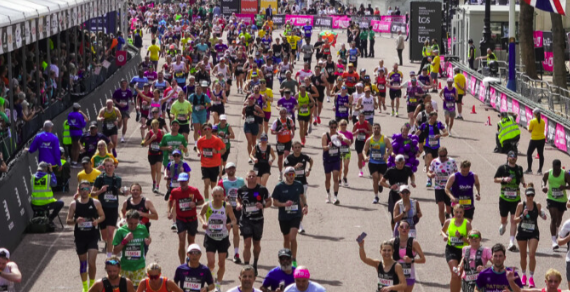
The second edition of Marathons 50: The World’s Strongest Marathon Brands by Brand Finance goes beyond traditional measures of economic impact and brand strength to examine the wider contribution of mass participation sport to physical and mental wellbeing, communities, cities and commercial partnerships.
The findings suggest that the value created by major sporting events extends well beyond race-day expenditure, television audiences and sponsorship exposure, raising important questions about how the sports industry measures its contribution to society.
Speaking to Global Sustainable Sport, Scott Moore, Head of Sports Services at Brand Finance, and Sofia Liszka, Senior Strategy and Sustainability Consultant, explained how the research is beginning to capture these wider benefits.
Measuring the value beyond race day
Economic impact studies have traditionally focused on visitor expenditure, accommodation, transport and the direct financial benefits of hosting major events.
Brand Finance’s latest research expands that approach by examining how participation in marathons influences behaviour, wellbeing and physical activity long after runners cross the finishing line.
“We wanted to try and capture the wider societal impact of marathons,” explained Moore. “We started looking at the uptick in mental and physical health, productivity, belonging, resilience and body image when people start running and when they start training for a marathon.”
“We wanted to try and capture the wider societal impact of marathons ... We started looking at the uptick in mental and physical health, productivity, belonging, resilience and body image when people start running and when they start training for a marathon.”
The research, drawing on over 9,400 respondents across nine markets alongside participation data and existing academic studies, identifies significant benefits associated with marathon training and participation.
Among its headline findings, the world’s 50 leading marathons inspired an estimated 160 million additional hours of physical activity, while more than 500,000 people participated in a marathon for the first time.
Importantly, the benefits do not necessarily end with the event. Drawing on existing academic studies, Brand Finance highlighted evidence that 2025 marathon finishers maintain some of their increased activity levels after their race. This demonstrates the potential for marathons to encourage longer-term behavioural change.
The multiplier effect of participation
One of the most significant findings concerns the influence marathon runners have on those around them.
The research indicates that people who watch someone they know participate in a marathon are four times more likely to consider running one themselves, and twice as likely to see marathons as a force for good.
This creates what Brand Finance describes as an inspiration effect, extending the societal benefits of participation beyond the individuals taking part.
Moore explained that the research found a strong societal impact associated with marathon participation, reflecting both improvements in personal wellbeing and the influence runners have on others.
“When you piece it all together, you see this compounding effect that takes hold once people start on their marathon journey, or their running journey more broadly.”
The findings suggest that the social value of major participation events may be considerably greater than traditional economic impact assessments indicate.
“When you piece it all together, you see this compounding effect that takes hold once people start on their marathon journey, or their running journey more broadly.”
Understanding the health and wellbeing benefits
The study examined six dimensions of wellbeing, including mental and physical health, community, belonging, resilience and body image.
Liszka explained that the research compared the experiences of marathon runners with those of other runners and less active individuals, examining how training and participation influenced different aspects of their lives.
“The research captures the holistic effects of running,” she explained, “looking beyond fitness to how people feel, how they recover and how they use technology to support their running.”
The research also indicated trends between marathon participation and wider lifestyle choices, including practicing meditation and yoga, sustaining a weekly fitness routine, and using training and nutrition apps.
“The research captures the holistic effects of running. Looking beyond fitness to how people feel, how they recover and how they use technology to support their running.”
However, Liszka acknowledged that a comprehensive assessment must also consider potential negative outcomes, including injuries and the physical demands associated with endurance running.
These considerations illustrate the complexity of measuring the true societal contribution of sport.
While the latest report quantifies additional physical activity and associated wellbeing benefits, Brand Finance has not yet assigned a monetary value to those outcomes.
That could be an important development in future editions.
Moore highlighted the potential to draw on government wellbeing valuation frameworks to estimate the economic value of increased activity, improved health and life satisfaction.
The challenge is to translate these outcomes into credible financial measures while accounting for differences between first-time participants, existing runners and those who are already highly active.
London leads the world’s strongest marathon brands
Alongside its societal impact research, Brand Finance assessed the strength and value of the world’s leading marathon brands.
The London Marathon emerged as the world’s strongest marathon brand, achieving a Brand Strength Index score of 95.5 out of 100.
The New York City Marathon ranked second with 92.3, followed by Boston with 85.9, Berlin with 85.4 and Paris with 84.6.
However, brand strength and brand value are different measures.
The New York City Marathon was identified as the world’s most valuable marathon brand, worth approximately US$339 million, followed by London at US$230 million and Chicago at US$149 million.
Collectively, the seven Abbott World Marathon Majors were valued at approximately US$1.1 billion.
The research demonstrates the considerable commercial strength of major mass participation events, but also highlights the opportunity to understand their wider contribution to society.
Creating value for host cities
Major marathons also influence how people perceive the cities in which they take place.
Beyond the immediate economic benefits generated by international visitors, Brand Finance examined how participation can strengthen perceptions of host destinations and encourage future visits, investment and other forms of engagement.
Moore explained that the organisation’s wider city brand research considers both people’s perceptions and their likely behaviours.
A successful marathon can therefore create benefits extending beyond the race weekend, strengthening a city’s international reputation and its attractiveness as a destination.
For host cities and event organisers, these findings provide an additional perspective on the long-term value of investing in major sporting events.
A new approach to sponsorship effectiveness
The research also examines how marathon sponsorship influences consumer perceptions and commercial outcomes.
Moore explained that Brand Finance increasingly focuses on what it describes as return on objectives, rather than relying on traditional measures of media exposure.
Instead, Brand Finance examines how sponsorship influences familiarity, preference, consideration, customer acquisition and other measurable business outcomes.
This approach is particularly relevant as brands increasingly seek partnerships that can demonstrate social and environmental benefits alongside commercial returns.
For marathon organisers, the ability to quantify participation, wellbeing and community outcomes could create additional opportunities to demonstrate the value of their events to existing and prospective partners.
World Athletics recognises the growing value of participation
The publication of Brand Finance’s research coincides with a significant strategic announcement from World Athletics, which has established a dedicated Running & Mass Participation department to strengthen its engagement with the global running community.
Announced ahead of the 2026 New York City Marathon, the initiative recognises the growing importance of recreational running to the future of athletics, with World Athletics estimating that at least one billion people worldwide participate in running.
“Mass participation running possesses the unique power to engage entire communities,” said World Athletics CEO Jon Ridgeon. “It is a tool for mental wellbeing, wider public health, social cohesion and, for our host cities, economic development.”
The announcement reflects many of the findings highlighted by Brand Finance, particularly the opportunity to recognise and quantify the wider economic and societal contribution of mass participation sport.
Together, the two developments suggest that the value of running is increasingly being recognised not simply through major events and elite competition, but through the lasting benefits generated by millions of recreational participants.
“Mass participation running possesses the unique power to engage entire communities. It is a tool for mental wellbeing, wider public health, social cohesion and, for our host cities, economic development.”
Sustainability performance and the Purpose Podiums
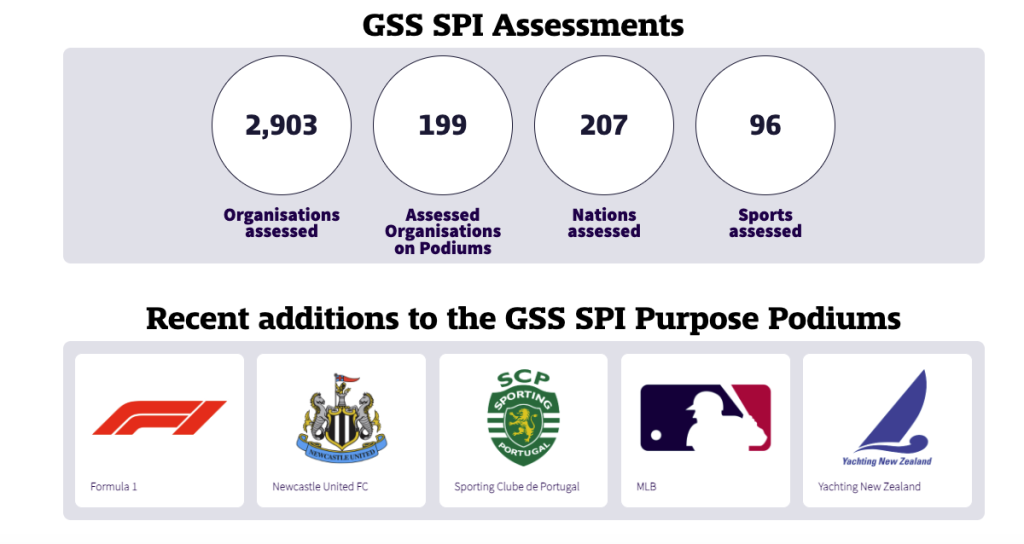
The growing importance of sustainability and societal impact is also reflected in the GSS SPI Index, which independently assesses sporting organisations across the Seven Sustainable Pillars of Sport.
Two organisers of Abbott World Marathon Majors have reached the SPI Purpose Podiums, recognising organisations that have demonstrated established sustainability and purpose-related performance.
London Marathon Events, organisers of the London Marathon, is ranked joint 70th globally, with an overall SPI score of 4.86, achieving a C: Purpose Established rating.
The Boston Athletic Association, organisers of the Boston Marathon, is ranked 82nd globally, with an SPI score of 4.78, also achieving a C: Purpose Established rating.
The organisers of the other Abbott World Marathon Majors have not yet reached the Purpose Podiums.
These independent assessments provide a complementary perspective to Brand Finance’s research, examining the sustainability practices and publicly available evidence of sporting organisations rather than their brand strength or commercial valuation.
Towards a broader understanding of sport’s value
Brand Finance’s latest research raises important questions about how the sports industry measures success.
For decades, major sporting events have largely been evaluated through attendance, media exposure, sponsorship revenue and their immediate economic contribution.
The Marathons 50 study demonstrates that participation events also generate wider benefits through increased physical activity, improved wellbeing, community engagement and the inspiration they provide to others.
As Brand Finance develops its approach to quantifying these outcomes, the opportunity to connect societal impact with economic and commercial value could become increasingly significant.
For event organisers, host cities and commercial partners, the implications are substantial.
As World Athletics strengthens its commitment to mass participation and Brand Finance develops new approaches to measuring societal impact, the opportunity to redefine how sport demonstrates its value is becoming increasingly significant.
The future value of major sporting events may depend not simply on how many people watch or participate, but on the lasting difference those events make to individuals, communities and society.
Read moreBrand Finance













Join the GSS Alliance Partners programme today
Stay ahead of the game with our FREE weekly newsletter, delivering the latest sport and sustainability news from around the globe straight to your inbox

11th Hour Racing
Join the GSS Network programme today



Register for GSS Workshops today
Join the GSS Education programme today