
To access our unique news archive of over 1,400 articles with insights on over 500+ sustainable sports organisations, join the GSS Network today.
Login here if you are a registered network subscriber.
News article
Top storyPowering the Beautiful Game: How Football Infrastructure is Becoming Part of Europe’s Clean Energy Future
As Europe accelerates its transition towards a low-carbon economy, football is discovering that one of its greatest sustainability assets may be hiding in plain sight. Stadium roofs, training grounds and club facilities are increasingly being reimagined not simply as sporting infrastructure, but as generators of clean energy, financial resilience and community value.
That was the message emerging from UEFA and SolarPower Europe’s European Solar Day webinar, which brought together football governing bodies, clubs, architects and energy experts to explore how renewable energy can become a core component of football’s future infrastructure strategy. The event forms part of a cooperation agreement signed between UEFA and SolarPower Europe in 2025, designed to accelerate the adoption of renewable energy across European football.
More Than Sustainability
For UEFA, the conversation is no longer solely about reducing emissions. Renewable energy is increasingly being viewed as a strategic infrastructure issue that touches everything from operational costs and energy security to long-term resilience.
“Sustainability in football is all about anticipating,” explained Vincent Reulet, UEFA’s Senior Expert in Social and Environmental Sustainability. “It’s also about innovation, and sometimes you need to be creative.”
Reulet argued that clubs and associations should consider not only the return on investment associated with solar installations, but also the cost of failing to act.
“There is a return on investment that everybody knows. But there is also the risk of inaction. How much will it cost for not doing anything today?”
With energy price volatility continuing to affect organisations across Europe, the argument for renewable energy is increasingly shifting from environmental responsibility to financial prudence.
"Sustainability in football is all about anticipating. It's also about innovation, and sometimes you need to be creative...There is a return on investment that everybody knows. But there is also the risk of inaction. How much will it cost for not doing anything today?"
The Business Case for Solar
That economic reality was highlighted by Raffaele Rossi, Head of Market Intelligence at SolarPower Europe.
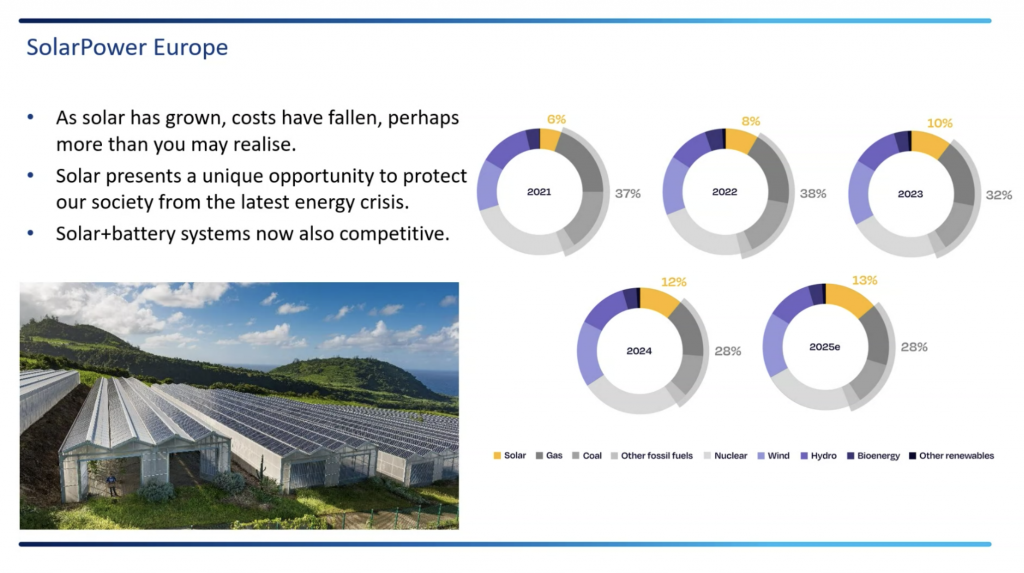
According to data presented during the webinar, retail electricity prices across Europe averaged approximately €250 per megawatt-hour last year, while commercial solar generation can often be produced for around €80 per megawatt-hour or less, depending on local market conditions.
At the same time, battery storage technology has undergone rapid transformation. Battery deployment across the European Union has increased tenfold over the past five years, allowing organisations to store electricity generated during the day and use it when demand is highest.
“Solar first can lower your bills today, and second can protect you from future price shocks,” Rossi said.
For football organisations that operate floodlights, hospitality facilities, offices, training centres and increasingly electric vehicle fleets, the ability to secure predictable long-term energy costs is becoming a significant strategic advantage.
"Solar first can lower your bills today, and second can protect you from future price shocks,"
Turning Stadium Roofs into Power Plants
Few organisations understand the potential of sports infrastructure better than global architecture firm Populous.
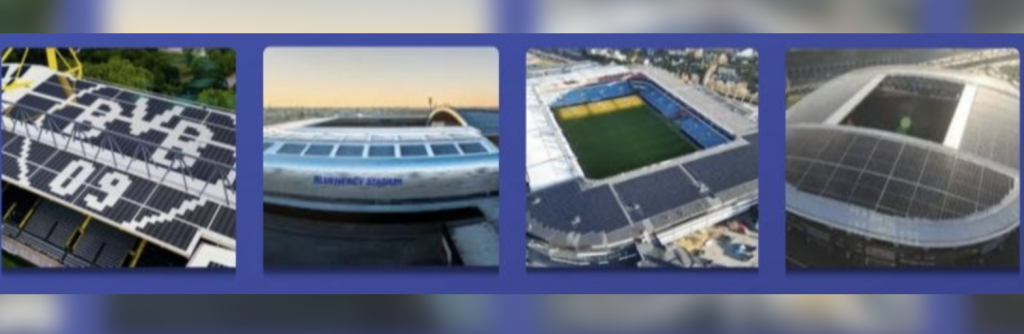
Presenting the example of Fulham FC’s Riverside Stand development, Senior Designer Somesh Tripathi described how stadium roofs are increasingly being designed as energy assets rather than simply structural necessities.
The project incorporates approximately 900 solar panels covering around 1,600 square metres, generating approximately 280,000 kWh of renewable electricity annually while reducing carbon emissions by more than 130 tonnes each year.
“Ten years ago the question was whether we should have solar or not,” said Tripathi. “Today the first question stakeholders ask is how much energy can be generated.”
The shift reflects a broader change in stadium design philosophy.
“Traditionally we asked how many seats, how much cover and how much hospitality. Today we’re asking how much energy the roof can generate, how much carbon we can save and how it contributes to net-zero commitments.”
As new venues target net-zero operations, solar generation, battery storage and energy-efficient design are increasingly becoming integral parts of the architectural brief rather than optional additions.
"Ten years ago the question was whether we should have solar or not. Today the first question stakeholders ask is how much energy can be generated. Traditionally we asked how many seats, how much cover and how much hospitality. Today we're asking how much energy the roof can generate, how much carbon we can save and how it contributes to net-zero commitments."
Creating Value Beyond the Stadium
While many clubs are focused on reducing their own energy costs, FC Porto is demonstrating how football infrastructure can create wider community benefits.
The Portuguese club has developed a network of renewable energy communities centred around its facilities, including the Estádio do Dragão and the club’s training centre at Olival.
According to Ricardo Carvalho, FC Porto’s Sports Facility Assessment Asset Manager, the training centre now generates approximately twice the electricity required for its own operations.
Rather than limiting production, the club distributes surplus renewable energy to neighbouring households.
“If you live on the other side of the street from the training centre, you are consuming green energy from us,” Carvalho explained.
The approach transforms football infrastructure from a passive energy consumer into an active contributor to local sustainability goals, creating social and economic value alongside environmental benefits.
"If you live on the other side of the street from the training centre, you are consuming green energy from us,"
A Model for Emerging Football Nations
The potential of solar energy is also attracting attention beyond Europe’s largest football markets.
The Football Federation of Bosnia and Herzegovina is currently exploring the integration of solar technology into plans for a new national stadium and associated training facilities.
For Mirela Rašić, the federation’s Club Licensing and Sustainability Manager, the project represents an opportunity not only to reduce costs but to demonstrate leadership within the region.
“We want to lead by example, lower our costs and encourage others in the community to believe in the potential of solar.”
Despite challenges around financing and regulatory frameworks, the federation is exploring support from UEFA’s HatTrick infrastructure programme alongside potential funding from European development institutions.
The project highlights how renewable energy is becoming part of football’s long-term infrastructure planning regardless of market size or geography.
"We want to lead by example, lower our costs and encourage others in the community to believe in the potential of solar."
From Awareness to Action
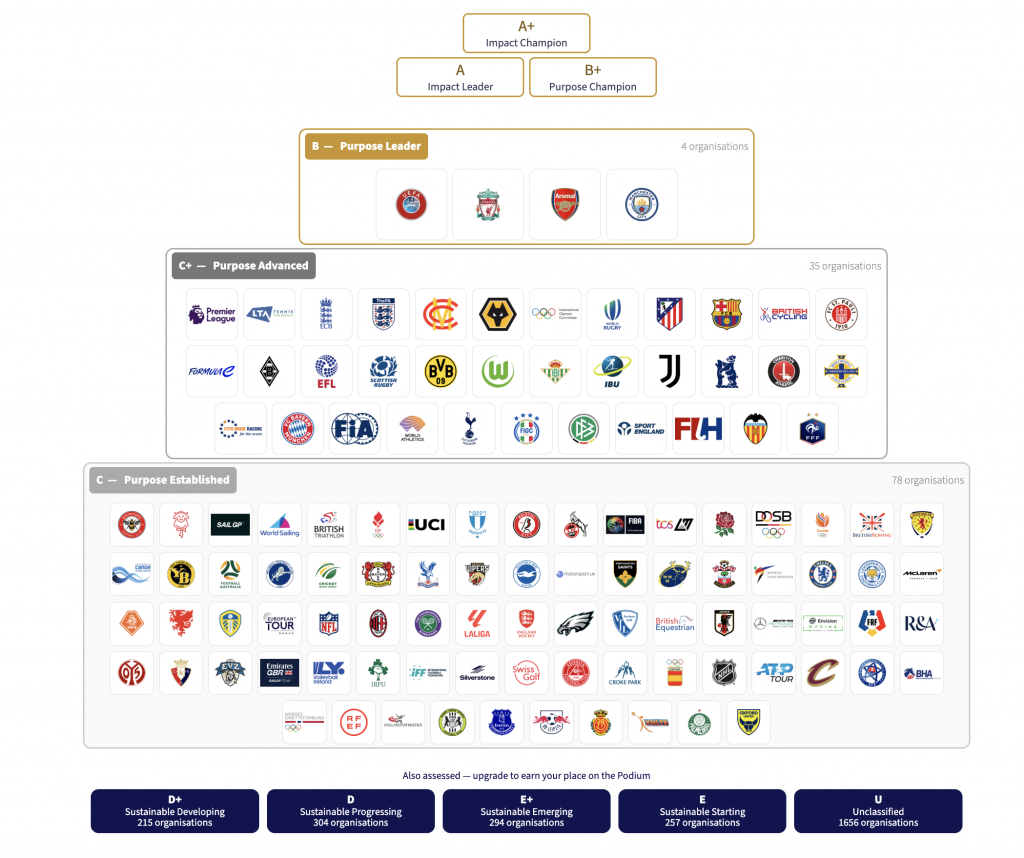
The growing focus on renewable energy infrastructure reflects a wider trend identified within the recently published GSS SPI Index. UEFA currently ranks among the Top 10 most purposeful sports organisations globally, with its infrastructure sustainability strategy demonstrating how leading organisations are moving beyond awareness and commitments towards measurable action and impact. The transition from sustainability policy to operational delivery is increasingly becoming a distinguishing characteristic of the highest-performing organisations across the sport sector.
"Remember that you are not alone. There is a whole community that is ready to help you. We can resolve a lot of this complexity, whether administrative, financial or technical."
Winning the Long Game
For UEFA, the message is ultimately one of collaboration and practicality. Whether through rooftop solar, community energy projects, battery storage systems or power purchase agreements, football organisations now have more pathways than ever to participate in the clean energy transition.
As Reulet concluded:
“Remember that you are not alone. There is a whole community that is ready to help you. We can resolve a lot of this complexity, whether administrative, financial or technical.”
By taking that first step, football may discover that some of its most important sustainability victories will be achieved not on the pitch, but on the roofs above it.
Read moreUEFA













Join the GSS Alliance Partners programme today
Stay ahead of the game with our FREE weekly newsletter, delivering the latest sport and sustainability news from around the globe straight to your inbox

11th Hour Racing
Join the GSS Network programme today



Register for GSS Workshops today
Join the GSS Education programme today