
To access our unique news archive of over 1,400 articles with insights on over 500+ sustainable sports organisations, join the GSS Network today.
Login here if you are a registered network subscriber.
News article
The Green Breakaway: How Eroica is Turning Cycling Heritage into a Sustainability Movement
In an era when sustainability is often associated with new technologies and future-focused innovation, one of cycling's most compelling environmental stories is rooted firmly in the past.
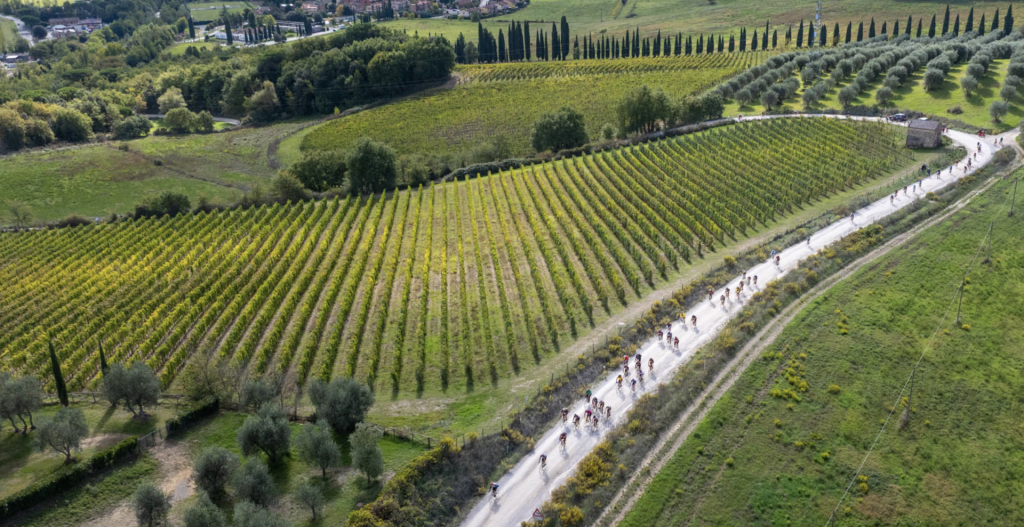
Italian cycling event organiser Eroica Italia SSD has built an international movement around vintage bicycles, historic roads and traditional cycling culture. Yet behind the nostalgic imagery lies a sophisticated sustainability strategy that is helping preserve landscapes, support local communities and promote responsible tourism across Tuscany.
Featured in the first edition of the UCI’s new Green Breakaway series, Eroica demonstrates how environmental responsibility can be woven into the very identity of a sporting event rather than added as an afterthought.
Founded in 1997 by Giancarlo Brocci, L’Eroica was originally created to protect Tuscany’s historic strade bianche – the white gravel roads that were increasingly under threat from modernisation. What began with fewer than 100 riders has grown into an internationally recognised event attracting more than 9,000 participants each year.
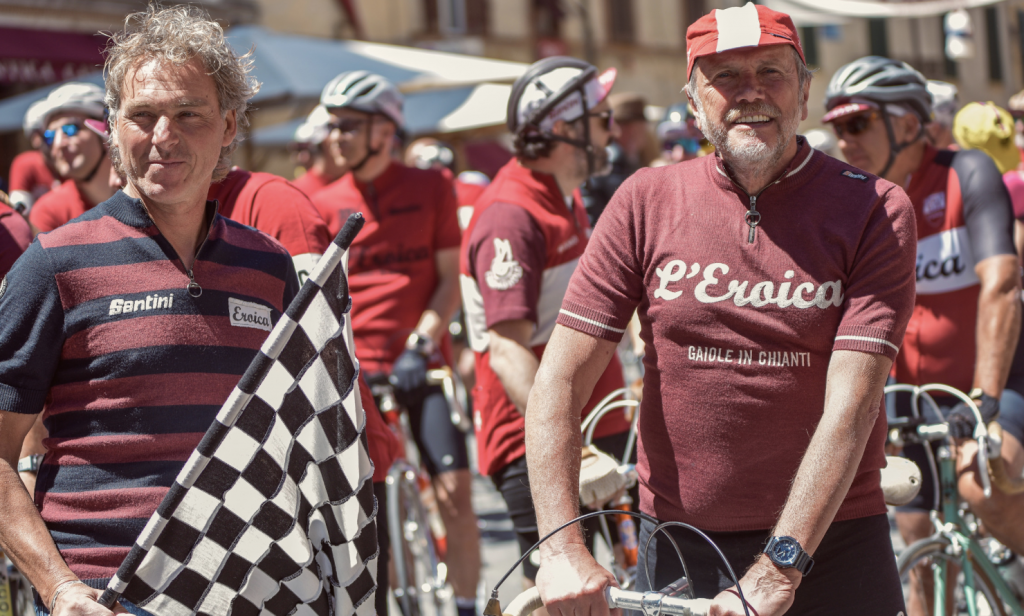
Sustainability by Design
The principles that inspired Eroica’s creation have evolved into a structured sustainability programme known as Eroica for the Environment.
The organisation’s approach is built around three interconnected pillars: environmental protection, economic development and social cohesion. Environmental initiatives focus on reducing resource consumption, increasing the use of renewable energy and adopting sustainable materials. Economically, Eroica seeks to support local producers, sustainable tourism and regional supply chains. Socially, it aims to strengthen community participation and ensure the benefits of its events extend beyond race day.
These commitments have been formalised through a Sustainability Manual that provides guidance not only for Eroica’s own operations but also for partners, sponsors and stakeholders seeking to align with its values.
Circular Economy on Two Wheels
Perhaps the most distinctive aspect of Eroica’s sustainability model is that circularity is embedded directly into the event format.
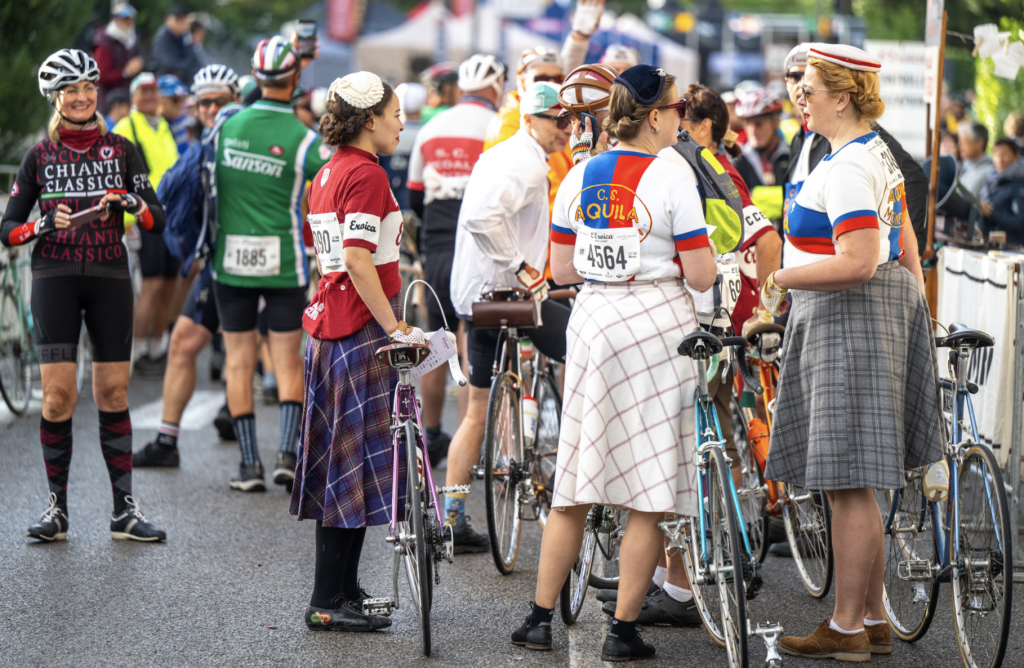
Participants ride steel-framed bicycles manufactured before 1987 and wear traditional cycling apparel that has often been repaired, restored and reused over many years. What began as a celebration of cycling heritage has become an example of circular economy principles in action.
The same philosophy extends to event operations. Race numbers are produced using recycled fabrics and ecological inks, while race packs feature reusable materials and locally sourced products.
As Alessandra Ortenzi, Head of Special Projects and ESG Strategy at Eroica Italia, explains:
“Five years ago, proposing sustainable materials at refreshment stops was considered a risk. Today, it is the norm.”
"Five years ago, proposing sustainable materials at refreshment stops was considered a risk. Today, it is the norm."
Communities at the Heart of the Journey
Eroica’s sustainability ambitions extend well beyond environmental management.
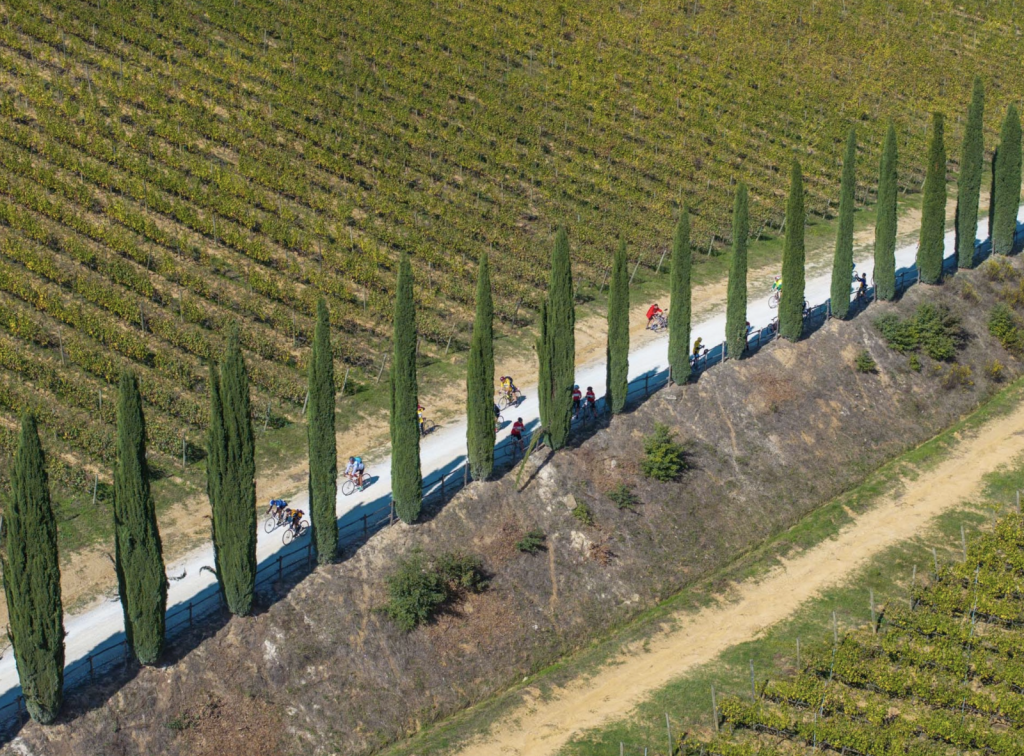
Through its Adotta un Chilometro (Adopt a Kilometre) initiative, local associations and community groups take responsibility for maintaining sections of the event’s routes across 17 municipalities. Volunteers help preserve nearly 290 kilometres of historic roads through regular clean-up activities and stewardship programmes.
The organisation has also partnered with Italy’s Ministry of Environment and Energy Security (MASE) to develop the Sustainable Cycling Manifesto and map more than 200 cycling routes connecting protected landscapes and rural communities across Italy.
The initiative arrives at a time when cycle tourism is becoming an increasingly important economic driver. According to figures highlighted by Eroica, cycle tourism generated approximately €6.4 billion for local economies in Italy during 2025, supported by around 49 million overnight stays.
A Model for Sustainable Cycling
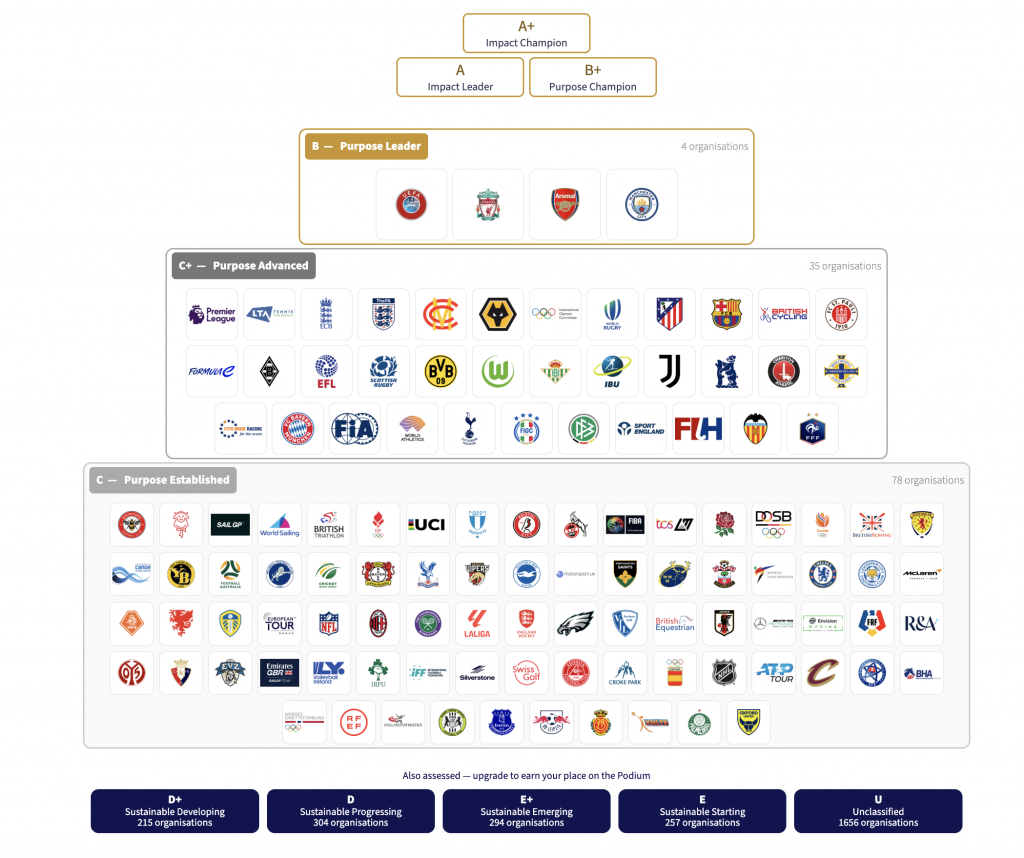
The wider cycling movement is also making progress in this area. Through initiatives such as the UCI Climate Action Charter, the sport is increasingly demonstrating how environmental responsibility can be embedded across events, teams and governing bodies. This leadership is reflected in the 2026 Global Sustainable Sport (GSS) SPI Index, where the UCI is currently ranked among the Top 50 most purposeful sports organisations in the world, recognising its commitment to climate action, sustainable mobility and the long-term development of cycling as a force for positive environmental change.
Yet what makes Eroica particularly noteworthy is that sustainability is not a separate programme layered onto an existing event. Instead, it flows naturally from the organisation’s founding purpose: preserving landscapes, protecting heritage and strengthening communities.
In doing so, Eroica offers an important reminder to the wider sports sector. Sometimes the most innovative sustainability solutions are not about creating something entirely new. They are about recognising the value of what already exists and ensuring it can be enjoyed for generations to come.
Read moreUCI






Join the GSS Alliance Partners programme today
Stay ahead of the game with our FREE weekly newsletter, delivering the latest sport and sustainability news from around the globe straight to your inbox
11th Hour Racing
Join the GSS Network programme today



Register for GSS Workshops today
Join the GSS Education programme today