
To access our unique news archive of over 1,400 articles with insights on over 500+ sustainable sports organisations, join the GSS Network today.
Login here if you are a registered network subscriber.
News article
Reimagining Delivery: How Trivandi’s Embedded Model Could Transform the Future of Multi-Sport Events
The future of international multi-sport events may not be defined by bigger stadiums, larger budgets or increasingly complex delivery structures. Instead, it could lie in something far simpler: bringing experience into the organising committee from day one.
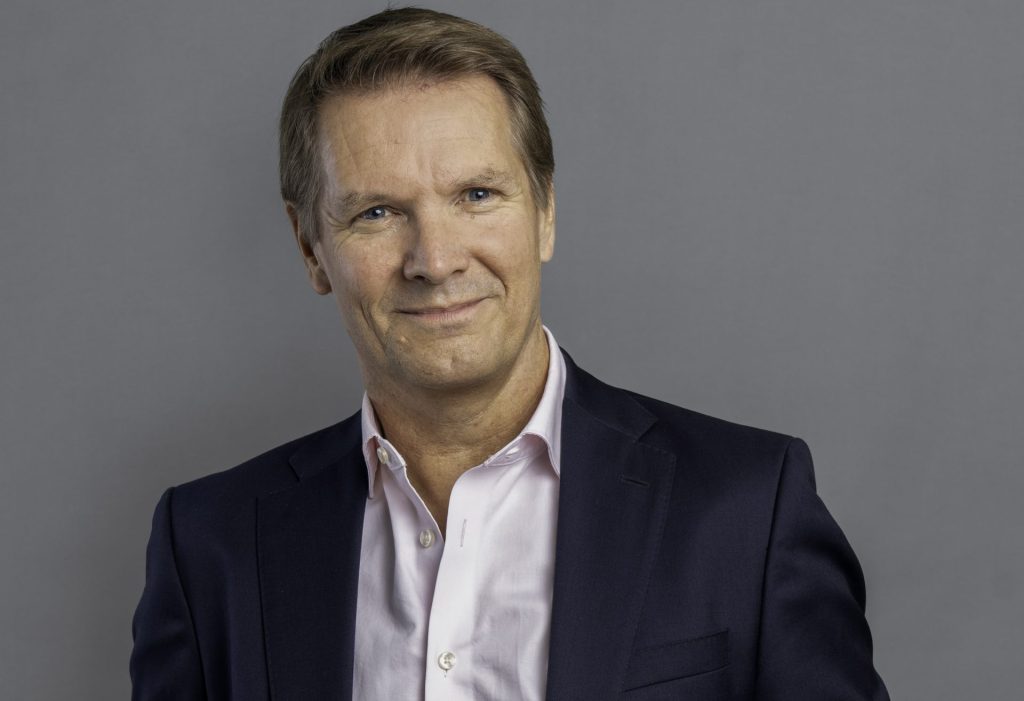
Speaking to Global Sustainable Sport during an exclusive interview at the Glasgow 2026 Commonwealth Games, Trivandi CEO James Bulley outlined what may prove to be one of the most significant innovations emerging from the Games—not a new venue or sporting format, but a fundamentally different approach to delivering major events. It is a model that replaces the traditional client-contractor relationship with an embedded delivery partnership, ensuring decades of accumulated Games expertise sits alongside organisers from the very beginning rather than arriving later as an external supplier.
Rather than acting as a traditional contractor, Trivandi became part of the organising committee itself.
“Rather than it being a client-supplier relationship, we’re actually embedded inside the organising company… owning the challenges, owning the problems, owning the decisions.”
It is a model that replaces the traditional client-contractor relationship with an embedded delivery partnership, ensuring decades of accumulated Games expertise sit alongside organisers from the very beginning rather than arriving later as an external supplier.
Combined with Glasgow’s “Reimagined Games” concept—built around existing infrastructure, financial responsibility and long-term impact—the approach offers an alternative blueprint for cities increasingly reluctant to host ever more expensive mega-events.
"Rather than it being a client-supplier relationship, we're actually embedded inside the organising company... owning the challenges, owning the problems, owning the decisions."
From Starting Again to Starting Smarter
One of the enduring weaknesses of major sporting events is that every organising committee effectively starts from scratch.
Host cities recruit new leadership teams, build temporary organisations, spend years developing expertise and, just as those teams become highly experienced, the event concludes and much of that knowledge disperses.
Bulley believes that cycle is no longer necessary.
Instead of relying on handover reports and archived documentation, Trivandi brings experienced Games professionals directly into the organising committee, allowing lessons from hundreds of previous events to inform decisions from the outset.
“One of the things we’ve tried hard to do in Trivandi is make sure that every event we do, we do it better by learning from the previous event.” Bulley explained.
He argues that knowledge is far more than documents and data.
“Quite often the leadership have never done Games before, and they’re drawing on files and data that have got no interpretation or explanation as to how that decision was made. We have over 110 staff who are able to bring lessons from not just the previous event, but more than 300 major events. That’s building a body of knowledge so decisions are informed by experience.”
It is a subtle but profound shift.
Rather than each Games rediscovering the same solutions, institutional knowledge travels with the delivery team.
"One of the things we've tried hard to do in Trivandi is make sure that every event we do, we do it better by learning from the previous event ... quite often the leadership have never done Games before, and they're drawing on files and data that have got no interpretation or explanation as to how that decision was made. We have over 110 staff who are able to bring lessons from not just the previous event, but more than 300 major events. That's building a body of knowledge so decisions are informed by experience."
Closing the Strategy-Delivery Gap
Perhaps the most innovative aspect of Glasgow 2026 is what Bulley describes as the Embedded Delivery Partner (EDP) model.
Traditionally, organisers spend several years developing strategies, objectives and legacy ambitions before appointing contractors to deliver specific services. Those suppliers often arrive with their own contractual objectives, creating what Bulley calls a “strategy-delivery gap”.
Glasgow has taken a different approach.
Rather than operating as an external contractor, Trivandi has become part of the organising committee itself.
“Rather than it being a client-supplier relationship, we’re actually embedded inside the organising company… owning the challenges, owning the problems, owning the decisions.”
He believes that fundamentally changes the way events are delivered.
“It closes what we call the strategy-delivery gap… being embedded fully in the organising committee gives us complete end-to-end responsibility and understanding of the objectives that we then deliver against.”
Instead of handing over responsibility at various stages, the same experienced team helps shape the strategy before delivering it.
That continuity reduces duplication, speeds decision making and ensures delivery remains aligned with the original vision.
"Rather than it being a client-supplier relationship, we're actually embedded inside the organising company... owning the challenges, owning the problems, owning the decisions ... it closes what we call the strategy-delivery gap... being embedded fully in the organising committee gives us complete end-to-end responsibility and understanding of the objectives that we then deliver against."
A Model Built for Today’s Economic Reality
The embedded delivery model fits naturally alongside Glasgow’s wider vision for the Commonwealth Games.
As Global Sustainable Sport previously reported, Glasgow 2026 has deliberately reimagined the Games around existing venues, compact geography, financial responsibility and long-term community benefit rather than expansion for its own sake. Organisers describe it as the “Reimagined Games”—a model intended to demonstrate that smaller, focused events can still deliver world-class experiences while remaining financially viable for future hosts.
Bulley believes the delivery structure is equally important.
Instead of employing large permanent teams over six or seven years, organisers can access specialist expertise precisely when required.
“With the model we’ve got here, you literally dial up, dial down, switch off, switch on people. We can bring in the right person at the right time to do the right piece of work… so you’re not incurring a lifetime cost.”
For cities facing growing financial pressures, that flexibility could become increasingly attractive.
It reduces long-term staffing costs while ensuring experienced specialists are available exactly when needed.
"With the model we've got here, you literally dial up, dial down, switch off, switch on people. We can bring in the right person at the right time to do the right piece of work... so you're not incurring a lifetime cost."
Glasgow as the Proof of Concept
The circumstances surrounding Glasgow 2026 have made it an ideal test case.
Following Victoria’s withdrawal as host, Glasgow inherited an exceptionally compressed delivery timetable. Trivandi joined the project with just 400 days remaining before the opening ceremony.
Under conventional procurement models, that timetable would have posed enormous risks.
Bulley believes the embedded partnership made it achievable, working alongside Glasgow 2026 Chief Executive Phil Batty and his team to integrate experienced event delivery expertise directly into the organising committee.
“That model can work if you’re fully embedded as owning the organising committee’s responsibilities to make those decisions.”
He argues that separating delivery partners from organisers within such a short timeframe would have made successful delivery significantly more difficult.
Instead, the integrated structure enabled rapid decision-making while maintaining strategic alignment throughout the project.
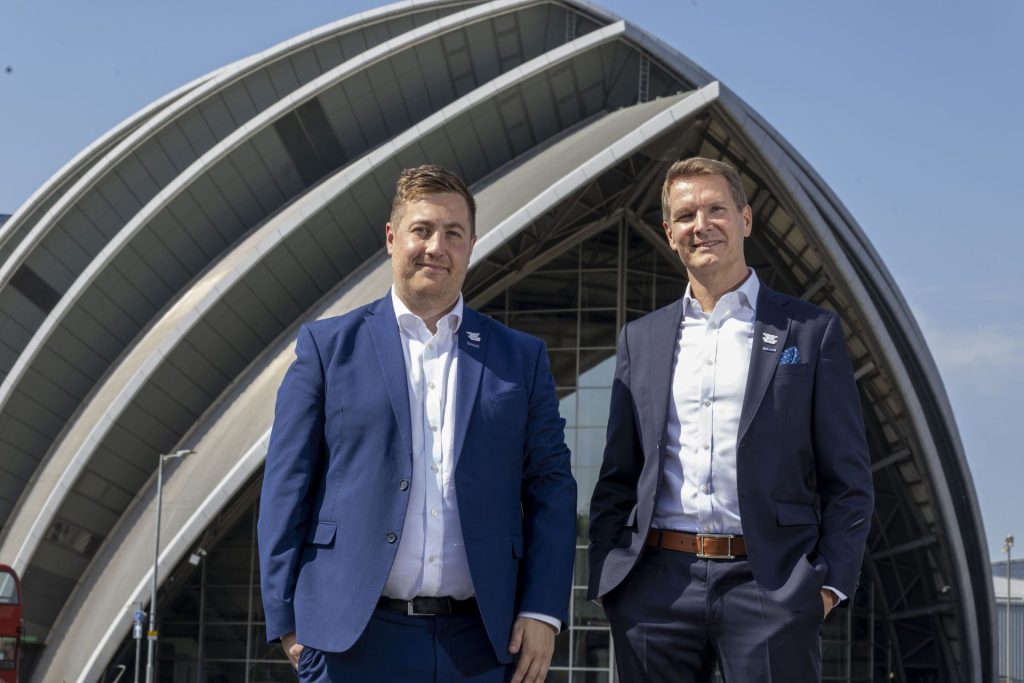
"That model can work if you're fully embedded as owning the organising committee's responsibilities to make those decisions."
Right-Sizing Rather Than Upscaling
The delivery philosophy extends beyond governance into the physical design of the Games.
Rather than adapting Glasgow to fit a traditional Commonwealth Games model, the event has been designed around Glasgow itself.
Existing venues are being utilised wherever possible.
Sports have been selected to reflect local facilities and interest.
Temporary infrastructure has been minimised.
Accommodation is largely hotel-based rather than centred on a purpose-built athletes’ village.
Bulley believes this “right-sizing” represents a more sustainable future for multi-sport events.
“There is an opportunity for cities to right-size the Games for their cities.”
He points to swimming, athletics and other venues that now fit comfortably within existing infrastructure rather than requiring expensive temporary expansion.
The emphasis shifts from building more to making better use of what already exists.
That philosophy mirrors the wider ambitions outlined by Glasgow 2026, where sustainability, financial responsibility and legacy are embedded across planning and operations rather than treated as separate workstreams.
"There is an opportunity for cities to right-size the Games for their cities."
Knowledge as a Lasting Legacy
Perhaps the greatest legacy of Glasgow 2026 will not be measured in medals or infrastructure but in organisational learning.
Major sporting events have long focused on transferring knowledge through reports, manuals and post-event reviews.
The embedded delivery model suggests there may be a more effective approach: transferring people.
Experienced professionals carry not only technical knowledge but also judgement, context and practical understanding that cannot easily be captured in documentation.
By combining international expertise with local teams—as Trivandi has done in Glasgow—the model also leaves behind enhanced capability within the host city itself.
It transforms knowledge transfer from a one-off handover into a continuous process of learning and improvement.
The Real Legacy May Be the Delivery Model
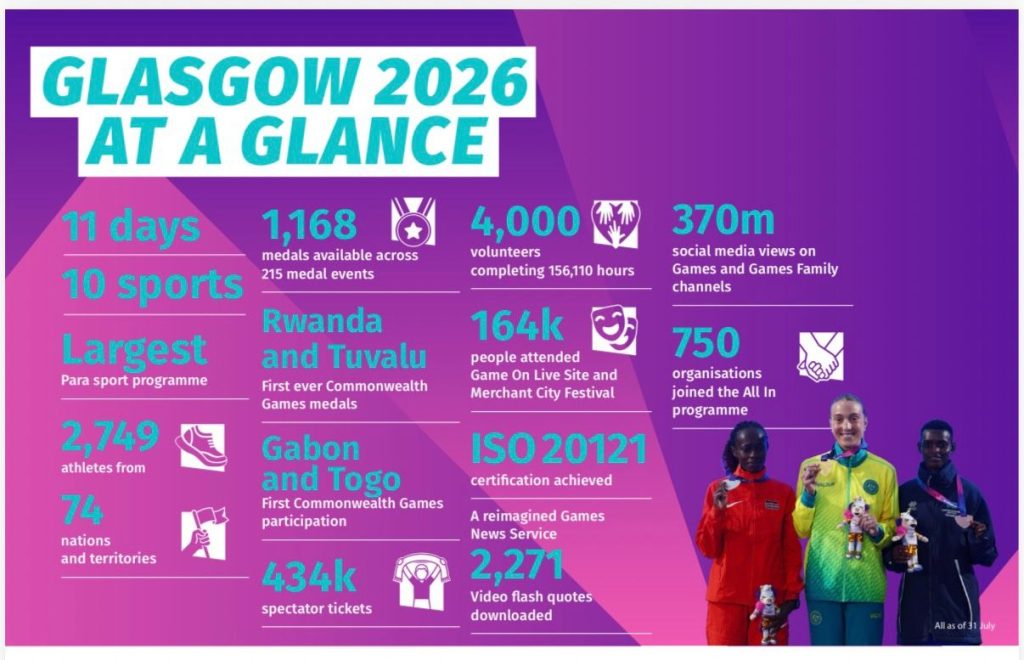
As Glasgow 2026 draws to a close, the debate surrounding the future of the Commonwealth Games is unlikely to disappear. Questions remain over television audiences, commercial value and whether the Games can continue to attract the world’s biggest athletes. Critics have argued that Glasgow simply delayed an inevitable decline, while supporters point to packed venues, positive athlete experiences and a successful delivery achieved under extraordinary circumstances.
One important caveat remains. As Bulley acknowledges, Glasgow benefited from the financial settlement that followed Victoria’s withdrawal, with Commonwealth Sport using that compensation to help fund a Games delivered for around £160 million without direct taxpayer funding. That unique set of circumstances may not be repeated for future hosts.
Yet perhaps the most important lesson from Glasgow has little to do with budgets. It is the demonstration that major multi-sport events do not have to begin with a blank sheet of paper. By embedding experienced delivery specialists inside the organising committee from the outset, aligning strategy with delivery and designing the event around the capabilities of the host city, Glasgow has provided a practical blueprint that could extend well beyond the Commonwealth Games.
Attention now turns to Ahmedabad in 2030, where the Commonwealth Games will celebrate their centenary against the backdrop of India’s wider Olympic ambitions. Organisers are expected to expand the sports programme once again while continuing to rely heavily on existing facilities.
Whether the next host adopts Glasgow’s embedded delivery model may prove every bit as important as the sports it chooses. If the Commonwealth Games are to thrive for another century, their future may depend not simply on where they are staged, but on how they are delivered.
Read moreTrivandi















Join the GSS Alliance Partners programme today
Stay ahead of the game with our FREE weekly newsletter, delivering the latest sport and sustainability news from around the globe straight to your inbox
11th Hour Racing
Join the GSS Network programme today
15-16 October, 2026
Gtech Community Stadium,
London (UK)
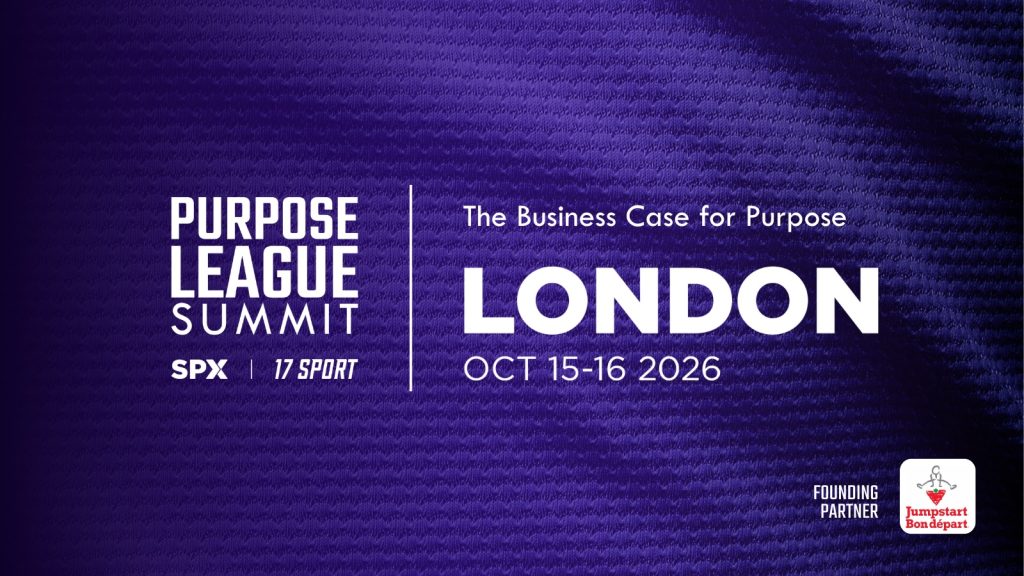
The SPX Purpose League Summit is a working summit for decision-makers interested in activating sport in a purpose-led way. Attendees will leave with an aligned peer network, data-backed insights, and the strategic commercial toolkits to transform sponsorship from an outsourced marketing expense into the single greatest driver of value.


Register for GSS Workshops today
Join the GSS Education programme today