
To access our unique news archive of over 1,400 articles with insights on over 500+ sustainable sports organisations, join the GSS Network today.
Login here if you are a registered network subscriber.
News article
COP31: Athletes warn climate change threatens the future of sport as leaders call for urgent action
Climate change is becoming an increasingly serious threat to the future of sport, with athletes, sporting organisations and political leaders warning that extreme weather is already affecting competitions, infrastructure and the communities that depend on sport.
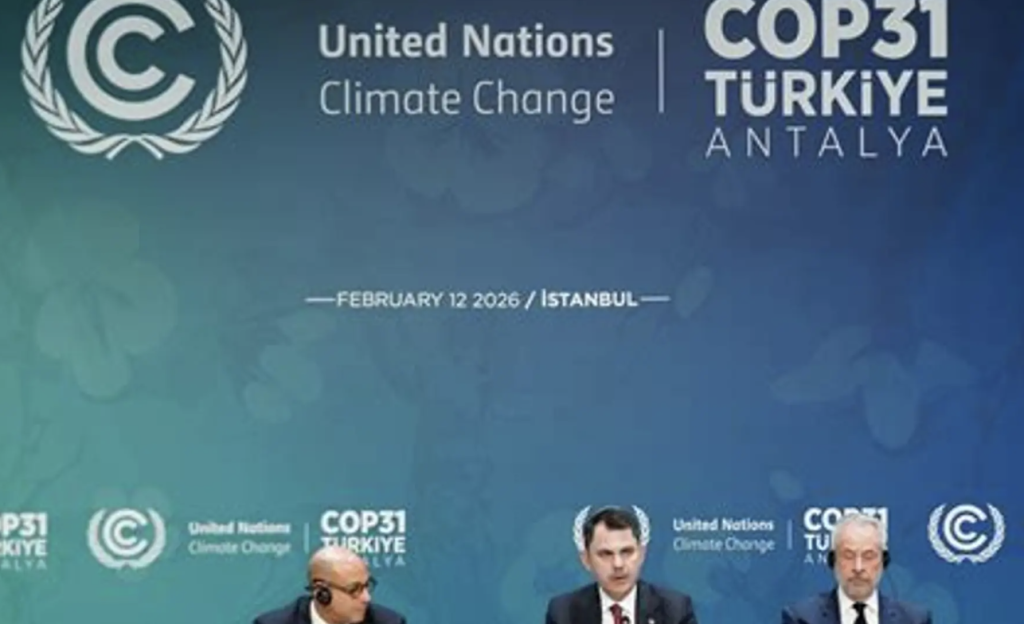
At COP31 in Antalya, Turkey, sport has enjoyed greater visibility than at previous UN climate summits, with Olympic champions and international sporting organisations highlighting the urgent need for climate adaptation alongside emissions reduction.
Writing in The Guardian, Dom Goggins, Chief Executive of the British Association for Sustainable Sport (BASIS), reflected on the growing importance of sport within international climate discussions and the challenges facing an industry increasingly exposed to environmental and financial risks.
Athletes highlight the human consequences
Olympic champions Michelle Gisin and Charlotte Kalla joined former Olympians Danielle Alakija and Kevin Wekesa in describing how climate change is transforming the environments in which athletes train and compete.
Alakija, who represented Fiji at London 2012, described how rising sea levels had already destroyed an island she regularly visited during childhood.
“There’s such a need for urgency and action,” she warned.
"There's such a need for urgency and action,"
Kenyan rugby sevens Olympian Kevin Wekesa questioned whether future generations would even have suitable conditions in which to participate.
“The real question is will we still have a sport to play,” he said.
"The real question is will we still have a sport to play,"
Reflecting on their experiences, Goggins observed:
“A warming projection can feel remote. A mountain without snow, a pitch under water or a child kept indoors brings it home.”
"A warming projection can feel remote. A mountain without snow, a pitch under water or a child kept indoors brings it home."
Sport faces an economic and environmental crisis
Goggins highlighted the growing financial consequences of climate change for sporting organisations, including cancelled competitions, damaged facilities, rising insurance premiums and volatile energy costs.
“Sport also has a business problem,” he wrote, highlighting the industry’s dependence on delivering events at particular times and locations.
"Sport also has a business problem,"
Research published by BASIS ahead of COP31 reinforces these concerns.
Its report, The Game Has Changed, found that every organisation responding to its survey had experienced extreme-weather impacts during 2026, while 94% believed sport was insufficiently prepared for the climate crisis.
The findings underline the need for sporting organisations to incorporate climate adaptation and resilience into their long-term financial and operational planning.
Andy Burnham calls for clean energy transition
Political leadership also featured prominently at COP31, with Andy Burnham identified by Goggins as the only G7 leader attending the summit.
Burnham advocated widespread electrification and greater investment in clean energy to reduce emissions, lower costs, create employment and strengthen energy security.
Goggins welcomed his intervention but emphasised that political commitments must translate into practical outcomes.
“Delivery will decide the result,” he wrote.
"Delivery will decide the result,"
The wider challenge for COP31 is turning existing climate agreements into tangible progress, particularly through climate finance, adaptation investment and accelerating the transition away from fossil fuels.
Sport must become central to climate action
UEFA highlighted investments in climate adaptation, while the UN Sports for Climate Action Framework continues encouraging organisations to reduce emissions and strengthen resilience.
UN climate chief Simon Stiell also recognised sport’s distinctive ability to communicate climate challenges to audiences beyond traditional environmental discussions.
Goggins argued that sport’s global reach offers an important opportunity to engage communities and make climate change relevant to everyday life.
“Sport has been more visible at this Cop than most others, though it’s still quite peripheral,” he observed.
"Sport has been more visible at this Cop than most others, though it's still quite peripheral,
He suggested that future climate summits should place athletes more centrally within discussions, recognising their ability to communicate the consequences of environmental change.
For sporting organisations, the message from Antalya is increasingly clear. Climate action is no longer simply about environmental responsibility. It is fundamental to protecting participation, safeguarding infrastructure and ensuring the long-term economic sustainability of sport.
Read moreDom Goggins for the Guardian



















Join the GSS Alliance Partners programme today
Stay ahead of the game with our FREE weekly newsletter, delivering the latest sport and sustainability news from around the globe straight to your inbox




11th Hour Racing
Join the GSS Network programme today





Register for GSS Workshops today
Join the GSS Education programme today