
To access our unique news archive of over 1,400 articles with insights on over 500+ sustainable sports organisations, join the GSS Network today.
Login here if you are a registered network subscriber.
News article
Racing Towards a Sustainable Future: Motorsport Circuits Move from Commitment to Action
The sustainability conversation in motorsport has often focused on championships, manufacturers and governing bodies. Yet one of the clearest indicators of the sport's wider progress can be found at the venues that host it.
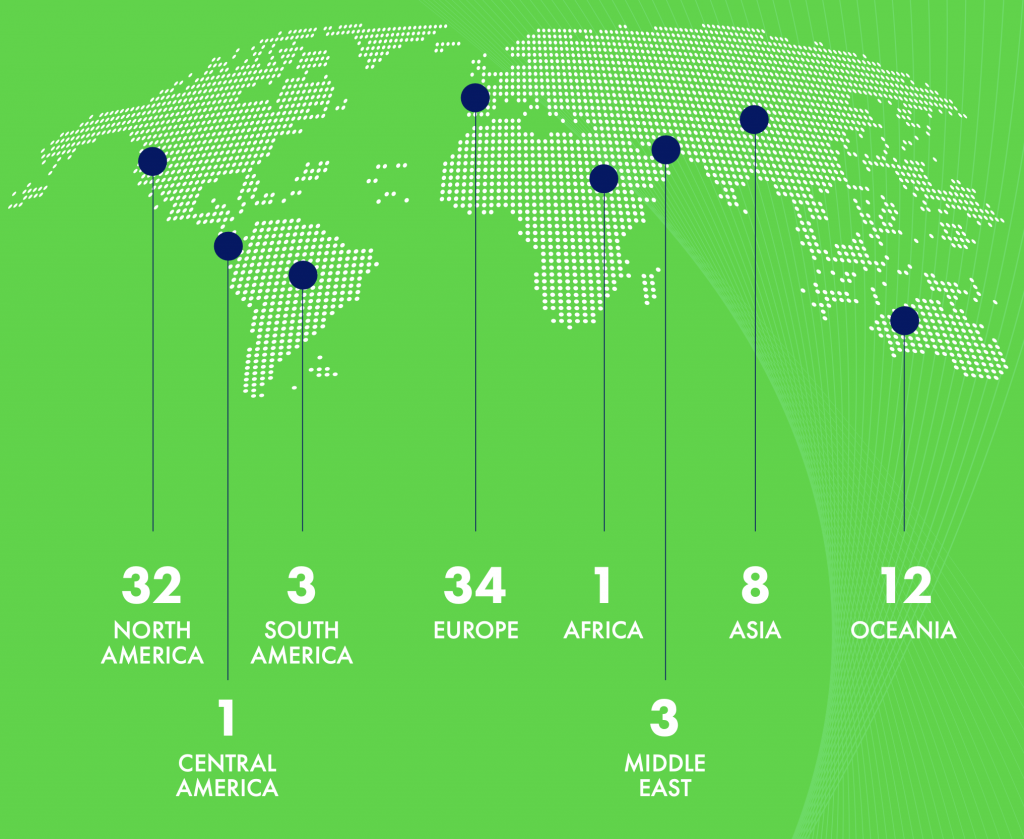
The sixth edition of the Sustainable Circuits Index™ (SCI™), published by Enovation Consulting and independently verified by the UCL School of Management, provides a comprehensive assessment of 115 permanent and temporary motorsport venues worldwide. More importantly, it offers a valuable snapshot of how sustainability performance across the sector has evolved over the past six years.
The headline finding is encouraging. Sustainability leadership is no longer confined to a small group of pioneers. Increasingly, circuits across the world are moving beyond ambition and beginning to demonstrate measurable action.
From Individual Leaders to Industry Momentum
The rankings themselves remain impressive.
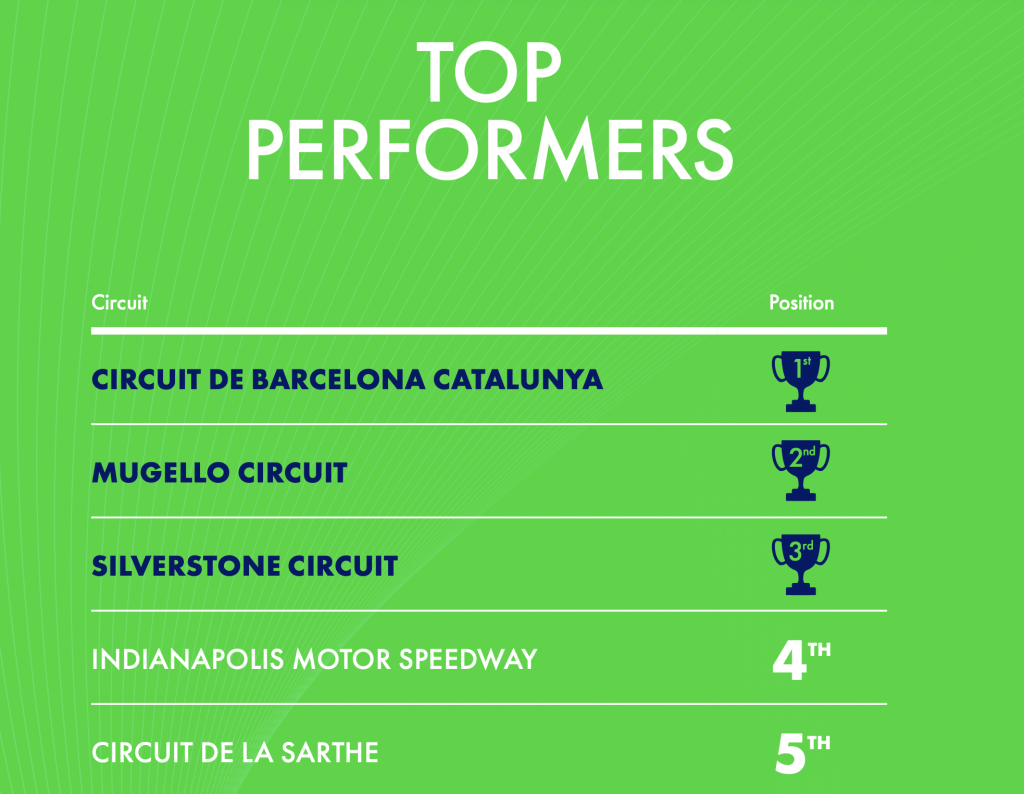
Spain’s Circuit de Barcelona-Catalunya retained its position as the world’s leading sustainable motorsport circuit, ahead of Italy’s Mugello Circuit and the UK’s Silverstone Circuit. Indianapolis Motor Speedway climbed to fourth place following a significant improvement, while Circuit de Spa-Francorchamps entered the top ten after a strong year of progress.
Yet focusing solely on the podium risks missing the bigger story.
The 2026 SCI reveals that 43 permanent circuits improved their sustainability scores during 2025, ten more than in the previous edition. Meanwhile, the number of circuits remaining on zero points has continued to fall, indicating that more venues are beginning to engage with sustainability in a structured and meaningful way.
Perhaps most significantly, the number of circuits achieving the highest “4 Cup” rating has increased from two to four. For several years, Barcelona and Mugello stood alone at the top of the rankings. Silverstone and Indianapolis Motor Speedway have now joined them, demonstrating that the gap between the leaders and the chasing pack is beginning to narrow.
Measuring Progress Beyond the Headlines
One of the strengths of the SCI is that it allows year-on-year progress to be tracked across a broad range of sustainability indicators.
The report’s mid-decade review shows just how far the sector has travelled since the first edition of the Index in 2020.
The number of circuits holding recognised sustainability certifications has increased from nine to 21. FIA Environmental Accreditations have grown from just three venues to 21. Waste management and circular economy initiatives are now evident at 54 permanent circuits compared with only four six years ago. Accessibility initiatives have expanded from 18 circuits to 67.
These are not superficial changes. They represent a growing commitment to embedding sustainability into the operational fabric of motorsport venues.
The findings also suggest that sustainability is becoming increasingly mainstream. While the industry’s leaders continue to set the pace, a broader group of circuits is beginning to make tangible progress, moving from low or medium performance categories into higher levels of achievement.
"The continued progress we are seeing across Circuits demonstrates that sustainability is becoming an integral part of how motorsport venues operate and evolve. This year's results have shown an increasing of actions, focused on community and operational efficiency , with a number of circuits implementing meaningful initiatives beyond major events."
Beyond Environmental Performance
Another notable trend emerging from the report is the increasing breadth of sustainability activity taking place across motorsport venues.
Environmental initiatives remain central, particularly around renewable energy, waste management, biodiversity and sustainable transport. However, the SCI assesses a much wider range of indicators, including accessibility, community engagement, economic impact, governance, sustainability reporting and stakeholder engagement.
This reflects a changing understanding of what sustainability means in practice.
Modern circuits are no longer simply race venues. Many have evolved into year-round destinations hosting concerts, conferences, corporate events and community programmes. As their role expands, so too does their potential impact on local communities, economies and wider society.
The strongest performers increasingly recognise that sustainability extends beyond carbon reduction. It includes accessibility, social inclusion, economic contribution, ethical governance and the ability to influence millions of fans and visitors who pass through their gates each year.
The Next Challenge: Governance, Reporting and Impact
While the report highlights considerable progress, it also points towards the next stage of the journey.
The SCI methodology focuses exclusively on publicly available information and only awards points for actions that have been implemented and evidenced. Future ambitions and unfulfilled commitments are not considered.
That emphasis on transparency is becoming increasingly important.
As sustainability programmes mature, the challenge for many circuits will be less about launching new initiatives and more about measuring outcomes, reporting progress and demonstrating long-term impact. Strong governance frameworks, robust reporting processes and clearly articulated sustainability strategies are becoming essential components of credible sustainability leadership.
This is particularly important as circuits face growing pressure from climate change itself. Extreme heat, flooding, water scarcity and increasingly unpredictable weather patterns are becoming operational realities for venues across the world. Sustainability is therefore no longer simply a reputational issue; it is becoming a matter of resilience and long-term viability.
"Circuits are becoming increasingly transparent in communicating their progress. Through the Sustainable Circuits Index, our goal has always been to provide the industry with a data-driven robust benchmark that encourages continuous improvement, fosters the sharing of best practices, and supports the transition to add value and future period the sport."
Closing the Gap
The most significant conclusion from the 2026 Sustainable Circuits Index is not that Circuit de Barcelona-Catalunya remains number one, or that Silverstone has joined the industry’s elite.
It is that sustainability leadership is becoming more widely distributed across the sector.
Six years ago, a small group of circuits stood well ahead of the field. Today, more venues are achieving recognised certifications, implementing accessibility initiatives, embracing circular economy principles and integrating sustainability into their strategic planning.
The leaders still matter. They continue to provide examples of what good practice looks like. But the real success story of the 2026 SCI may be that sustainability is no longer a niche pursuit within motorsport. It is increasingly becoming part of how the industry’s venues operate, evolve and prepare for the future.
Read moreEnovation Consulting













Join the GSS Alliance Partners programme today
Stay ahead of the game with our FREE weekly newsletter, delivering the latest sport and sustainability news from around the globe straight to your inbox

11th Hour Racing
Join the GSS Network programme today





Register for GSS Workshops today
Join the GSS Education programme today