
To access our unique news archive of over 1,400 articles with insights on over 500+ sustainable sports organisations, join the GSS Network today.
Login here if you are a registered network subscriber.
News article
Top storyBeyond Infantino: The 50-Year Presidential Problem That Refuses to Go Away
Gianni Infantino's abandoned plan to introduce private investment into the FIFA World Cup has reignited questions about his leadership. But this is not simply the story of one president. Over the past 50 years, international sport has repeatedly concentrated too much power in too few hands. From FIFA and athletics to boxing and biathlon, the real challenge is not replacing presidents—it is redesigning the institutions they lead.
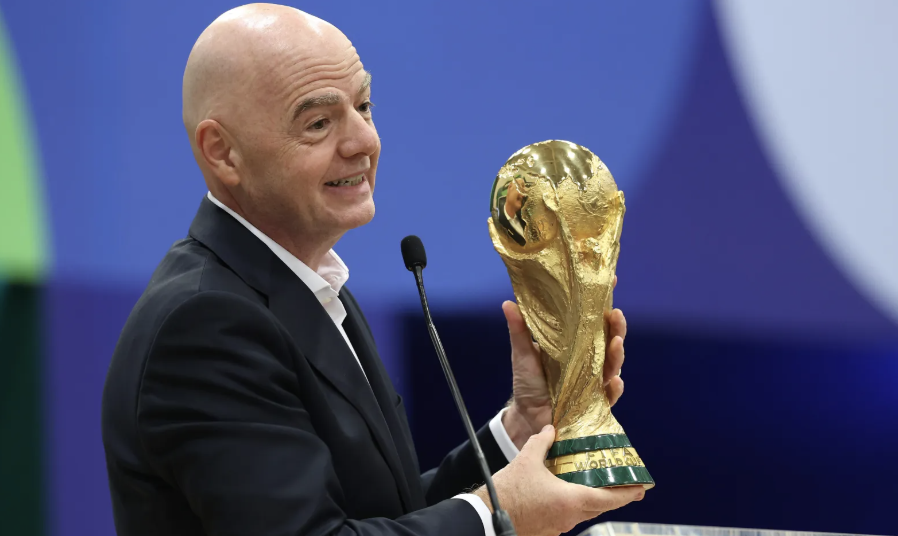
A crisis bigger than FIFA
Gianni Infantino’s attempt to introduce private investment into the FIFA World Cup may ultimately be remembered as one of the defining governance moments in modern sport.
The proposal to create FIFA Forward Enterprise and sell interests in football’s flagship competitions provoked an extraordinary backlash. UEFA described the proposal as “irresponsible and indefensible”, insisting that “the World Cup cannot be treated as an investment product”. Concacaf criticised the lack of due process, while the Asian Football Confederation also voiced concerns. Perhaps most damaging of all, Carlos Cordeiro, one of Infantino’s closest advisers, resigned, describing the proposal as “a bad deal for football” that risked mortgaging the game’s future.
Within days, FIFA withdrew the proposal.
For many observers, the episode raised an obvious question: has Gianni Infantino become too powerful?
It is an understandable conclusion. But it is also the wrong question.
The more important question is whether Infantino is simply the latest product of a governance model that international sport has repeatedly failed to reform over the last 50-years.
Removing one president may resolve an immediate crisis. It will not solve the deeper constitutional problem that has allowed successive leaders across multiple sports to accumulate extraordinary influence over organisations that ultimately belong to athletes, fans and their member federations.
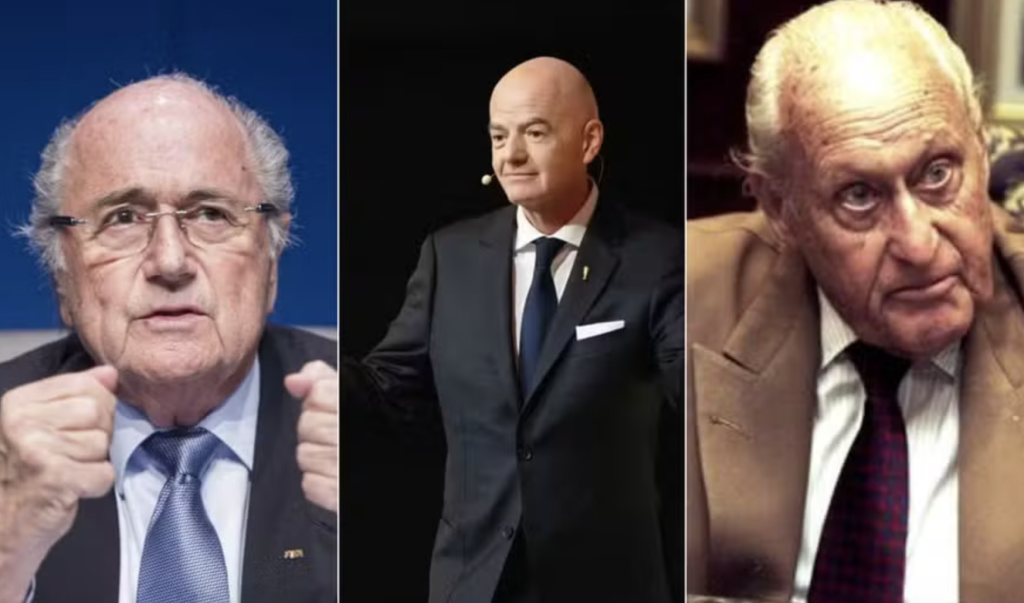
When presidents become bigger than the institution
International sport has a long history of visionary presidents.
Many have transformed their sports.
Many have also transformed the balance of power.
João Havelange did exactly that when he became FIFA President in 1974. He expanded the World Cup, commercialised football and transformed FIFA into one of the world’s most powerful sporting organisations. His achievements fundamentally changed the global game.
But they also changed FIFA itself.
The presidency became the centre of political influence. Commercial relationships, development funding and strategic direction increasingly revolved around one office.
Sepp Blatter inherited that structure in 1998.
Under Blatter, FIFA’s revenues continued to grow, but so too did concerns about patronage, transparency and accountability. The arrests of senior FIFA officials in Zurich in May 2015 exposed the extent of football’s governance crisis. Days later, despite winning re-election, Blatter announced he would step down.
Gianni Infantino was elected in 2016 promising transparency, reform and a new era for FIFA.
A decade later, football once again finds itself questioning whether the presidency has become more powerful than the institution it is supposed to serve.
The names have changed.
The structure has not.
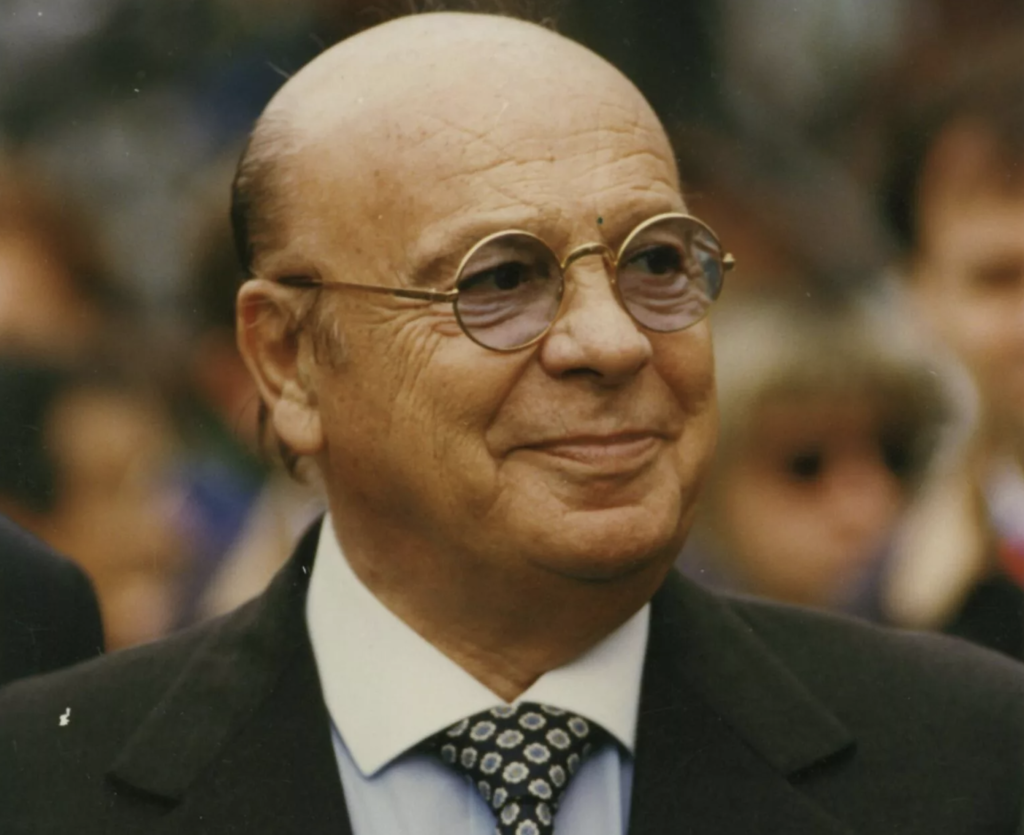
Athletics shows how power can reshape a sport
Football is far from unique.
Athletics travelled a remarkably similar path.
Primo Nebiolo was unquestionably one of the sport’s great visionaries. Elected President of the IAAF in 1981, he created the World Athletics Championships in 1983 and helped transform athletics into a genuinely global commercial product.
The early championships in Helsinki, Rome and Tokyo represented a golden era. Carl Lewis, Sebastian Coe, Steve Ovett, Edwin Moses, Jackie Joyner-Kersee, Daley Thompson and Sergei Bubka became household names across the world.
Yet Nebiolo also centralised authority around the presidency.
In 1993, the IAAF moved its headquarters from London to Monaco. More than 50 experienced members of staff lost their jobs as responsibility shifted from an established executive structure to an organisation operating much closer to the President’s office. In the same year, the World Championships moved from a four-year cycle to every two years.
The commercial logic was obvious.
More championships meant more broadcasting rights, sponsorship opportunities and revenue.
But scarcity creates value.
The uniqueness of athletics’ premier championship inevitably diminished as it became more frequent, while the sport gradually lost much of the global prominence it had enjoyed during the 1980s.
The comparison with football is striking.
Infantino’s proposal to stage the FIFA World Cup every two years followed precisely the same commercial logic: more tournaments, more content and more income.
Football rejected it because it recognised the risk.
The value of the World Cup lies not simply in its quality, but in its rarity.
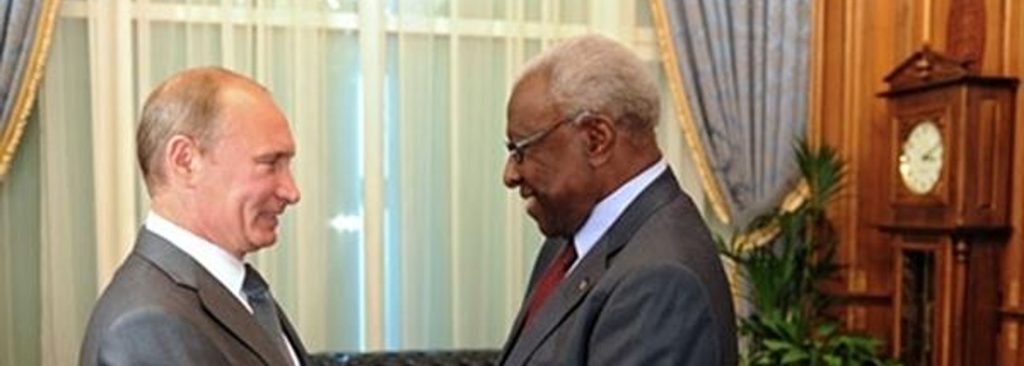
When governance fails, trust disappears
If Nebiolo demonstrated how power could become concentrated, his successor revealed where that concentration could ultimately lead.
Lamine Diack inherited a federation in which enormous authority already rested with the presidency.
The Russian doping scandal that emerged in 2014 exposed systemic failures in governance and integrity. Diack was later convicted in France for his role in a corruption scheme linked to concealing Russian doping cases, allowing athletes to continue competing while undermining confidence in the sport.
The damage extended far beyond athletics.
Sponsors questioned their involvement.
Supporters questioned results.
Clean athletes questioned whether the rules protected them at all.
Governance failures rarely destroy organisations overnight.
They erode trust until the institution itself becomes the story.
World Athletics has spent the past decade rebuilding that trust.
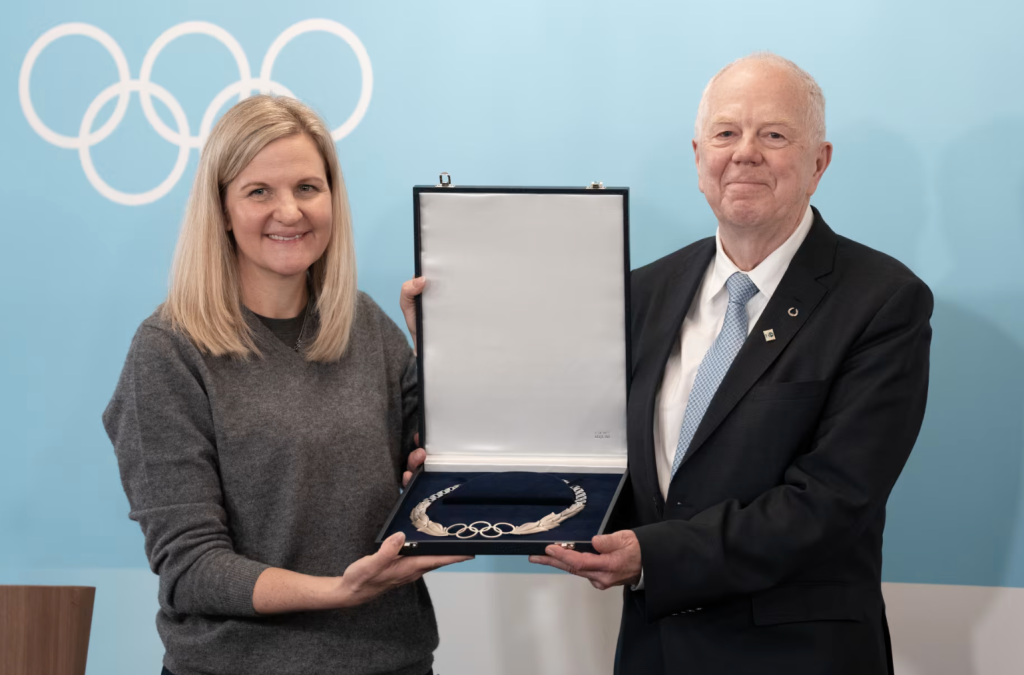
Sebastian Coe, elected President in 2015, inherited one of the deepest crises in the federation’s history. Under his leadership, governance structures have been strengthened, independent integrity systems introduced and confidence gradually restored.
Yet rebuilding credibility takes far longer than losing it.
Sport has shown that reform is possible
Not every governance crisis ends the same way.
The International Biathlon Union provides perhaps the strongest example of meaningful institutional reform.
Following the 2018 corruption scandal involving former President Anders Besseberg and allegations linked to Russian doping, the federation fundamentally changed its governance model. Olle Dahlin was elected President on a platform of transparency and reform. Independent investigations were commissioned, governance structures strengthened and the Biathlon Integrity Unit established.
The emphasis was not simply on changing the individual.
It was on changing the institution.
International boxing demonstrates the opposite.
Years of governance failures culminated in the International Olympic Committee suspending, and ultimately withdrawing, recognition from the International Boxing Association. The federation lost responsibility for Olympic boxing because confidence in its governance had collapsed.
One federation reformed.
Another lost control of its sport’s biggest stage.
The difference was not the personality of the president.
It was the willingness to redesign the governance model itself.
Governance can now be measured
For decades, governance has often been discussed in abstract terms.
Increasingly, it can be assessed.
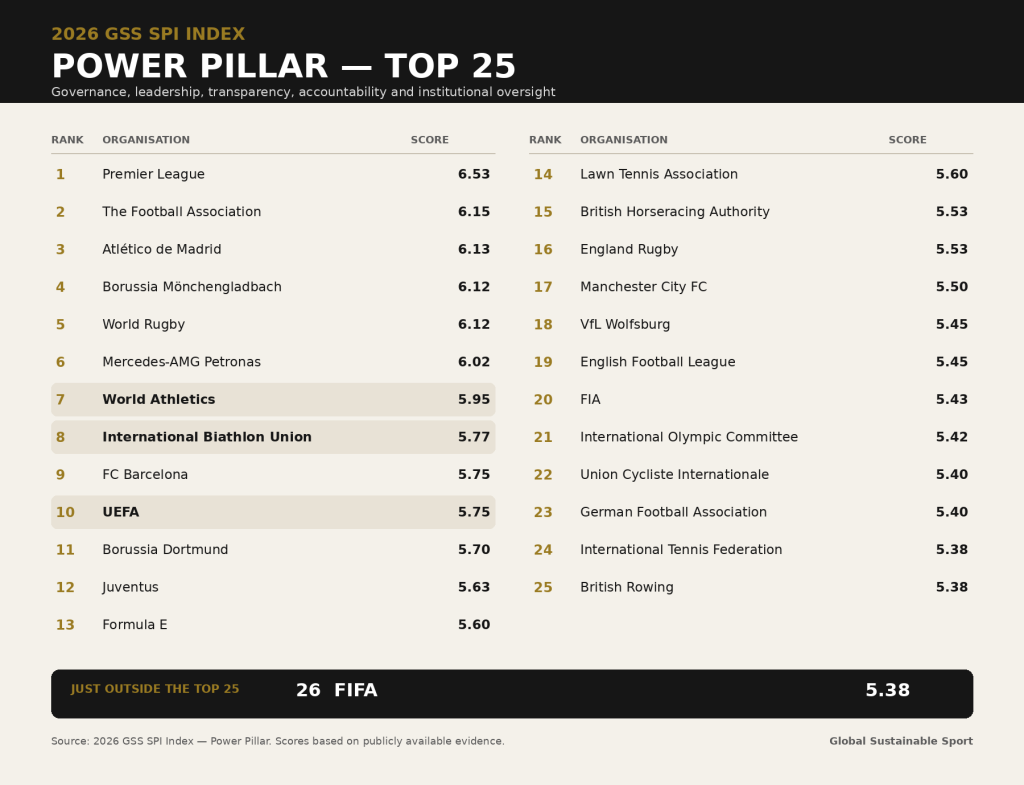
The recently published GSS SPI Index evaluates organisations across seven pillars, including governance through its Power pillar, which examines leadership, transparency, accountability, institutional oversight and governance structures using publicly available evidence.
The results are revealing.
World Athletics, the International Biathlon Union and UEFA—all organisations that have invested heavily in governance reform—sit among the strongest performers.
FIFA, despite governing one of the world’s biggest sporting event, currently sits outside the Top 25, below a host of football clubs, motor racing teams and series, and national federations from sports like tennis, horse racing, rugby and rowing.
The rankings do not suggest that any organisation is perfect.
They do demonstrate that governance is no longer simply a matter of opinion.
It can be measured.
More importantly, it can be improved.
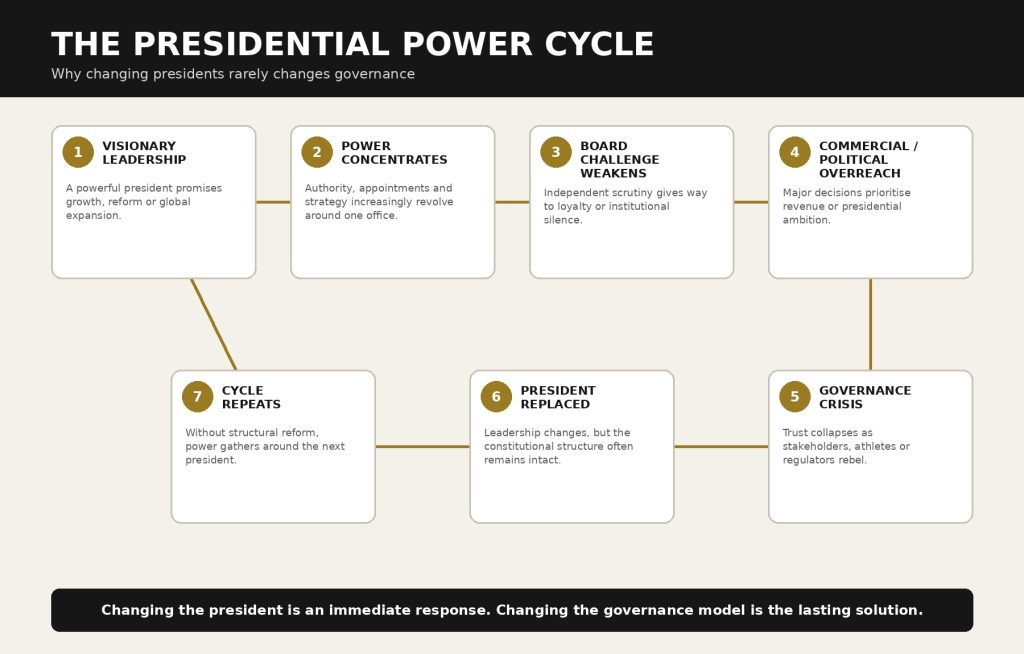
The Presidential Power Cycle. The future belongs to institutions, not individuals
Every governance crisis in international sport eventually becomes personalised.
Blame Havelange.
Blame Blatter.
Blame Nebiolo.
Blame Diack.
Blame Infantino.
Replace the president.
Elect someone new.
Wait.
Repeat.
History suggests this cycle, the Presidential Power Cycle, will continue for as long as international federations continue to concentrate authority around individuals rather than institutions.
Strong governance requires genuinely independent boards capable of challenging executive decisions. Major commercial proposals should be subject to transparent scrutiny. Ethics, integrity and audit functions must possess genuine independence. Presidents should lead organisations—not dominate them.
The immediate question is whether Gianni Infantino survives the fallout from the World Cup investment proposal.
The more important question is whether FIFA finally addresses the constitutional weaknesses that made such a proposal possible.
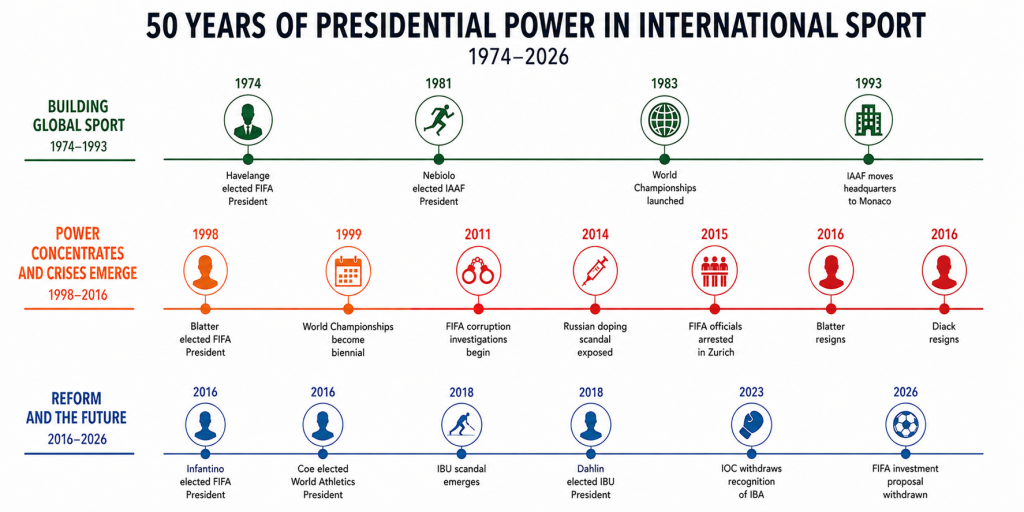
Athletics eventually reformed, but only after suffering profound reputational damage.
The International Biathlon Union transformed itself by redesigning its governance.
Boxing failed to reform in time and paid a heavy price.
Football now stands at the same crossroads.
The lesson from the past fifty years is not that international sport has repeatedly elected the wrong presidents.
It is that it has too often built governance systems that allowed presidents to become more powerful than the institutions they were elected to serve.
Sport should never depend on the integrity of one individual. Good governance creates institutions that remain transparent, accountable and resilient regardless of who occupies the presidency. Strong organisations are built on independent oversight, effective boards and robust governance—not on powerful presidents.
Because, ultimately, the question facing FIFA is not simply whether Gianni Infantino should remain as President.
It is whether international sport is finally prepared to move beyond a governance model that has repeatedly concentrated too much power in too few hands.
Is Gianni Infantino the problem…
…or simply the latest chapter in a 50-year governance story?
The purpose of good governance is not to find extraordinary presidents. It is to build institutions that never have to depend upon them.
Photos: IOC/Quinton Meyer, Reuters, World Athletics, TV Globo
Read moreGlobal Sustainable Sport






Join the GSS Alliance Partners programme today
Stay ahead of the game with our FREE weekly newsletter, delivering the latest sport and sustainability news from around the globe straight to your inbox
11th Hour Racing
Join the GSS Network programme today


Register for GSS Workshops today
Join the GSS Education programme today