
To access our unique news archive of over 1,400 articles with insights on over 500+ sustainable sports organisations, join the GSS Network today.
Login here if you are a registered network subscriber.
News article
Serie A and UEFA Lead the Way: The 2024/25 ‘Road to Zero’ Report Redefines Sustainable Football Events
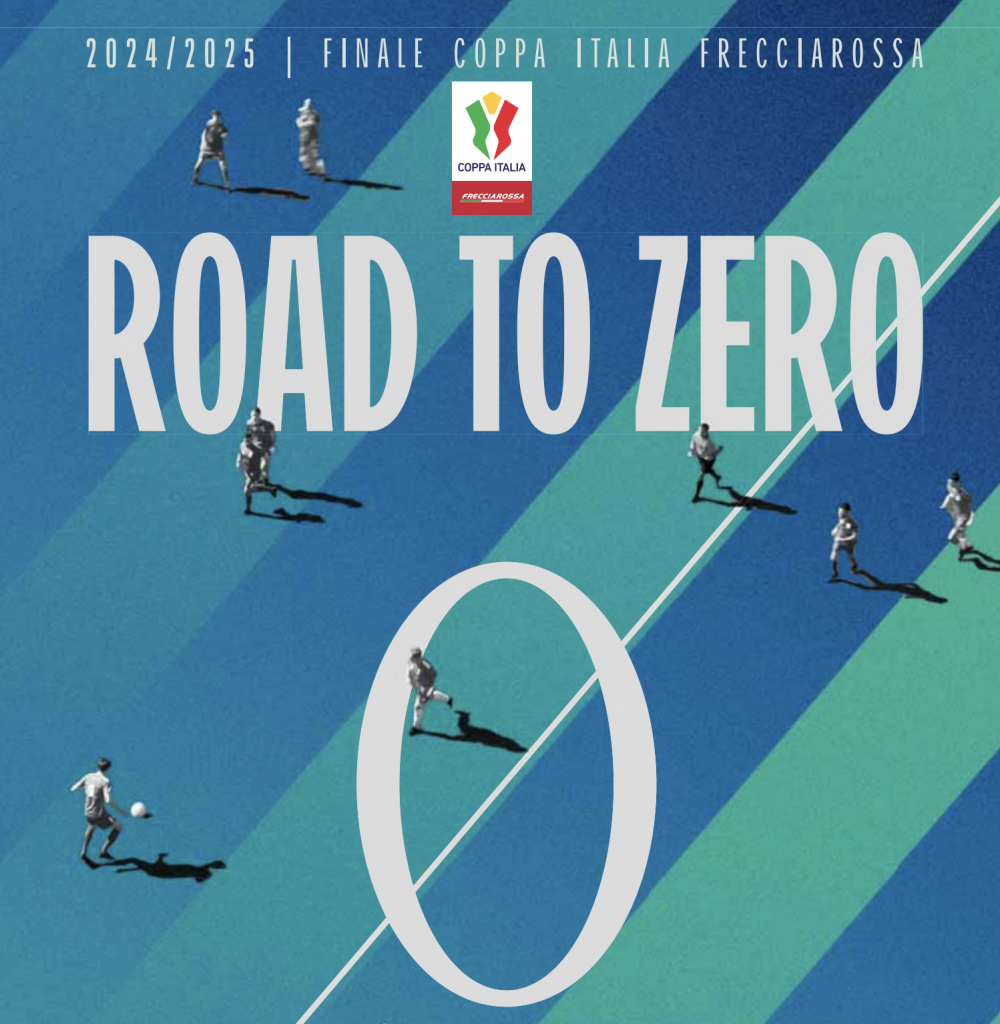
Sustainable football reached a new milestone in Rome as Lega Calcio Serie A, in collaboration with UEFA, published the second edition of its Road to Zero project. Centred on the 2024/25 Frecciarossa Coppa Italia Final at the Stadio Olimpico, the initiative offers one of the most comprehensive ESG-based assessments yet of a major football event, reinforcing football’s potential to act as a catalyst for measurable, systemic change.
A Strategic Framework for Responsible Governance
Selected by UEFA in 2022 as the first European league to pilot a dedicated sustainability strategy, Serie A has embedded sustainability within its 2030 Calcio Social Responsibility framework. For the Coppa Italia Final, this translated into eleven operational policies aligned with UEFA’s ESG standards, covering everything from procurement and logistics to accessibility, communications and reporting.
The governance of the event was underpinned by a renewed Memorandum of Understanding between Lega Serie A, Sport e Salute and Roma Capitale, ensuring a coordinated, cross-institutional approach to planning and delivery. As Marco Mezzaroma, President of Sport e Salute, noted: “The results of the ‘Road to Zero’ project demonstrate the potential of sport to drive tangible change.”
“The results of the ‘Road to Zero’ project demonstrate the potential of sport to drive tangible change.”
Decarbonising the Matchday Experience
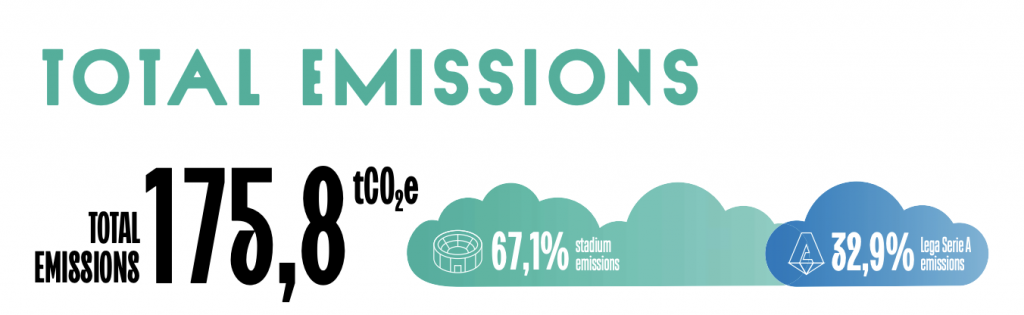
A central pillar of the project was the measurement and reduction of the event’s carbon footprint, calculated using the UEFA Carbon Footprint Calculator. Total emissions for the final were estimated at 175.8 tonnes of CO₂e, with 67.1% attributed to stadium operations and 32.9% linked to Lega Serie A’s organisational activities
Sustainable mobility emerged as the most impactful intervention. Bologna FC completed their journey to Rome entirely by high-speed rail, while AC Milan adopted a mixed model combining charter flights and rail travel. For supporters, ticket holders were granted free access to Rome’s public transport network on matchday, supported by extended operating hours and enhanced services to the Stadio Olimpico.
Renewable energy also played a key role. The stadium was powered entirely by electricity from renewable sources, while television production relied on generators fuelled by HVO biofuel, significantly reducing emissions associated with broadcast operations.
Inclusion at the Heart of Delivery
Beyond environmental metrics, Road to Zero placed strong emphasis on social inclusion and accessibility. The 2024/25 final saw the expansion of the Quiet Sensory Room, providing a protected and supportive environment for children with intellectual or sensory disabilities.
Innovative technologies further enhanced accessibility. The Touch2See system enabled blind and visually impaired supporters to follow the match through tactile feedback, while Sound Shirts allowed deaf fans to experience the atmosphere of the stadium through vibrations synced to crowd noise and on-pitch action.
Circularity, Catering and Legacy
Circular economy principles were embedded across event operations. Waste sorting stations and water refill points were installed throughout the stadium to reduce single-use plastics, while catering services prioritised plant-based and locally sourced food in line with UEFA’s Healthy Eating guidelines.
Luigi De Siervo, CEO of Lega Calcio Serie A, described the project as: “A key step in our commitment to a more sustainable and inclusive game,” emphasising that long-term progress depends on the shared responsibility of leagues, clubs, partners and host cities.
“A key step in our commitment to a more sustainable and inclusive game,” emphasising that long-term progress depends on the shared responsibility of leagues, clubs, partners and host cities.
A Blueprint for European Football
Taken together, the Road to Zero report positions Serie A not simply as a participant in football’s sustainability transition, but as a standard-setter. By combining rigorous data collection, transparent reporting and practical interventions across environment, social impact and governance, the project offers a replicable blueprint for major football events across Europe and beyond.
As UEFA continues to strengthen its sustainability expectations for competitions and host venues, initiatives such as Road to Zero demonstrate how strategy can be translated into action, delivering measurable impact while enhancing the matchday experience for players, fans and communities alike.
Read moreSerie A









Join the GSS Alliance Partners programme today
Stay ahead of the game with our FREE weekly newsletter, delivering the latest sport and sustainability news from around the globe straight to your inbox
Yali Sports Africa
(Africa)
Join the GSS Network programme today


Register for GSS Workshops today
Join the GSS Education programme today