
To access our unique news archive of over 1,400 articles with insights on over 500+ sustainable sports organisations, join the GSS Network today.
Login here if you are a registered network subscriber.
News article
Scaling Sustainability: How FIS Is Turning Wildlife Protection into Action
As winter sports continue to expand into some of Europe’s most sensitive mountain environments, the responsibility on governing bodies to protect alpine biodiversity is becoming impossible to ignore. In January 2026, the International Ski and Snowboard Federation (FIS) took a decisive step from ambition to implementation, using its WildTracks initiative to test how sustainability commitments can translate into practical, scalable action on the ground.
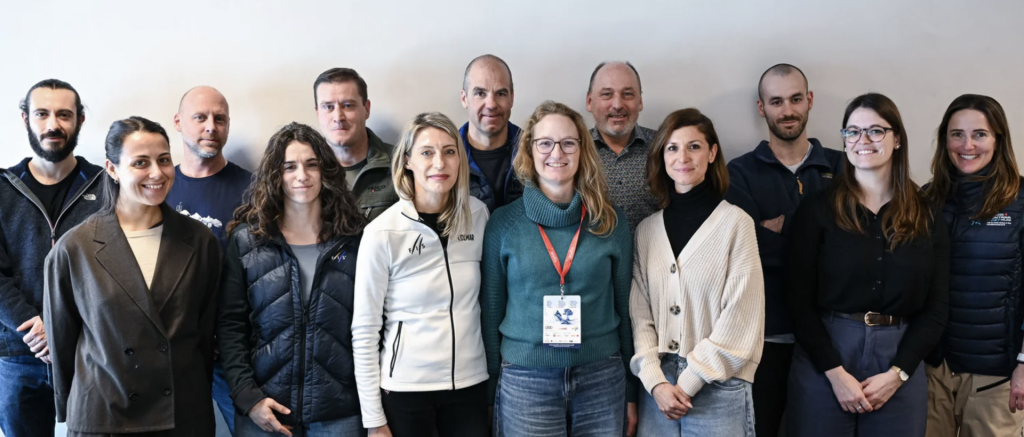
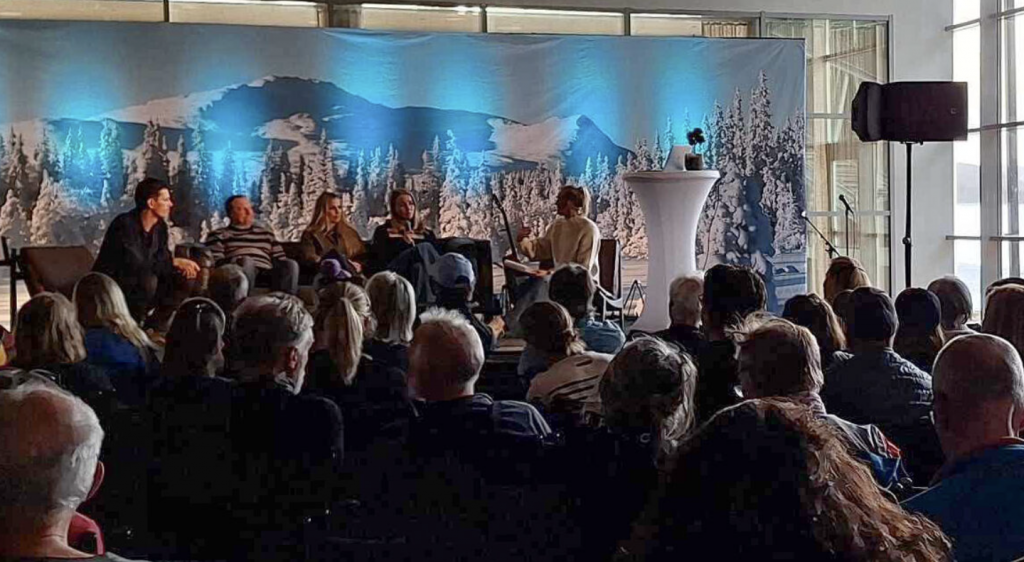
Developed in partnership with the Prince Albert II of Monaco Foundation and supported by Naturalia Environnement, WildTracks aims to reduce wildlife disturbance linked to major winter sports events. Two pilot roundtables, held alongside competitions in Val Thorens and Crans-Montana, brought together local authorities, event organisers, scientists and environmental experts to confront a central challenge for winter sport: how to protect fragile ecosystems without undermining the sporting spectacle.
From Strategy to Science-Based Action
Mountain regions are home to species such as black grouse, rock ptarmigan and chamois, all of which depend on quiet winter refuges and seasonal migration corridors to survive harsh alpine conditions. Major events can fragment habitats, disrupt feeding patterns and sever key movement routes if not carefully planned.
“As an international federation, we have a responsibility to better understand the interactions between our events and the ecosystems that host them,” said Susanna Sieff, FIS Sustainability Director. “WildTracks is about building a solid scientific foundation that allows us to propose concrete measures with a real impact on wildlife protection.”
This emphasis on evidence-based decision-making marks a shift in how sustainability is being embedded within the operational core of winter sport, moving biodiversity from a peripheral issue to a planning priority.
“As an international federation, we have a responsibility to better understand the interactions between our events and the ecosystems that host them. WildTracks is about building a solid scientific foundation that allows us to propose concrete measures with a real impact on wildlife protection.”
Val Thorens: Rethinking Event Design
At Val Thorens, which hosted a Freeride World Tour stop, discussions focused on how competition sites are selected and managed. Traditionally, safety, snow conditions and terrain suitability dominate these decisions. WildTracks participants argued that environmental sensitivity should now be part of that equation.
“The choice of the face where the event takes place is never random,” explained Thibault Combre, General Manager at Val Thorens. “It is the result of careful analysis, primarily based on safety considerations, snow conditions and the overall suitability of the terrain for the competition.”
Building on this process, the roundtable proposed dedicated environmental reviews to help identify slopes that minimise disturbance to wildlife. Clearer guidance for spectators—particularly at freeride events, where off-piste movement is common—was also highlighted as essential to prevent lasting damage to sensitive habitats.
“The choice of the face where the event takes place is never random. It is the result of careful analysis, primarily based on safety considerations, snow conditions and the overall suitability of the terrain for the competition.”
Crans-Montana: Restoring Ecological Connectivity
In Crans-Montana, future host of the FIS Alpine World Ski Championships, attention shifted to the physical barriers created by event infrastructure. Fencing and temporary installations can block traditional wildlife corridors, placing additional stress on animals already under pressure from climate change.
Participants discussed practical solutions, including opening temporary gaps in fencing at night to allow animals to move through established routes, and mapping sensitive habitats to inform infrastructure placement.
“We are ready to move into an action phase,” said Didier Défago, representing local organising stakeholders. “Our objective is to define clear timelines and deliver a project that is as concrete and operational as possible, while remaining scientifically robust.”
“We are ready to move into an action phase. Our objective is to define clear timelines and deliver a project that is as concrete and operational as possible, while remaining scientifically robust.”
Scaling Impact Across Winter Sport
Val Thorens and Crans-Montana were deliberately chosen for their contrasting landscapes and event profiles, allowing FIS to test whether a single methodology can adapt across different contexts.
“Working with two distinct pilot sites allows us to refine our approach and ensure it remains transferable to other events and locations,” said Jordan Peyret, Project Manager at Naturalia Environnement.
“Working with two distinct pilot sites allows us to refine our approach and ensure it remains transferable to other events and locations,”
Looking ahead to 2026, FIS plans to expand WildTracks through targeted interviews, workshops with organisers and deeper engagement with scientific research. The long-term ambition is a practical, science-based guide embedded into event delivery across the FIS calendar.
“For us, it is essential that this project is built on a strong scientific foundation and designed to be scalable. Only by doing so can we move beyond isolated actions and create broader, long-term benefits for wildlife across mountain regions.”
“For us, it is essential that this project is built on a strong scientific foundation and designed to be scalable,” added Ester Borgioli of the Prince Albert II of Monaco Foundation. “Only by doing so can we move beyond isolated actions and create broader, long-term benefits for wildlife across mountain regions.”
Read moreFIS










Join the GSS Alliance Partners programme today
Stay ahead of the game with our FREE weekly newsletter, delivering the latest sport and sustainability news from around the globe straight to your inbox


11th Hour Racing
Join the GSS Network programme today

Register for GSS Workshops today
Join the GSS Education programme today