
To access our unique news archive of over 1,400 articles with insights on over 500+ sustainable sports organisations, join the GSS Network today.
Login here if you are a registered network subscriber.
News article
Green Ambition: How Danish Sport is Redefining Event Sustainability
How do we create large-scale international sporting events with a smaller climate footprint and greater social value? This was the central question as stakeholders from across Denmark gathered in Herning for a landmark network seminar focused on responsible event delivery in a complex reality.
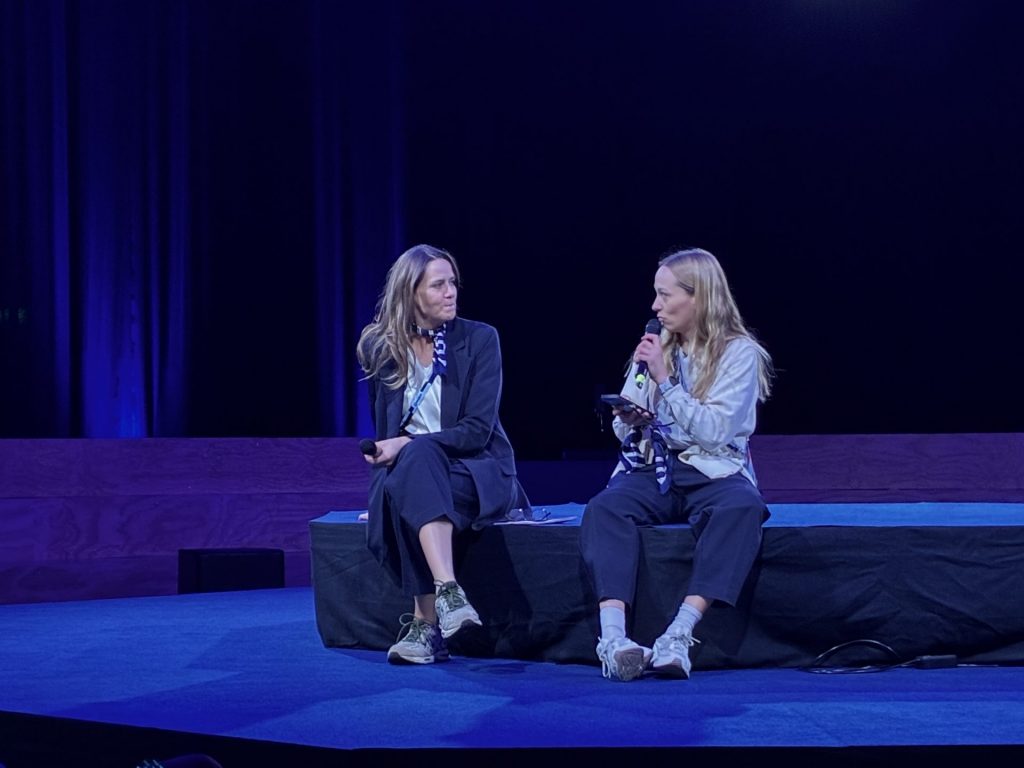
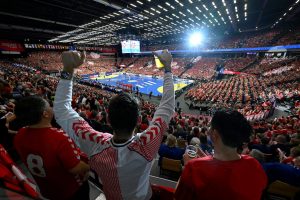
Organised by Sport Event Denmark, Danish Handball, and Bæredygtig Herning, the seminar brought together 70 representatives from cities including Copenhagen and Aarhus, as well as event organisers, to share knowledge and set a new standard for the industry. The timing was poignant, occurring alongside the Men’s EHF EURO and drawing on further insights from the 2025 IIHF Ice Hockey World Championship and the 2026 World Half Marathon Championships.
Strategic Action Over Box-Ticking
In an interview with Global Sustainable Sport, Hanne Sejer, Deputy Chief Executive of Sport Event Denmark, reflected on the discussions in Herning, highlighting a tension between standardisation and innovation. While standards and frameworks play an important role, she warned against an over-reliance on rigid checklists.
“It’s easier for event managers if you can just tick off boxes and do what you’re told,” Sejer explained. “But sometimes that approach means you miss the really big outcomes. If sustainability becomes a form to complete rather than a conversation to have, you risk killing creativity.”
“It’s easier for event managers if you can just tick off boxes and do what you’re told. But sometimes that approach means you miss the really big outcomes. If sustainability becomes a form to complete rather than a conversation to have, you risk killing creativity.”
That tension was echoed throughout the day. Several organisers expressed a desire for clearer requirements, while others argued that sustainability only becomes meaningful when it is embedded into decision-making, not added at the end of the planning process.
The seminar drew on experiences from events including the 2025 IIHF Ice Hockey World Championship, Copenhagen Sprint and the upcoming 2026 World Half Marathon Championships, illustrating how different sports are grappling with similar challenges around transport, catering, energy use and stakeholder engagement.
A Shared Responsibility
Sport Event Denmark has responded to this complexity by introducing green minimum requirements across its funding programmes. Event organisers must now address sustainability during both the application and evaluation phases, and projects receiving more than DKK 500,000 are required to appoint a dedicated sustainability lead.
“We can’t save the planet alone,” said Lars Lundov, CEO of Sport Event Denmark. “But these championships are only on loan to us. We have a responsibility to use them to push international federations forward and show that the green transition is the way ahead.”
“We can’t save the planet alone. But these championships are only on loan to us. We have a responsibility to use them to push international federations forward and show that the green transition is the way ahead.”
Crucially, the emphasis is on progress rather than perfection, a theme that resonated strongly with municipal representatives.
“This is part of our future strategy,” noted Dorte West, Mayor of Herning. “Our ambition is to take social responsibility and leave a positive legacy. That requires sharing knowledge and being honest about what works and what doesn’t.”
“This is part of our future strategy. Our ambition is to take social responsibility and leave a positive legacy. That requires sharing knowledge and being honest about what works and what doesn’t.”
A Pure Promise: The European Handball Experience
The Men’s EHF EURO provided a live case study for many of the discussions in Herning. For the first time, three host nations — Denmark, Sweden and Norway — aligned under a single sustainability framework, known as Pure Promise.
Speaking to Global Sustainable Sport Ann Lykke Davidsen, Head of Communications at Danish Handball, explained that the concept was deliberately simple.
“All three countries are surrounded by water. We drink it straight from the tap, swim in it, depend on it. That made water a powerful way to connect sustainability to something everyone understands.”
“All three countries are surrounded by water. We drink it straight from the tap, swim in it, depend on it. That made water a powerful way to connect sustainability to something everyone understands.”
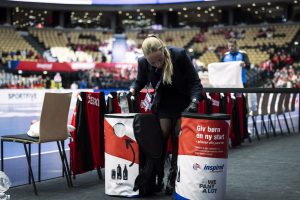
The theme translated into practical action. Media and volunteers were issued with reusable steel bottles, supported by refill stations, helping to avoid tens of thousands of single-use plastic bottles. The organisers also partnered with the Climate Tree Foundation to establish so-called “Water Woods”, linking reforestation directly to groundwater protection.
At the same time, Davidsen was candid about the limits of current infrastructure. While official car fleets transitioned to electric vehicles, team buses still rely on diesel, requiring organisers to calculate and compensate for unavoidable emissions.
“Sustainability is never perfect,” she acknowledged. “But if you don’t start, you never learn where the barriers really are.”
“Sustainability is never perfect. But if you don’t start, you never learn where the barriers really are.”
The Athlete Perspective
The seminar also gave space to the athlete voice — often absent from sustainability strategy discussions.
Danish international footballer Sofie Junge Pedersen highlighted the personal and professional tensions athletes face when speaking out on climate issues.
“Many players are afraid of being called hypocrites,” she said. “Our lives involve travel and flying, so people expect perfection before they’ll listen. But if perfection is the requirement, nobody will ever speak up.”
For Junge Pedersen, honesty matters more than purity. She argued that athletes can still have impact by expressing concern, supporting climate-conscious policies and backing governing bodies that take action.
“Sport speaks to people all over the world,” she added. “Even simple statements can shift attitudes.”
“Many players are afraid of being called hypocrites,” she said. “Our lives involve travel and flying, so people expect perfection before they’ll listen. But if perfection is the requirement, nobody will ever speak up. “Sport speaks to people all over the world. Even simple statements can shift attitudes.”
Her contribution reinforced a key message from the seminar: sustainability is cultural as much as technical, and change accelerates when people feel supported rather than exposed.
From Dialogue to Delivery
A recurring conclusion from the Herning discussions was that sustainability must be integrated into the entire event experience — from transport and accommodation to food, fan engagement and legacy planning.
Examples ranged from hotels reducing red meat menus unless specifically requested, to organisers rethinking how water is sold and consumed in venues. Small decisions, repeated across systems, were seen as powerful levers for change.
Perhaps most importantly, participants acknowledged the value of creating spaces where challenges can be shared openly.
“If sport is to be part of the solution. It requires courage, collaboration and a willingness to learn from one another. We must always aim to do a little better – and not be afraid to talk about what we’re actually doing,”
“If sport is to be part of the solution,” the seminar concluded, “it requires courage, collaboration and a willingness to learn from one another. We must always aim to do a little better – and not be afraid to talk about what we’re actually doing,”
In Herning, green ambition was not framed as an abstract goal, but as a continuous process — one shaped by dialogue, experimentation and a growing recognition that sustainability is no longer optional, but fundamental to the future of sport.
Read moreSport Event Denmark



















Join the GSS Alliance Partners programme today
Stay ahead of the game with our FREE weekly newsletter, delivering the latest sport and sustainability news from around the globe straight to your inbox
11th Hour Racing
Join the GSS Network programme today


Register for GSS Workshops today
Join the GSS Education programme today