
To access our unique news archive of over 1,400 articles with insights on over 500+ sustainable sports organisations, join the GSS Network today.
Login here if you are a registered network subscriber.
News article
Pioneering the Green Wave: 2025 IOC Climate Action Awards Signal Sport’s Shift from Pledge to Proof
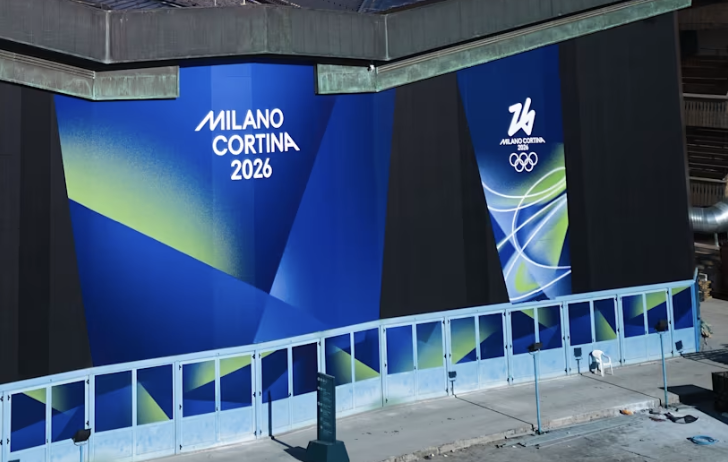
The global sporting community continues to demonstrate that competitive excellence and environmental leadership are no longer separate ambitions. At the 145th IOC Session in Milan, held ahead of the Milano Cortina 2026 Olympic Winter Games, the International Olympic Committee (IOC) announced the winners of the 2025 IOC Climate Action Awards, celebrating organisations and individuals delivering measurable progress on climate action.
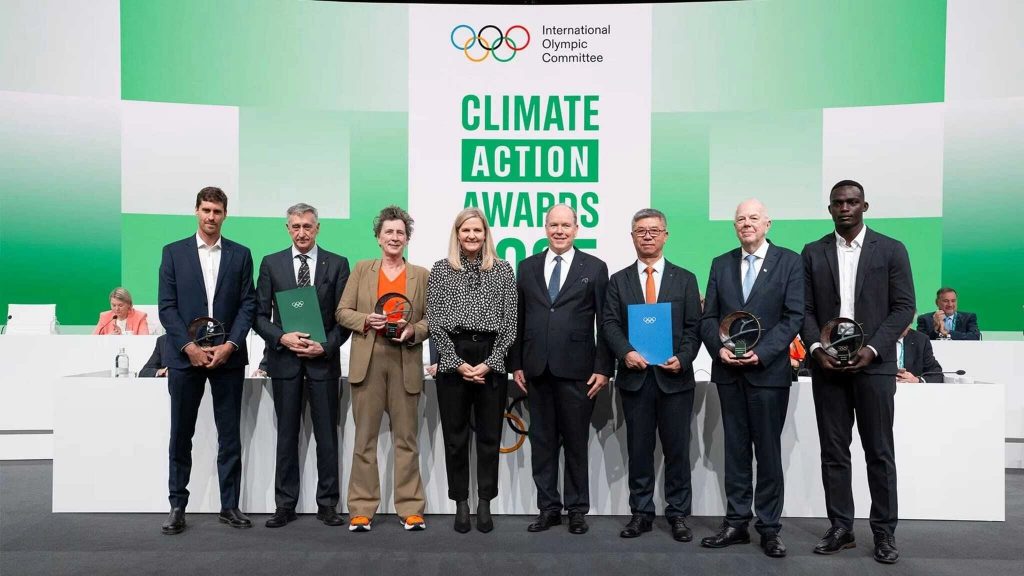
Supported by Worldwide Olympic and Paralympic Partner Deloitte, the awards recognise initiatives across the Olympic Movement that go beyond pledges and commitments, translating sustainability strategies into tangible operational change. As the climate pressures facing sport intensify—from heat stress to shrinking winter seasons—the 2025 awards highlight a growing maturity in how governing bodies and athletes are responding.
Biathlon Sets the Pace for Winter Sport
The International Biathlon Union (IBU) claimed the International Federation category, becoming the first Winter IF to embed its World Cups and World Championships within a formal climate transition plan. The result was a reported 6% reduction in emissions across all three scopes of the Greenhouse Gas Protocol in 2024—an important signal in a sport directly exposed to the realities of a warming climate. …
Beyond operational measures, the IOC recognised the IBU for “driving systemic change” through initiatives such as its Athlete Ambassador Programme and the Biathlon Climate Challenge, which has mobilised more than 12,000 fans to engage in climate-positive action.
Accepting the award, IBU President Olle Dahlin said: “We are honoured to receive this prestigious award from the IOC. It is a testament to the work of the entire biathlon family – from our athletes and national federations to our fans and partners – in our collective mission to protect the climate and the winter nature we all love.”
“We are honoured to receive this prestigious award from the IOC. It is a testament to the work of the entire biathlon family – from our athletes and national federations to our fans and partners – in our collective mission to protect the climate and the winter nature we all love.”
The IBU’s approach reflects a broader trend in winter sport: moving from isolated venue-level initiatives to federation-wide strategies that integrate competitions, broadcast operations and stakeholder engagement into long-term climate planning.
World Sailing’s Data-Driven Decarbonisation
While biathlon took the top honour, World Sailing received a ‘Highly Commended’ recognition for its innovative work tackling one of sailing’s most carbon-intensive challenges: on-water support fleets. At the Paris 2024 Olympic Games in Marseille, World Sailing deployed emissions-tracking technology across 285 support vessels, enabling detailed monitoring of fuel consumption and efficiency.
The data revealed that emissions from support fleets could be cut by more than 20% through relatively practical measures, including optimised fleet management, eco-piloting training for drivers and equipment efficiency standards.
World Sailing CEO David Graham said: “Decarbonising our support fleets is a critical priority for the future of our sport. This recognition from the IOC is a powerful validation of the innovative steps we are taking to ensure sailing continues to lead on environmental sustainability.”
“Decarbonising our support fleets is a critical priority for the future of our sport. This recognition from the IOC is a powerful validation of the innovative steps we are taking to ensure sailing continues to lead on environmental sustainability.”
Alexandra Rickham, World Sailing’s Head of Sustainability, added: “As a sport that lives and breathes on the water, we have a unique responsibility to protect our oceans. By embracing new technology and proving that operational changes can deliver a 20% reduction in emissions, we hope to create a blueprint not just for sailing, but for the wider maritime and sporting community.”
Crucially, World Sailing plans to scale this model across future sanctioned events and towards LA28, signalling a shift from pilot projects to systemic adoption.
“As a sport that lives and breathes on the water, we have a unique responsibility to protect our oceans. By embracing new technology and proving that operational changes can deliver a 20% reduction in emissions, we hope to create a blueprint not just for sailing, but for the wider maritime and sporting community.”
Reflecting on the awards, IOC Director of Sustainability Marie Sallois said: “Our winners are showing that protecting our planet and pursuing excellence can go hand in hand. Their work demonstrates the impact the Olympic community can have when it acts together with purpose.”
Deloitte’s Mark Price added that the 2025 cohort stood out for delivering “measurable benefits and scalable solutions”, underlining a growing emphasis on data, metrics and accountability across sport’s sustainability agenda.
“Our winners are showing that protecting our planet and pursuing excellence can go hand in hand. Their work demonstrates the impact the Olympic community can have when it acts together with purpose.”
From Symbolism to Systems Change
Taken together, the 2025 IOC Climate Action Awards point to a subtle but important shift. The focus is no longer solely on symbolic commitments or one-off initiatives, but on embedding climate action into the operating models of sport—across events, fleets, federations and fan engagement.
For winter sports facing existential climate risks, and for summer sports grappling with extreme heat and resource pressures, the challenge is now one of scale and speed. The pioneers recognised this year offer credible pathways forward. The question for the wider sporting ecosystem is whether these examples remain isolated success stories—or become the new baseline for how sport measures, manages and communicates its impact on the planet.
Read moreInternational Olympic Committee (IOC)











Join the GSS Alliance Partners programme today
Stay ahead of the game with our FREE weekly newsletter, delivering the latest sport and sustainability news from around the globe straight to your inbox


11th Hour Racing
Join the GSS Network programme today


Register for GSS Workshops today
Join the GSS Education programme today