
To access our unique news archive of over 1,400 articles with insights on over 500+ sustainable sports organisations, join the GSS Network today.
Login here if you are a registered network subscriber.
News article
Milano Cortina 2026: Balancing a Storied Legacy with Modern Sustainability
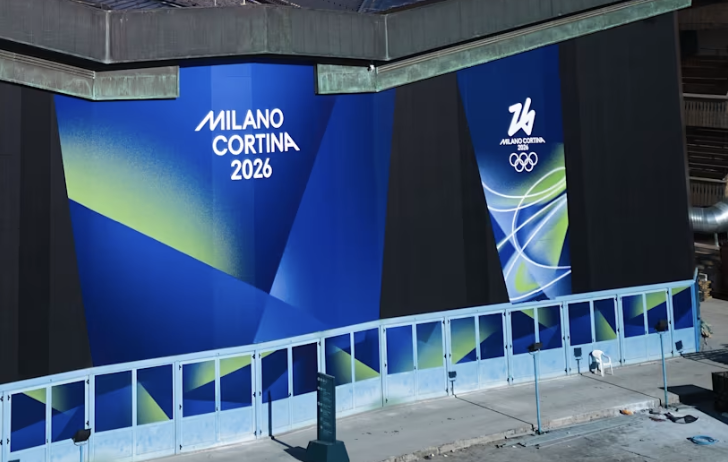
As Italy prepares to host the Olympic Winter Games from 6 to 22 February 2026, the contrast between Cortina d’Ampezzo’s historic Olympic legacy and the environmental demands of the modern era has never been more apparent. A recent heavy snowfall in Milan may offer a picturesque winter backdrop, but it also serves as a timely reminder of a new mountain reality, one where natural snow is increasingly unreliable and climatic uncertainty is now the norm rather than the exception.
The Blueprint of 1956: A Legacy of Innovation
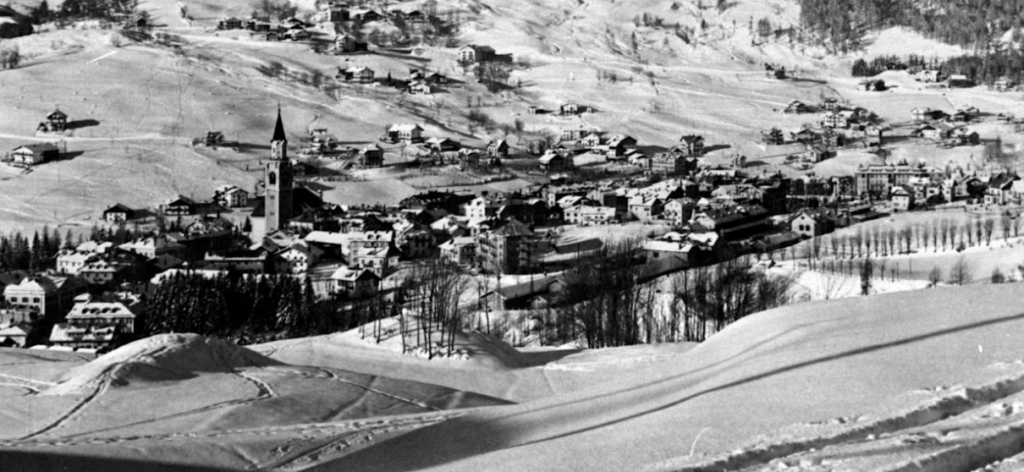
Seventy years ago, Cortina d’Ampezzo established a blueprint for Olympic legacy that still resonates today. At the 1956 Winter Games, organisers made the prescient decision not to construct a dedicated Olympic Village. Instead, athletes were housed in local hotels and family homes, embedding the Games within the fabric of the town and avoiding the burden of redundant infrastructure once the spotlight faded.
That forward-thinking approach has endured. Nearly 70 per cent of Cortina’s permanent venues from 1956 remain in use today, including the Olympic Ice Stadium and the iconic Tofane slopes. These venues continue to host elite international competitions, reinforcing the idea that Olympic legacy must mean more than preservation — it must be about continued relevance and evolution.
For Milano Cortina 2026, that philosophy has been revived. Around 85 per cent of competition venues already exist, with organisers prioritising reuse and temporary structures to ensure investments are targeted, efficient and enduring.
Environmental Expectations and Modern Challenges
Despite its rich heritage, Milano Cortina 2026 faces unprecedented scrutiny around sustainability. Unlike 1956, the Games must now align with the IOC’s Olympic Agenda 2020+5, which places a strong emphasis on reducing carbon emissions, promoting circularity and delivering long-term value for host communities.
Organisers have committed to powering the Games with 100 per cent renewable energy and embracing circular economy principles, including the repurchase of more than 20,000 pieces of equipment from the Paris 2024 Olympic Games. However, delivering a genuinely “green” Winter Games remains deeply complex.
The scale and geography of the event present immediate challenges. Milano Cortina 2026 will be the most geographically dispersed Winter Games in history, spanning more than 20,000 square kilometres across four main regions in northern Italy. This dispersion has significant implications for transport emissions, logistics and operational complexity.
Total greenhouse gas emissions are currently estimated at close to one million tonnes of CO₂ equivalent — lower than some previous Winter Games, but still substantial. Meanwhile, biodiversity concerns have drawn criticism, most notably around the redevelopment of the Cortina bobsleigh, luge and skeleton track, which required the felling of several hundred trees despite opposition from environmental groups.
Snow: The Paradox of Adaptation
Milan’s recent snowfall may have lifted spirits, but the long-term outlook for winter sport is sobering. Research suggests that by 2050, only around ten former Winter Olympic host locations will remain climatically viable. This reality has forced Milano Cortina 2026 organisers to invest heavily in modern artificial snow systems to safeguard competition conditions.
Yet this solution brings its own contradictions. Artificial snow production is water- and energy-intensive and can degrade soil quality, meaning a technology designed to mitigate climate impacts can, paradoxically, exacerbate them. The challenge for the Games — and for winter sport more broadly, is to move beyond short-term fixes and rethink how adaptation is approached in a warming world.
A Turning Point for the Olympic Movement?
Milano Cortina 2026 represents a clear evolution in how the Olympic movement approaches sustainability, particularly for the Winter Games. By drawing on the legacy-driven planning model of 1956 while embedding contemporary sustainability principles, Italy is attempting to bridge two very different eras of sport.
Whether the Games can fully deliver on their environmental promises remains to be seen. What is clear, however, is that Milano Cortina 2026 will be closely watched — not only by athletes and fans, but by future host cities grappling with the growing realities of climate change. In that sense, the Games may prove to be less a celebration of winter as it once was, and more a test case for whether winter sport has a sustainable future at all.
Images
© 1956 / Foto Constantini, Cortina
© © 2026 / International Olympic Committee (IOC) / CIANCAGLINI, Emmanuele
Read moreInternational Olympic Committee (IOC)























Join the GSS Alliance Partners programme today
Stay ahead of the game with our FREE weekly newsletter, delivering the latest sport and sustainability news from around the globe straight to your inbox




Yali Sports Africa
(Africa)
Join the GSS Network programme today





Register for GSS Workshops today
Join the GSS Education programme today