
To access our unique news archive of over 1,400 articles with insights on over 500+ sustainable sports organisations, join the GSS Network today.
Login here if you are a registered network subscriber.
News article
Equality by Design: What Cross-Country Skiing Can Teach the Wider Sporting World
While many sports continue to debate how best to achieve gender equality, Cross-Country Skiing has quietly been putting many of those principles into practice for decades. Equal prize money and equal World Cup calendars have been in place since 1992, while the introduction of equal race distances in recent years has further strengthened the sport’s reputation as one of winter sport’s leading examples of equality.
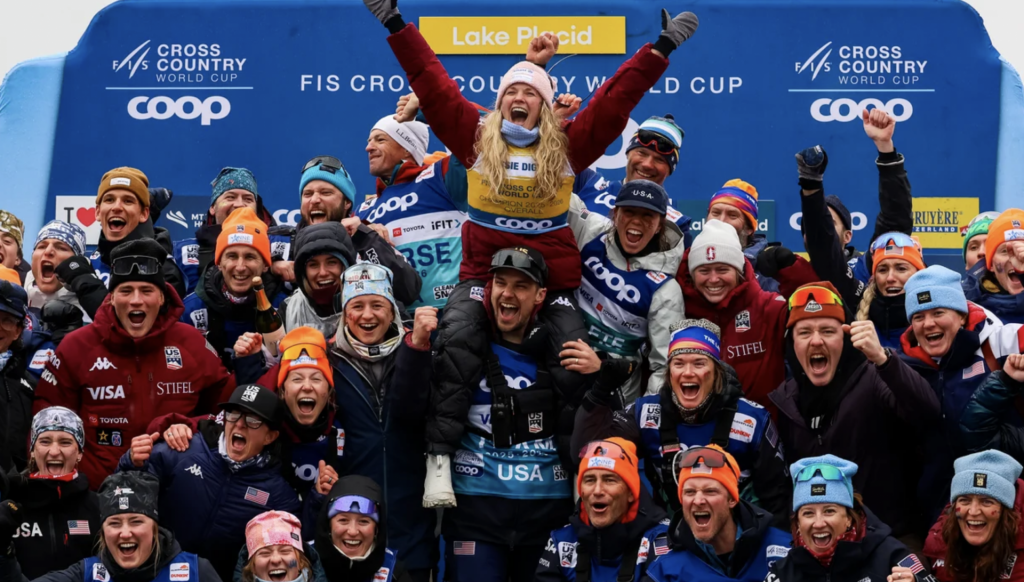
What makes the story particularly significant is that these changes were not introduced in response to modern pressures. Instead, they were the result of long-term decisions made by leaders who recognised the importance of equality long before it became a central topic across international sport.
“We’ve had equal calendars since 1992, and equal prize money since 1992,” said Doris Kallen, FIS Cross-Country World Cup Coordinator. “Only one major decision is recent. The rest are much older.”
“We’ve had equal calendars since 1992, and equal prize money since 1992. Only one major decision is recent. The rest are much older.”
Building on Strong Foundations
Rather than claiming credit for today’s achievements, Kallen points to the vision of previous generations.
“We’ve been lucky enough to step into the footprints of people who were forward-thinking. Many people back then took decisions that were 20 or 30 years ahead of their time.”
The lesson extends beyond gender equality. In an era when many sports organisations are seeking to embed sustainability and purpose into their operations, Cross-Country Skiing demonstrates the value of taking decisions that deliver long-term cultural change rather than short-term headlines.
In the recently published GSS SPI Index, FIS currently sits outside the Purpose Podiums, but the federation’s long-standing commitment to equality provides an example of how sustained action can create meaningful and lasting impact.
“We’ve been lucky enough to step into the footprints of people who were forward-thinking. Many people back then took decisions that were 20 or 30 years ahead of their time.”
Equality as a Signal
The move to equal race distances has become one of the sport’s most visible symbols of progress. For Synne Dyrhaug, FIS Cross-Country Media Coordinator, the significance goes beyond operational convenience.
“Having the same courses and race distances for both men and women is also a symbol, and an important one,” she said. “It’s a really nice way for our sport to show that equality works.”
Dyrhaug believes the change sends a powerful message to younger athletes entering the sport.
“It’s a clear signal to them that we’re equal and has been a real source of empowerment for the whole sport.”
“It’s a clear signal to them that we’re equal and has been a real source of empowerment for the whole sport.”
A Wider Sustainability Mindset
The same long-term thinking can also be seen in the sport’s approach to sustainability. For years, the FIS Cross-Country World Cup calendar has been designed to “follow the snow”, grouping events geographically where possible to reduce travel and associated costs.
“It was about environmental sustainability but also financial sustainability,” explained Kallen. “With one guideline you can address both.”
For Dyrhaug, maintaining progress now means continuing to support smaller venues and emerging snow sport nations while protecting what she describes as an “amazing culture of collaboration, respect and determination to keep developing the sport.”
“It was about environmental sustainability but also financial sustainability. With one guideline you can address both.”
Taken together, Cross-Country Skiing’s achievements show that equality is not a standalone initiative but part of a broader culture of inclusion, sustainability and forward thinking. It is a reminder that the most effective changes in sport are often those that become so embedded they simply feel normal.
Read moreFIS







Join the GSS Alliance Partners programme today
Stay ahead of the game with our FREE weekly newsletter, delivering the latest sport and sustainability news from around the globe straight to your inbox
11th Hour Racing
Join the GSS Network programme today


Register for GSS Workshops today
Join the GSS Education programme today