
To access our unique news archive of over 1,400 articles with insights on over 500+ sustainable sports organisations, join the GSS Network today.
Login here if you are a registered network subscriber.
News article
When Governance Fails, Sport Loses Its Integrity
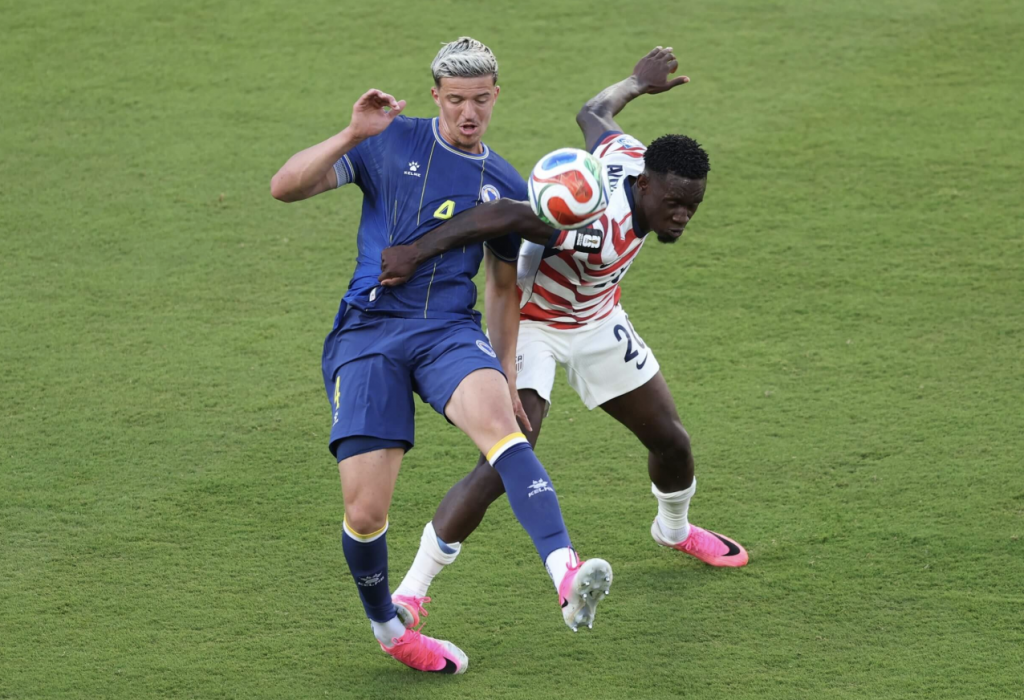
The controversy surrounding FIFA's decision to suspend Folarin Balogun's automatic World Cup ban following intervention from US President Donald Trump has generated headlines around the world. Critics have questioned whether politics influenced a sporting decision, while FIFA insists its independent disciplinary structures acted within the rules.
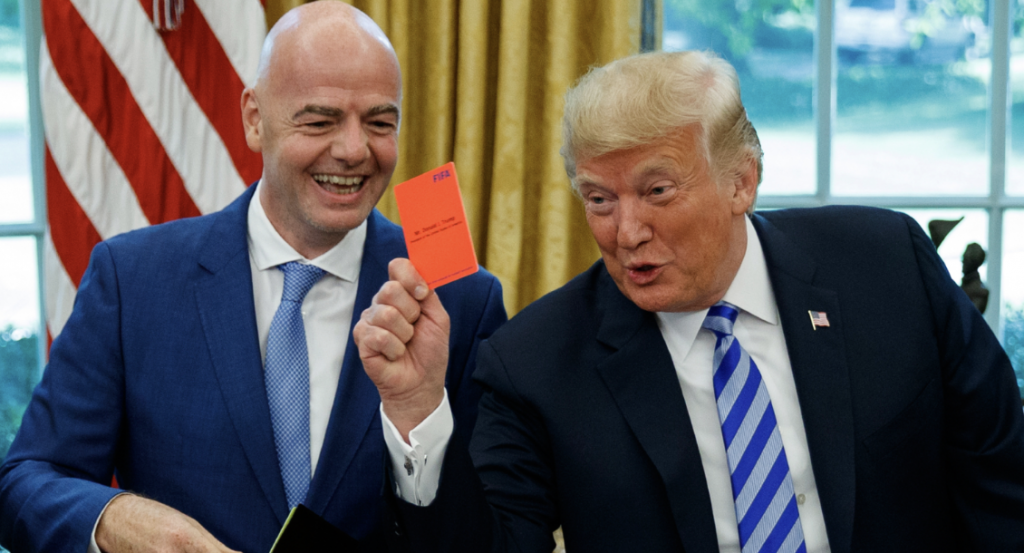
Yet focusing solely on the details of this particular case risks missing a much bigger issue.
The Balogun affair is not fundamentally a corruption story. It is a governance story.
More specifically, it is the latest example of a recurring problem that has shaped international sport for decades: the concentration of institutional power around individual presidents.
A Familiar Pattern
Every generation of sport seems to produce its own dominant leader.
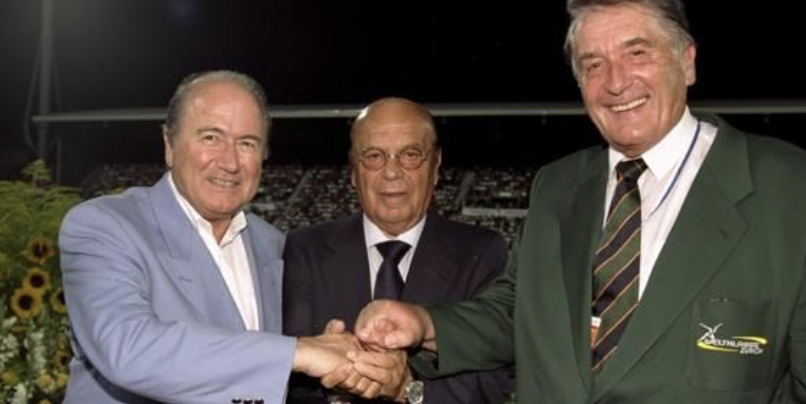
Juan Antonio Samaranch transformed the International Olympic Committee and oversaw the commercialisation of the Olympic Movement. Primo Nebiolo reshaped athletics into a global television sport. Lamine Diack expanded the reach of athletics before corruption scandals engulfed the federation. Sepp Blatter presided over FIFA’s transformation into a multi-billion-dollar organisation before leaving amid the biggest governance crisis in football history.
Now Gianni Infantino finds himself facing questions over the relationship between presidential influence and institutional independence.
The names change.
The sport changes.
The controversies change.
Yet the governance problem remains remarkably consistent.
The Problem Isn’t New
Recent history is littered with examples where the concentration of power around individuals has raised questions about sporting integrity.
The 1984 Los Angeles Olympics, overseen by Samaranch, were later overshadowed by revelations that a number of positive or questionable doping tests were never pursued through the disciplinary processes that would be expected today.
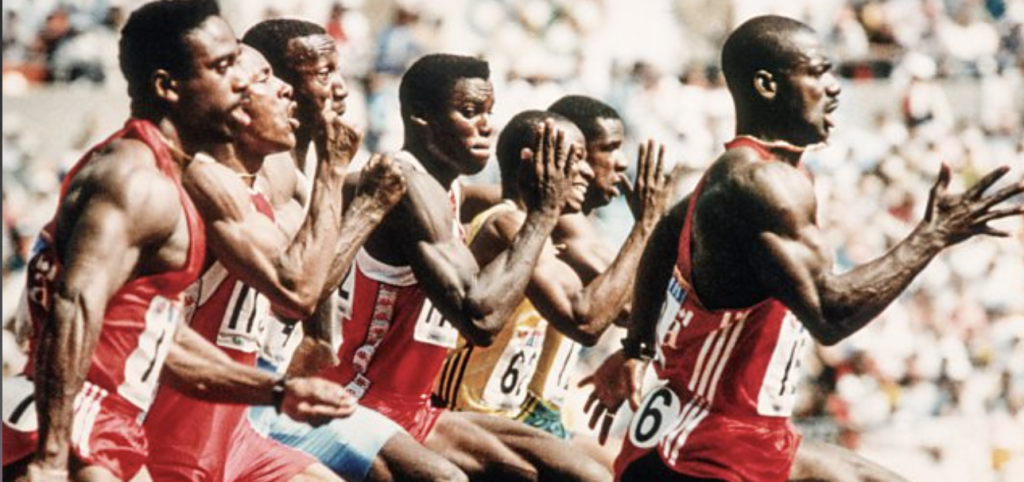
The men’s 100 metres final at the 1988 Seoul Olympics, overseen by Samaranch and Nebiolo, remains one of the most infamous races in sporting history and was later dubbed the “Dirtiest Race”. Ben Johnson was stripped of his gold medal after testing positive for steroids, but subsequent investigations raised broader questions about the consistency of anti-doping enforcement at the Games and whether all athletes were treated equally under the rules.
At the 1987 World Athletics Championships in Rome, overseen by Nebiolo, the long jump competition became embroiled in controversy when Italian athlete Giovanni Evangelisti was initially awarded a medal following what was later shown to be an incorrectly measured jump. While direct involvement was never proven, the episode raised uncomfortable questions about governance and conflicts of interest at a championship hosted in the home nation of the sport’s most powerful administrator.
Fast forward to today and the details may be different, but the underlying concerns remain strikingly familiar.
Whether it is Olympic doping scandals, FIFA governance controversies or disciplinary decisions at major events, the recurring issue is often not corruption itself, but the concentration of influence within a small group of individuals.
Beyond FIFA
The challenge extends far beyond football.
International sport has repeatedly witnessed powerful presidents dominate decision-making within federations across Olympic and non-Olympic sports. Many of them have experienced periods where the influence of a single individual appeared to extend far beyond what would normally be expected within a modern governance structure.
In many cases, these leaders have delivered genuine progress. They have grown participation, secured commercial revenues, increased visibility and expanded the global reach of their sports.
That is not the problem.
The problem emerges when organisations become dependent upon the authority of one individual rather than the strength of their governance systems.
When that happens, boards stop challenging.
Independent committees lose influence.
Transparency declines.
Accountability weakens.
Eventually, the organisation begins to reflect the priorities of the president rather than the interests of the sport.
Corruption Is Often the Symptom
Historically, governance debates in sport have focused on corruption:
- Bribes
- Vote-buying.
- Doping cover-ups.
- Manipulated bidding processes.
These are all serious issues.
But corruption is often the symptom rather than the disease.
The underlying problem is usually the same: too much power concentrated in too few hands.
The reality is that many international federations remain structurally vulnerable to presidential dominance. Long-serving leaders can gradually accumulate influence over elections, appointments, committees, disciplinary processes and commercial relationships. Over time, the distinction between the individual and the institution begins to blur.
The question raised by the Balogun decision is not whether FIFA found a legal mechanism to suspend a ban.
The question is whether the same outcome would have been possible for a smaller nation without direct access to the FIFA President or the political influence of a host government.
Once that question exists, trust begins to erode.
And in sport, trust and integrity are everything.
What Good Governance Looks Like
The solution is not simply replacing one president with another.
Nor is it introducing ever more governance policies and compliance documents.
The future of sports governance lies in building institutions that are stronger than the individuals who lead them.
That means genuinely independent boards.
Independent ethics and disciplinary processes.
Transparent elections.
Robust conflict-of-interest management.
Clear succession planning.
And, most importantly, governance systems capable of challenging executive leadership when necessary.
The true test of governance is not whether a president is effective.
It is whether the organisation remains effective without them.
If the departure of a president creates uncertainty, instability or a vacuum of leadership, governance has already failed.
The Next Evolution of Governance Assessment
Global Sustainable Sport believes there is an urgent need for an independent assessment programme capable of identifying governance strengths and weaknesses before they develop into crises.
Traditionally, governance assessments have focused on structures: whether organisations have policies, committees, codes of conduct and governance frameworks.
These are important foundations, but they do not necessarily tell us whether power is genuinely distributed throughout an organisation.
The next generation of governance assessment must move beyond compliance and towards institutional resilience.
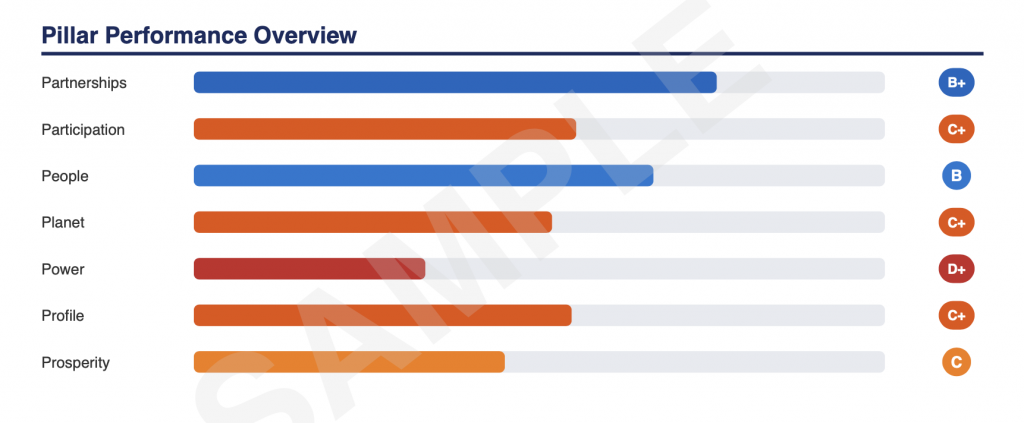
Through this framework, governance should be assessed through the lens of Awareness, Activity and Impact.
Does an organisation recognise good governance principles?
Does it actively implement them?
Can it demonstrate that governance mechanisms genuinely influence decision-making and constrain executive power?
Perhaps the most important question of all is a simple one:
Would the organisation still function effectively if its president left tomorrow?
A sustainable organisation should be able to answer that question with confidence.
This is the objective of the work being developed through the GSS SPI Assessment Programme.
Strong Institutions, Not Strong Presidents
The sustainability movement has rightly focused attention on environmental impact, social responsibility and human rights.
Yet governance remains the foundation upon which all of those ambitions depend.
Without strong governance, sustainability commitments can be ignored.
Without independent oversight, accountability becomes optional.
Without balanced power structures, even well-intentioned organisations can drift towards decisions that undermine trust.
The lesson from FIFA’s latest controversy is therefore much broader than one disciplinary decision.
Sport does not primarily have a corruption problem.
It has a governance problem.
More specifically, it has a concentration of power problem.
Until international federations build institutions that are stronger than their presidents, the same governance failures will continue to emerge under different names, in different sports and in different generations.
And each time they do, public trust in sport, and sports integrity itself, will be the ultimate casualty.
Images
Evan Vucci/AP, Reuters, Michael Steele / Getty Images
Read moreGlobal Sustainable Sport








Join the GSS Alliance Partners programme today
Stay ahead of the game with our FREE weekly newsletter, delivering the latest sport and sustainability news from around the globe straight to your inbox
11th Hour Racing
Join the GSS Network programme today




Register for GSS Workshops today
Join the GSS Education programme today