
To access our unique news archive of over 1,400 articles with insights on over 500+ sustainable sports organisations, join the GSS Network today.
Login here if you are a registered network subscriber.
News article
FIBA Sets New Benchmark for Basketball with 2025–2029 Sustainability Strategy
FIBA has launched an ambitious Sustainability Strategy for 2025–2029, signalling a step change in how global governing bodies approach environmental responsibility, social impact, governance and long-term value creation. Endorsed by FIBA’s Central Board in December 2025, the strategy places sustainability and innovation at the heart of the international federation’s operations and major events.
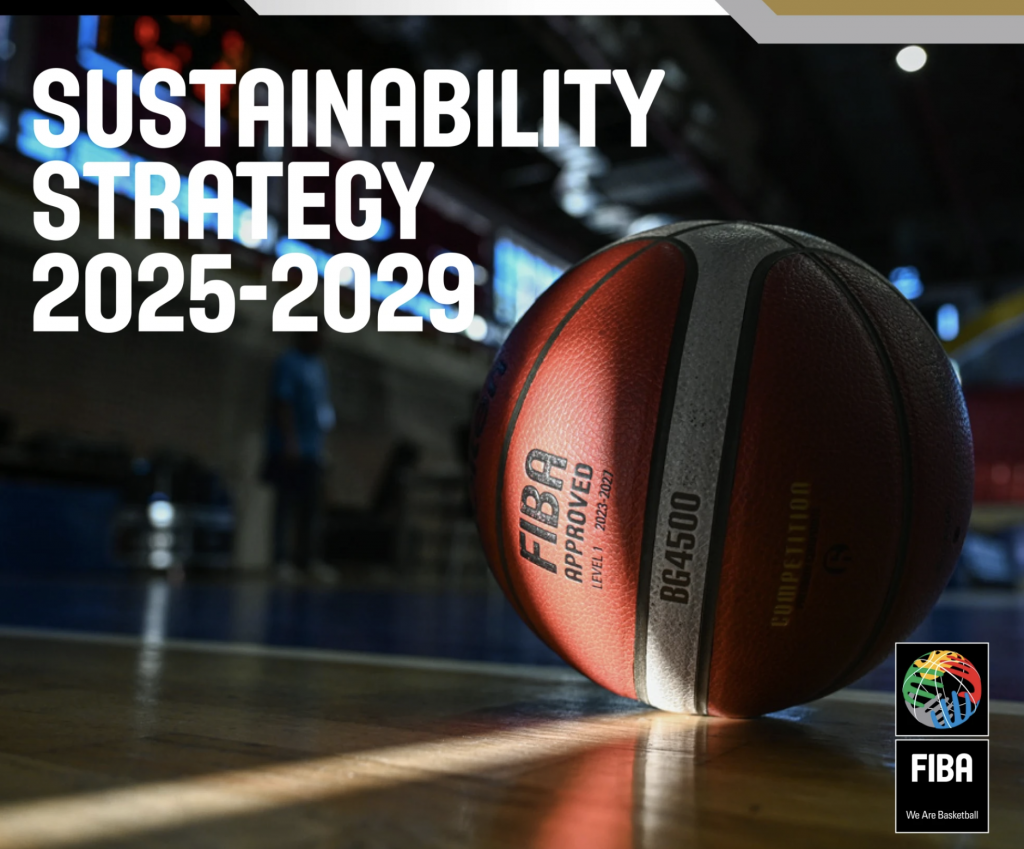
Structured around two spheres of responsibility, FIBA as an organisation and FIBA as an event owner, the strategy aims to embed sustainability into both internal governance and the planning, delivery and legacy of FIBA’s flagship competitions, including the Women’s Basketball World Cup 2026 and the Basketball World Cup 2027.
Partnering for Impact
Partnerships sit at the core of FIBA’s approach, with sustainability increasingly embedded into how it works with sponsors, suppliers and host partners.
“Partnerships are a core guiding principle of FIBA’s sustainability strategy,” the federation explained in response to Global Sustainable Sport. “Sustainability criteria are progressively embedded into institutional and commercial partnerships, with a focus on co-developing initiatives that deliver measurable environmental and social impact together with hosts, sponsors and suppliers.”
“Partnerships are a core guiding principle of FIBA’s sustainability strategy. Sustainability criteria are progressively embedded into institutional and commercial partnerships, with a focus on co-developing initiatives that deliver measurable environmental and social impact together with hosts, sponsors and suppliers.”
FIBA pointed to the role of long-term global partners in activating its social pillars, adding: “FIBA Global Partners Molten and TCL have been intrinsically involved in activating FIBA’s Women in Basketball strategic pillar across multiple countries and regions through grassroots programmes and forums.”
This collaborative model reflects a shift away from transactional sponsorships towards partnerships that contribute directly to long-term social value within the basketball ecosystem.
Participation, Inclusion and Access
Participation and inclusion form a central strand of FIBA’s social impact ambitions, with basketball positioned as a platform for social mobility and community engagement.
“Participation and inclusion are addressed through Women in Basketball, Youth Development and Basketball For Good, using basketball as a platform to expand access, promote inclusion and engage youth and underrepresented communities,” FIBA said.
The federation highlighted a growing portfolio of grassroots and regional programmes, including Her World, Her Rules, Mini Basketball, and initiatives such as Hoops for Schools, Ball’In Schools, Bula Hoops and a range of Youth Development Camps. Together, these programmes aim to lower barriers to participation and use basketball as a tool for education, confidence-building and community cohesion.
“Participation and inclusion are addressed through Women in Basketball, Youth Development and Basketball For Good, using basketball as a platform to expand access, promote inclusion and engage youth and underrepresented communities,”
Planet: From Strategy to Measurement
Environmental responsibility is one of the most technically challenging areas of the strategy, with FIBA acknowledging the need to build stronger data foundations before accelerating action.
“The 2025–2029 period prioritises establishing robust baselines for Scope 1, 2 and 3 emissions for both the organisation and flagship events,” FIBA noted. “This will be followed by progressive reduction measures, sustainable mobility, waste management, responsible sourcing and biodiversity initiatives.”
FIBA has already begun piloting this approach at its headquarters in Mies, Switzerland. “Energy-efficiency measures, renewable electricity sourcing and on-site solar energy production have resulted in zero direct CO₂ emissions from building operations and a reduction of approximately 46 MWh annually,” the federation said.
At event level, sustainability action plans covering mobility, energy, waste and sourcing will be progressively integrated into major competitions, allowing FIBA to test and scale environmental solutions in live event settings.
“The 2025–2029 period prioritises establishing robust baselines for Scope 1, 2 and 3 emissions for both the organisation and flagship events. This will be followed by progressive reduction measures, sustainable mobility, waste management, responsible sourcing and biodiversity initiatives.”
People, Safeguarding and Wellbeing
FIBA places particular emphasis on safeguarding, integrity and wellbeing across its global network.
“Safeguarding has long been a core priority for FIBA, where we have been a leading organisation for many years, supported by dedicated policies, structures and education programmes,” the federation explained.
This is supported by practical mechanisms, including the rollout of the FIBA Safeguarding Toolkit and mandatory training for National Federations. “The introduction of mandatory Safeguarding Single Point of Contact (SPOC) training provides a concrete, measurable mechanism to strengthen protection standards across the basketball ecosystem,” FIBA added.
Alongside safeguarding, the strategy integrates diversity, equity and inclusion, integrity and wellbeing into governance, operations and event delivery.
“Safeguarding has long been a core priority for FIBA, where we have been a leading organisation for many years, supported by dedicated policies, structures and education programmes,”
Governance, Reporting and Accountability
FIBA has framed governance as a standalone pillar, reflecting the growing expectation that sustainability commitments must be underpinned by credible reporting and accountability.
“KPIs are defined within the Action Plan, including measurement-based indicators where no prior baseline exists, and sustainability progress is reflected through internal reporting processes and the FIBA Activity Report, published every two years,” the organisation said.
This focus on measurement and transparency is intended to move sustainability beyond narrative commitments towards demonstrable progress over the four-year cycle.
“KPIs are defined within the Action Plan, including measurement-based indicators where no prior baseline exists, and sustainability progress is reflected through internal reporting processes and the FIBA Activity Report, published every two years,”
Engaging Fans and Athletes
Engagement with fans and athletes is another key lever for impact, with FIBA aiming to use its global platform to normalise sustainable behaviours.
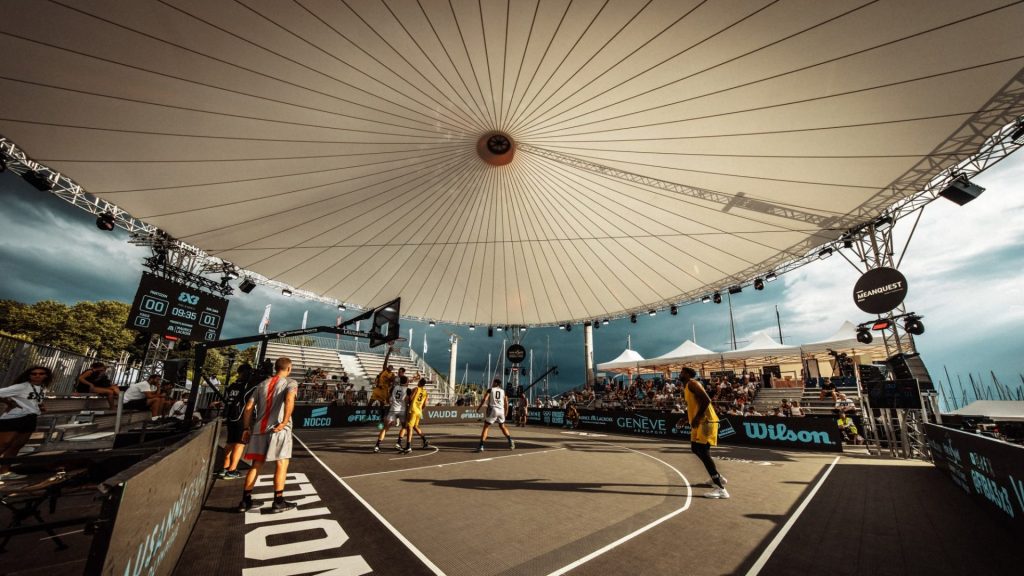
“Engagement is driven by digital initiatives and Basketball For Good programmes with the aim to raise awareness and inspire action,” FIBA explained. The federation cited the Mascot Education Programme at recent World Cups, which promoted recycling awareness across host countries and was delivered through its Youth Leadership Programme, empowering young people to lead sustainability initiatives in their own communities.
Prosperity and Long-Term Value
Balancing financial performance with long-term value creation remains a delicate but necessary part of FIBA’s strategy.
“Financial stability is one of the areas requiring the greatest attention to ensure that sustainability initiatives create value for all stakeholders involved,” FIBA said. “This includes partners, hosts, suppliers and the broader basketball ecosystem.”
The federation is seeking to align commercial growth with sustainability outcomes by embedding environmental and social considerations into sponsorships, procurement and licensing. It also noted a growing appetite from media and marketing partners to engage more actively with FIBA’s sustainability programmes.
“Financial stability is one of the areas requiring the greatest attention to ensure that sustainability initiatives create value for all stakeholders involved. This includes partners, hosts, suppliers and the broader basketball ecosystem.”
Scaling Across Federations and Events
For now, FIBA’s primary focus is on leading by example through its own operations and major competitions.
“Sustainability requirements are primarily integrated into major events, where they form part of sustainability frameworks and event documentation,” FIBA said. “This includes the progressive implementation of sustainability principles at upcoming flagship competitions, starting with the FIBA Women’s World Cup 2026 in Berlin and continuing with the FIBA Basketball World Cup 2027 in Qatar.”
Over time, FIBA expects these principles to cascade more widely across National Federations as guidance, tools and expectations mature.
“Sustainability requirements are primarily integrated into major events, where they form part of sustainability frameworks and event documentation. This includes the progressive implementation of sustainability principles at upcoming flagship competitions, starting with the FIBA Women’s World Cup 2026 in Berlin and continuing with the FIBA Basketball World Cup 2027 in Qatar.”
A Benchmark Moment for Global Basketball
Taken together, FIBA’s 2025–2029 Sustainability Strategy represents a meaningful attempt to move from high-level commitments towards structured implementation, measurement and partnership-driven delivery. While much of the impact will depend on execution over the next four years, the strategy positions basketball as a sport increasingly willing to confront its environmental footprint, social responsibilities and governance obligations head-on.
As FIBA itself puts it, the strategy is intended as a promise – to protect the planet, empower communities and ensure that basketball’s global influence contributes to a more sustainable future.
Read moreFIBA






Join the GSS Alliance Partners programme today
Stay ahead of the game with our FREE weekly newsletter, delivering the latest sport and sustainability news from around the globe straight to your inbox

11th Hour Racing
Join the GSS Network programme today


Register for GSS Workshops today
Join the GSS Education programme today