
To access our unique news archive of over 1,400 articles with insights on over 500+ sustainable sports organisations, join the GSS Network today.
Login here if you are a registered network subscriber.
News article
Turning the Tide: Creative Activism Drives Brazil’s Largest Marine National Park
In an era where many sustainability campaigns struggle to move beyond awareness, the “No Blue, No Green” initiative in Brazil offers a compelling blueprint for impact. Developed by Droga5 São Paulo in partnership with the SOS Oceano alliance, the campaign did more than capture attention—it helped unlock the creation of Brazil’s largest marine national park.
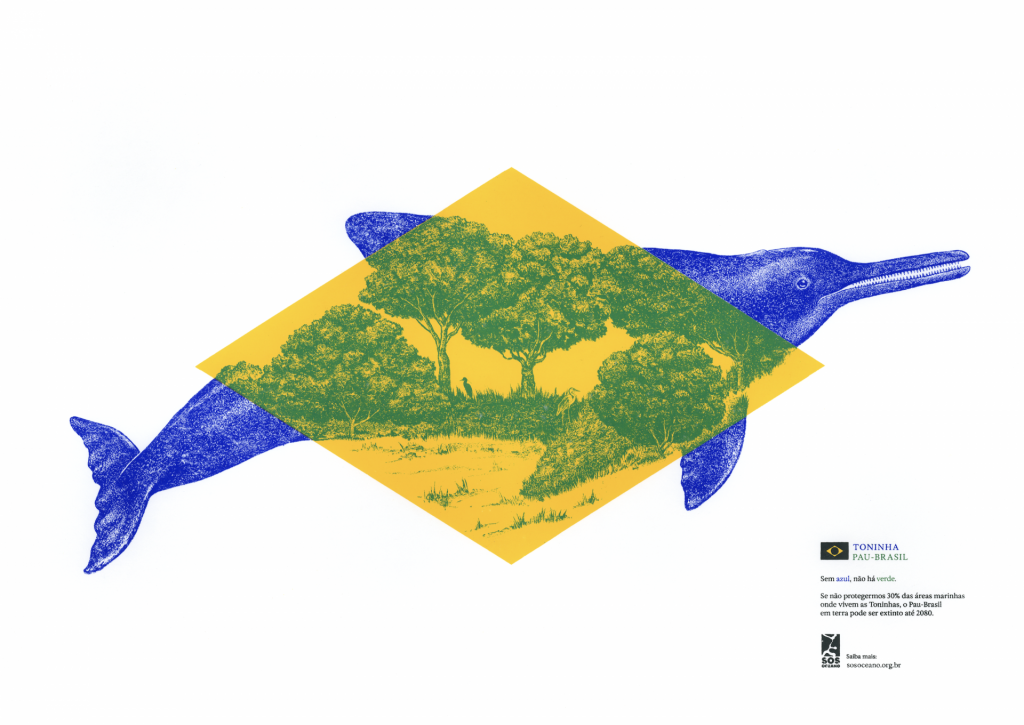
By removing the blue and green from the Brazilian flag, the campaign delivered a stark and immediate message: without healthy oceans, life on land cannot survive. The visual disruption of a national symbol transformed a complex environmental issue into something both accessible and impossible to ignore.
From visibility to policy change
What set the campaign apart was its clear legislative ambition. At its core was a long-standing objective—to secure protection for the Parque Nacional do Albardão, a project that had remained stalled within Brazil’s Ministry of the Environment for more than two decades.
Angela Kuczach, Coordinator of the SOS Oceano alliance, explains: “The technical studies were already in place and the scientific foundation was solid, but through the campaign we brought visibility to all of this.”
That visibility proved decisive. After 22 years of inertia, the park was officially decreed, protecting over 1.5 million hectares and safeguarding 25 endangered species. The campaign demonstrated that when communication is aligned with scientific evidence and advocacy, it can directly influence public policy.
“The technical studies were already in place and the scientific foundation was solid, but through the campaign we brought visibility to all of this.”
Building a movement, not just a message
Central to the campaign’s success was its ability to mobilise a broad coalition. By reimagining the Brazilian flag—an “immutable icon”—the initiative united voices across society, from Indigenous leaders and scientists to celebrities and policymakers.
Gabriela Rodrigues, Chief Impact Officer at Droga5 São Paulo, highlights the shift from communication to mobilisation: “This campaign succeeded because it became a movement. Communication doesn’t just have the power to raise awareness, it has the power to create stories that mobilise people. We chose to highlight an issue few people fully understood—the role oceans play in sustaining life on land—and did so at a moment when the world was watching Brazil. By altering a national symbol, we brought together groups that rarely collaborate, creating collective pressure that ultimately enabled real change.”
More than 60 creators and nearly 50 NGOs collaborated to apply coordinated pressure on decision-makers. Timed alongside COP30, when global attention was focused on Brazil, the campaign amplified its influence at a critical moment.
“This campaign succeeded because it became a movement. Communication doesn’t just have the power to raise awareness, it has the power to create stories that mobilise people. We chose to highlight an issue few people fully understood—the role oceans play in sustaining life on land—and did so at a moment when the world was watching Brazil. By altering a national symbol, we brought together groups that rarely collaborate, creating collective pressure that ultimately enabled real change.”
Creativity rooted in science
The campaign’s second phase deepened its impact by celebrating biodiversity through a series of handcrafted screen prints. Produced using natural mineral pigments, the artworks paired marine and terrestrial species, reinforcing the interdependence of ecosystems.
As André Maciel of Black Madre Studio explains, the concept is grounded in fundamental logic: “The project is rooted in colour theory. When we say ‘without blue there is no green,’ we are working with the fundamental logic of primary and secondary colours—blue and yellow create green. But beyond that, it becomes a metaphor for the relationship between ocean and land. The creative challenge was to translate that scientific truth into something visual, tangible and emotionally resonant.”
The choice of materials and methods reflected the campaign’s integrity—ensuring that its environmental message was embedded not only in its narrative but also in its production.
“The project is rooted in colour theory. When we say ‘without blue there is no green,’ we are working with the fundamental logic of primary and secondary colours—blue and yellow create green. But beyond that, it becomes a metaphor for the relationship between ocean and land. The creative challenge was to translate that scientific truth into something visual, tangible and emotionally resonant.”
Beyond awareness: a platform for lasting impact
Crucially, the creation of the Albardão National Park is not seen as an endpoint. The campaign has evolved into a long-term platform, with additional regions—Foz do Amazonas, Abrolhos, and the seamounts near Fernando de Noronha—identified for future protection.
Equally important is the role of local communities. The alliance is now focused on engaging coastal populations as active partners in the park’s implementation, fostering ownership and long-term stewardship.
As Kuczach explains: “A National Park is permanent, and its benefits span generations. When we raised the black flag, we weren’t just creating a striking visual—we were giving a voice to marine life and making the urgency of protection visible. The campaign translated a complex environmental challenge into something immediate and culturally recognisable, and that is what helped secure a lasting outcome for both people and biodiversity.”
“A National Park is permanent, and its benefits span generations. When we raised the black flag, we weren’t just creating a striking visual—we were giving a voice to marine life and making the urgency of protection visible. The campaign translated a complex environmental challenge into something immediate and culturally recognisable, and that is what helped secure a lasting outcome for both people and biodiversity.”
A blueprint for impact
The success of “No Blue, No Green” signals a broader shift in how creative industries can contribute to sustainability. By combining scientific credibility, cultural relevance and strategic advocacy, the campaign moved beyond awareness to deliver measurable environmental outcomes.
For the global sport and sustainability sector, the lesson is clear: when powerful storytelling is aligned with purpose and policy, it doesn’t just raise awareness—it can truly change the map.
Read moreDroga5 & SOS Oceano
Join the GSS Alliance Partners programme today
Stay ahead of the game with our FREE weekly newsletter, delivering the latest sport and sustainability news from around the globe straight to your inbox
11th Hour Racing
Join the GSS Network programme today

Register for GSS Workshops today
Join the GSS Education programme today