
To access our unique news archive of over 1,400 articles with insights on over 500+ sustainable sports organisations, join the GSS Network today.
Login here if you are a registered network subscriber.
News article
The Long Game: Jono Ridler’s 1,367km Advocacy Marathon
On 4 April 2026, ultra-marathon swimmer Jono Ridler emerged from the waters of Te Whanganui-a-Tara Wellington, completing a remarkable 90-day journey that stretched the limits of human endurance and redefined the role sport can play in environmental advocacy.
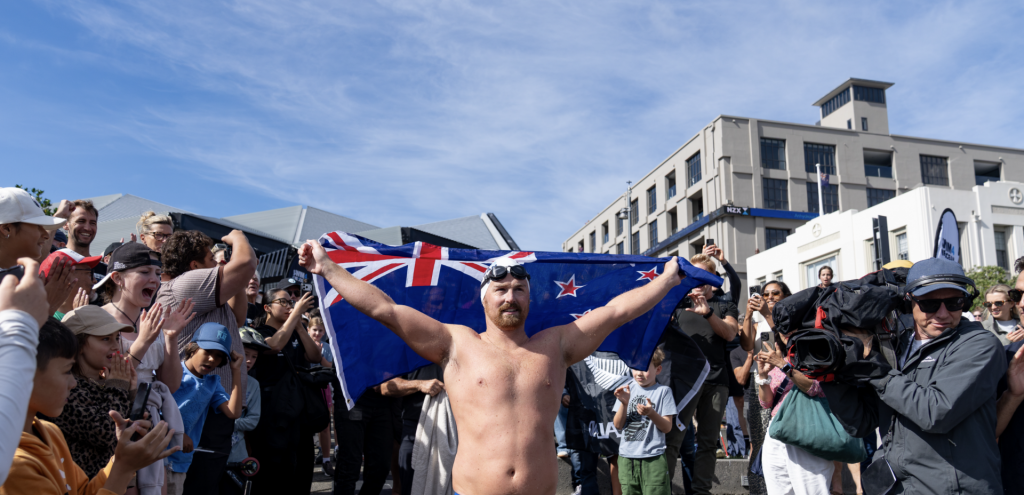
Covering 1,367 kilometres and spending more than 468 hours in the ocean, Ridler’s effort is expected to be ratified as the longest unassisted staged swim in history. He did so without a wetsuit—wearing only standard togs, a cap and goggles—adding another layer of exposure to an already extraordinary challenge.
But this was never just about distance. From the outset, Swim4TheOcean was designed as a strategic intervention—an attempt to convert endurance into influence and visibility into policy momentum.
Delivered in partnership with Live Ocean, the mission carried a clear and focused demand: an end to destructive bottom trawling in New Zealand waters. By the time Ridler reached Wellington, more than 67,000 people had added their names to that call.
As Peter Burling, Co-Founder of Live Ocean, explained:
“We know sport can be an incredible platform for bringing people around issues—a catalytic moment for change. As guardians of the fourth-largest ocean space on the planet, we think New Zealand can and should do better.”
“We know sport can be an incredible platform for bringing people around issues—a catalytic moment for change. As guardians of the fourth-largest ocean space on the planet, we think New Zealand can and should do better.”
Endurance as Infrastructure
At its core, the swim was governed by the strict rules of the Marathon Swimmers Federation. Each stage had to begin precisely where the last ended, with GPS-logged exit and entry points ensuring continuity along the coastline.
This structure transformed the New Zealand shoreline into more than a route—it became a moving platform for engagement, with each restart extending both the journey and the conversation.
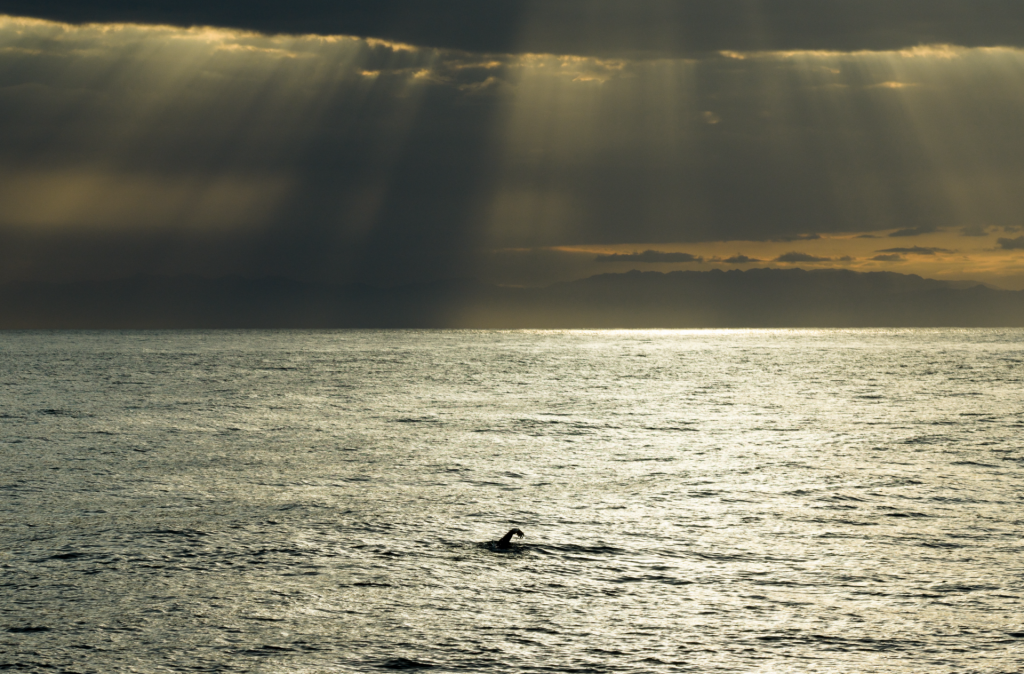
The early stages revealed the scale of the challenge. Within the first week, Ridler had logged more than 100 kilometres while battling nausea, sunburn and unpredictable sea conditions.
“Day one was pretty tricky,” he admitted. “We only managed about three hours out… including revisiting the contents of my stomach about a dozen times.”
As the weeks progressed, the cumulative toll intensified. By early February, he had reached 493 kilometres, dealing with salt tongue, mouth ulcers and a wrist injury that forced him to swim with a closed fist.
Yet the rhythm held. Stroke by stroke, restart by restart, the swim built momentum—physically and publicly.
A Strategic Partnership with a Policy Endgame
Swim4TheOcean was never positioned as an awareness campaign alone. From the outset, it was framed as a targeted policy intervention.
Live Ocean brought scientific credibility and strategic intent, ensuring the swim translated into measurable impact. Baseline public-attitude data collected in 2023 will now be compared with post-swim results to assess whether awareness—and support for reform—has materially shifted.
This reflects a broader shift across sport and sustainability: moving beyond storytelling towards evidence-based advocacy.
There is precedent. A previous Ridler–Live Ocean collaboration contributed to strengthened marine protections in the Hauraki Gulf, demonstrating how aligned campaigns can reach beyond awareness into policy influence.
In that context, Swim4TheOcean represents a scaling of that model—from regional success to national mobilisation.
The Policy Target: Ending Bottom Trawling
At the heart of the campaign sits a clear and urgent ask: end bottom trawling on seamounts and vital marine ecosystems by 2027, and accelerate the transition away from the practice entirely.
“Bottom trawling is a last-century fishing method,” Ridler said. “It causes long-lasting damage and prevents ecosystems from recovering.”
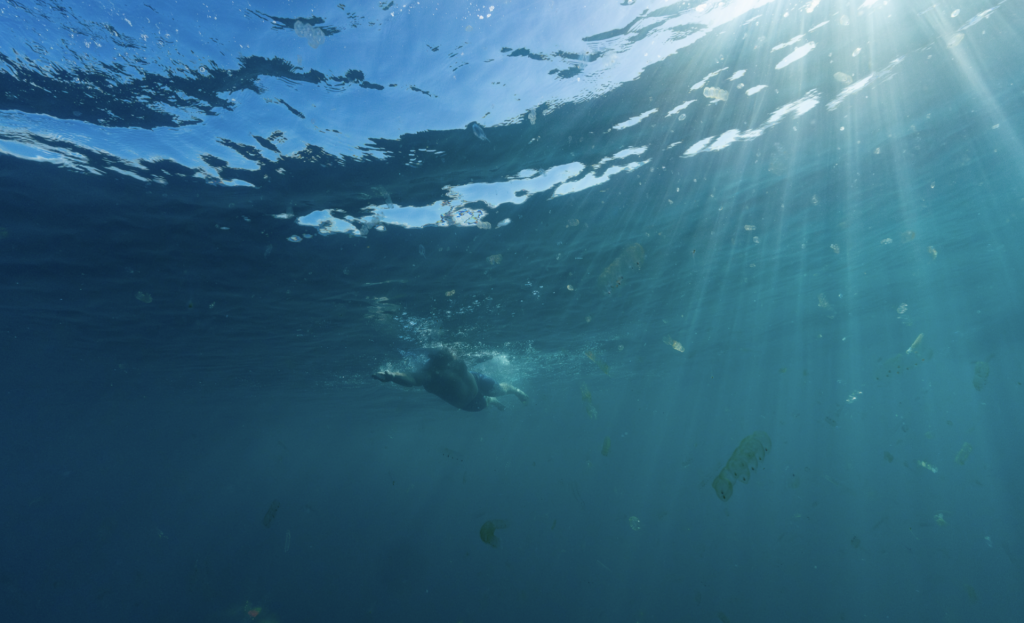
The environmental case is increasingly difficult to ignore. Seafloor disturbance releases stored carbon, damages biodiversity and undermines the ocean’s natural role in climate regulation—placing it in direct conflict with national sustainability commitments.
What Swim4TheOcean has achieved is to bring that issue into the public domain, translating a complex environmental challenge into a clear, human narrative: one swimmer, one coastline, one collective call to action.
“Bottom trawling is a last-century fishing method. It causes long-lasting damage and prevents ecosystems from recovering.”
Navigating the Final Push
If the early stages were about adaptation, the final weeks were defined by resilience.
By March, Ridler had passed the 1,000-kilometre mark—equivalent to crossing Cook Strait around 45 times—while accumulating more than 340 hours in the water.
From Hawke’s Bay south, the conditions intensified. Water temperatures dropped below 15°C, exposed coastlines limited landing points, and fatigue became a constant companion.
“My mind fluctuates,” Ridler reflected. “Some days you’re in a really good space. Some days it’s hard… You focus on the next stroke, the next hour.”
The defining milestone came at Cape Palliser, where Ridler entered the Cook Strait just as the petition surpassed 50,000 signatures—a moment where physical endurance and public momentum aligned.
“My mind fluctuates. Some days you’re in a really good space. Some days it’s hard… You focus on the next stroke, the next hour.
Communities, Capital and the Long View
While the swim was defined by endurance, its impact has been shaped by connection.
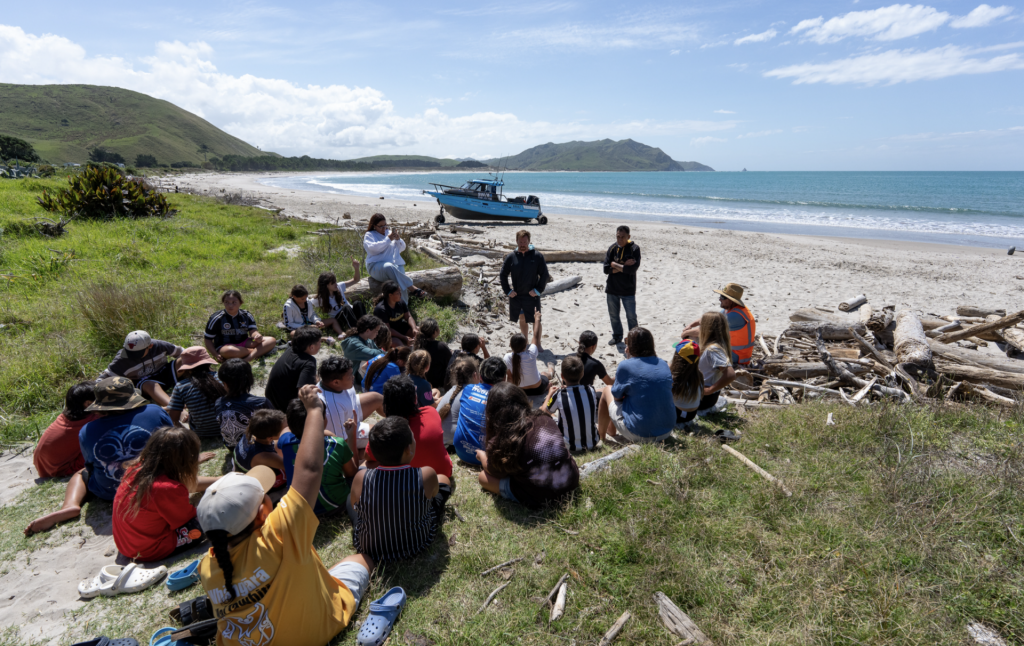
More than 120 coastal stopovers transformed the route into a rolling national conversation. Communities welcomed Ridler ashore, shared their own experiences of ocean change, and added their voices to the growing call for action.
That grassroots engagement has been reinforced by institutional backing, with partners aligning commercial support with long-term environmental outcomes—an increasingly important signal in the evolving sustainability landscape.
A Legacy Beyond the Water
As Ridler stepped out of the water in Wellington—welcomed by Te Āti Awa mana whenua and a large crowd—the moment marked both an ending and a beginning.
Within hours, he was on his way to Parliament, carrying with him not just a personal achievement, but a national mandate built across three months of sustained effort.
At the heart of that moment was a generational challenge:
“I want my generation to be the generation that says, not ‘do you remember how good it used to be’, but ‘do you remember how bad it used to be?’” Ridler said. “This can be a real moment to change… I hope this inspires all of you to, in your own way, be ocean advocates… because if we can really take this thing exponential and get an incredible number of signatures, that will be impossible to ignore.”
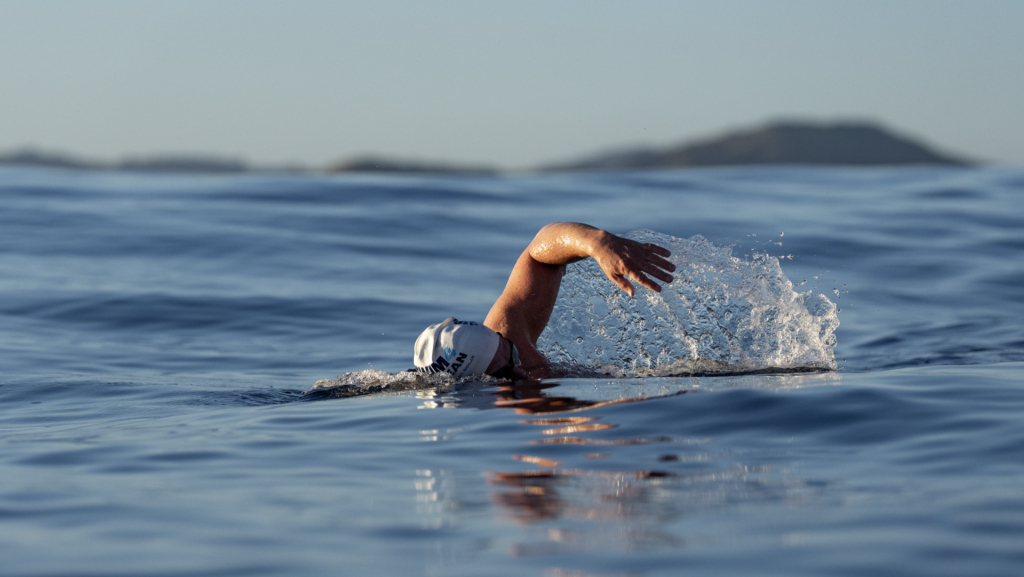
“I want my generation to be the generation that says, not ‘do you remember how good it used to be’, but ‘do you remember how bad it used to be? This can be a real moment to change… I hope this inspires all of you to, in your own way, be ocean advocates… because if we can really take this thing exponential and get an incredible number of signatures, that will be impossible to ignore.”
That call now sits within a broader transition for Live Ocean itself. The Foundation has appointed Rosalie Nelson as its new Chief Executive, joining at a pivotal moment to help scale its impact across science, innovation and advocacy.
Nelson brings deep experience in strategy and purpose-led leadership, and sees the ocean as central to both identity and future:
“New Zealand begins and ends with the ocean: it is central to our identity and to our future… What draws me to Live Ocean is the focus on action—partnering with exceptional scientists, innovators and communicators to help scale solutions for a healthy ocean.”
“New Zealand begins and ends with the ocean: it is central to our identity and to our future… What draws me to Live Ocean is the focus on action—partnering with exceptional scientists, innovators and communicators to help scale solutions for a healthy ocean.”
Her appointment signals the next phase of the “Long Game”—one that moves from mobilisation to delivery, from momentum to measurable change.
Because ultimately, this was never just a journey down a coastline.
It was an attempt to turn individual endurance into collective action—and to prove that sport, when aligned with purpose, can still help bend the arc of environmental governance in the right direction.
Read moreLive Ocean













Join the GSS Alliance Partners programme today
Stay ahead of the game with our FREE weekly newsletter, delivering the latest sport and sustainability news from around the globe straight to your inbox

11th Hour Racing
Join the GSS Network programme today


Register for GSS Workshops today
Join the GSS Education programme today