
To access our unique news archive of over 1,400 articles with insights on over 500+ sustainable sports organisations, join the GSS Network today.
Login here if you are a registered network subscriber.
News article
Goals, Grassroots and Green Pitches: Football’s Collective Sustainability Shift
European football is entering a new phase of sustainability—one that moves beyond isolated initiatives and into the fabric of how the game is governed, delivered and experienced. Across the continent, national associations are embedding environmental, social and governance priorities into their core strategies, signalling a shift from intent to integration.
Guided by UEFA frameworks, the direction of travel is clear: sustainability is no longer a peripheral function but a central pillar shaping the future of football.
Redefining the Matchday Experience
For many associations, transformation begins with the matchday. Accessibility, inclusion and environmental responsibility are increasingly standard practice rather than innovation.
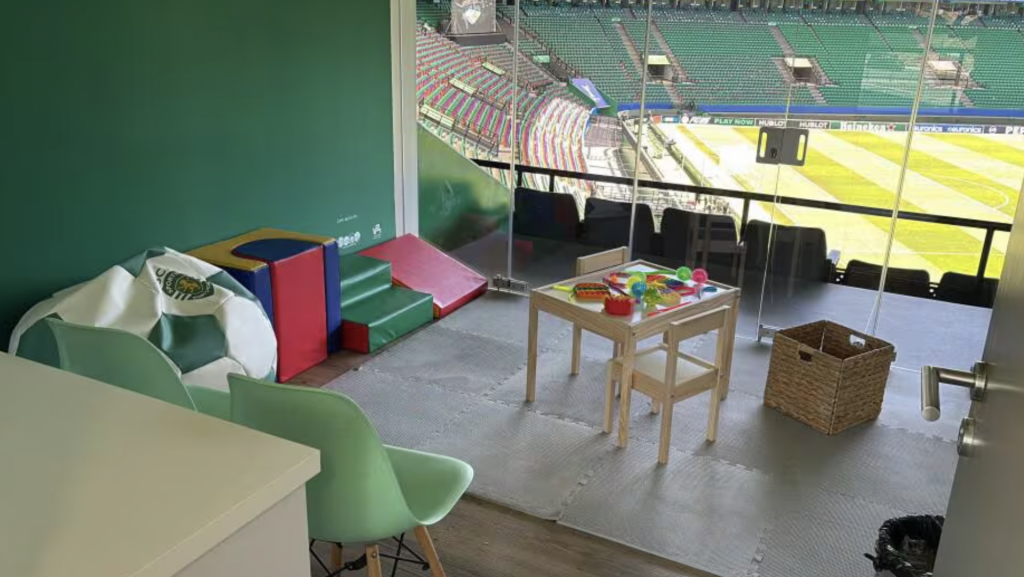
The Football Association of Wales (FAW) has positioned accessibility at the heart of its operations, introducing audio-descriptive commentary and sensory rooms to ensure a more inclusive experience for all supporters. What began as a social focus has expanded into a broader sustainability strategy, incorporating environmental considerations into tournament delivery and sourcing practices.
As Jason Webber, FAW’s Senior Equality, Diversity, Inclusion and Sustainability Manager, explains:
“Our matchday and tournament-specific sustainability strategies… have helped the FAW embed environmental and social principles directly into event planning and operational delivery.”
Similarly, the Italian Football Association (FIGC) is reimagining the matchday format itself. Through NGO partnerships, inclusive hospitality roles and detailed food recovery plans, sustainability is being designed into the fan experience. The result is a more holistic model—one that connects participation, people and planet in a single operational framework.
“Our matchday and tournament-specific sustainability strategies… have helped the FAW embed environmental and social principles directly into event planning and operational delivery.”
From Isolation to Collective Action
A defining feature of this shift is collaboration. Across Europe, associations are moving away from siloed approaches and towards shared learning and collective action.
In Austria, a workshop hosted by SK Rapid Vienna brought together sustainability officers from across the Bundesliga. Beyond knowledge exchange, the initiative created something equally valuable: recognition. Participants reported a renewed sense of purpose and a clearer understanding that their work sits within a wider movement.
This momentum is being mirrored in Türkiye, where the Turkish Football Federation (TFF) has established a platform bringing together men’s and women’s top-tier clubs. The aim is to co-develop solutions and create consistency across the football ecosystem.
As TFF SES Manager Begüm Serbetçioğlu noted:
“The overall aim is to establish a more consistent and collaborative sustainability approach across Turkish football.”
“The overall aim is to establish a more consistent and collaborative sustainability approach across Turkish football.”
Embedding Sustainability in Governance
Perhaps the most significant development is the formal integration of sustainability into governance structures.
From Wales’ sustainable sourcing code to the Austrian Football Association (ÖFB) placing sustainability at the centre of its long-term strategy, associations are moving towards measurable, accountable frameworks. UEFA’s reporting playbooks are playing a key role here, helping organisations align on language, metrics and expectations.
In Romania, this alignment is already delivering impact. A national network has been established, alongside a shared understanding of sustainability priorities and a clear ambition to lead on social and environmental responsibility by 2026.
As Florin Șari, Public Policy and Social Responsibility Manager of the Romanian Football Federation put it:
“We are committed not only to act, but to inspire and actively involve others in driving meaningful change.”
“We are committed not only to act, but to inspire and actively involve others in driving meaningful change.”
A Game-Wide Transformation
What emerges is a picture of football as a system in transition. Sustainability is no longer defined by standalone projects, but by how effectively it is embedded across operations, partnerships and governance.
The challenge now is scale and consistency. But with growing collaboration, clearer frameworks and increasing accountability, Europe’s football associations are demonstrating that collective action can turn ambition into everyday practice—ensuring the game remains both relevant and responsible for generations to come.
Read moreUEFA






Join the GSS Alliance Partners programme today
Stay ahead of the game with our FREE weekly newsletter, delivering the latest sport and sustainability news from around the globe straight to your inbox

11th Hour Racing
Join the GSS Network programme today




Register for GSS Workshops today
Join the GSS Education programme today