
To access our unique news archive of over 1,400 articles with insights on over 500+ sustainable sports organisations, join the GSS Network today.
Login here if you are a registered network subscriber.
News article
Top storySport as a Common Currency for Climate Action
Set against the backdrop of the Eden Project, Anthropy 2026 brought together more than 2,000 business leaders, policymakers and innovators from across the UK, united by a shared ambition to shape a better Britain.
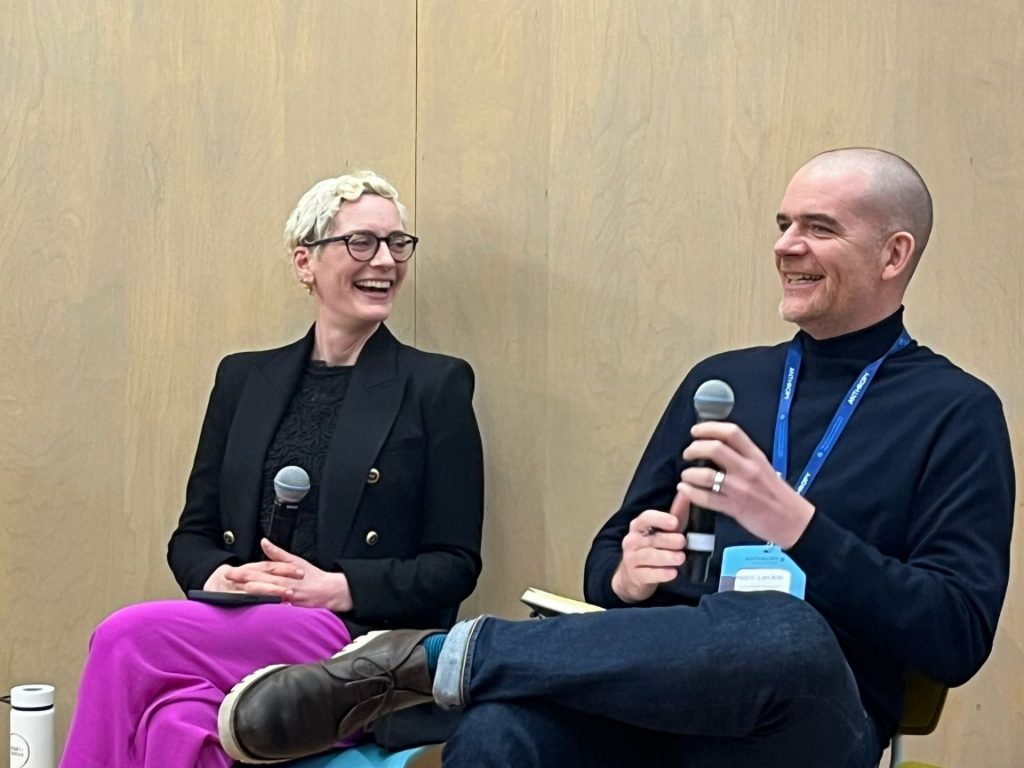
Across the three-day gathering, discussions spanned the future of the economy, society and the environment—creating space for different sectors to explore how they can contribute to long-term national progress. Sport was one of those sectors.
Featured across a number of sessions, sport was positioned not simply as entertainment, but as a platform with the reach, influence and community connection to support wider societal goals. Within that context, the session “Soft Power – Sport as a systematic leader, a community builder and the instigator of collective action” explored how sport can move from influence to impact—particularly in addressing climate and social challenges.
What emerged was not a question of whether sport can contribute—but how far its role can extend.
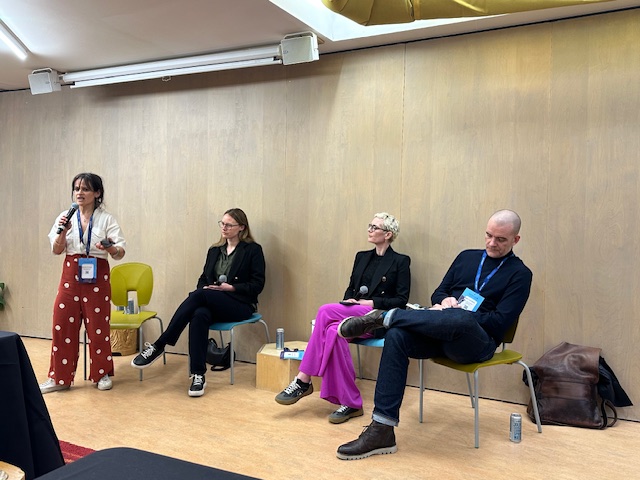
From climate paralysis to cultural shift
Opening the session, Katie Cross, CEO of Pledgeball, framed the scale of the challenge through a deliberately stark lens, highlighting how modern systems are undermining the essentials of life—from clean air to stable food systems.
Yet the response, she argued, is often paralysis.
Sport, however, offers a different pathway—one rooted in participation rather than fear.
As she explained, change does not require universal buy-in:
“We need 25% of the population simply adopting a new social norm to trigger the shift that we need to see.”
It is here that sport’s emotional connection becomes critical. Clubs, teams and communities provide a shared identity—one that can translate complex issues like climate into something tangible and local.
“We need 25% of the population simply adopting a new social norm to trigger the shift that we need to see.”
A language that transcends borders
Claire Poole, CEO of Sport Positive, built on this by describing sport as a “common currency”—a universal language that connects people regardless of geography or background.
“You can’t drop yourself anywhere in the world without coming into sport pretty quickly,” she noted.
From children playing in the streets to global broadcast audiences, sport operates simultaneously at every level of society. That reach, combined with its emotional pull, gives it a unique ability to influence behaviour.
But the opportunity extends beyond visibility.
Poole emphasised that sport intersects with some of the biggest societal challenges—from loneliness and health to trust and community cohesion—often providing solutions where other sectors struggle.
“You can’t drop yourself anywhere in the world without coming into sport pretty quickly,”
The ‘honey pot’ effect of sport in communities
For Marc Leckie, CEO of the Tottenham Hotspur Foundation, the reality of that influence is most visible at the local level.
Drawing on his experience at the Tottenham Hotspur Foundation, he described sport as a powerful entry point for engaging communities.
“The stadium is the honey pot,” he explained, highlighting how people are drawn in through their connection to the club.
From there, programmes can extend into education, employment and enterprise. Stories shared during the session illustrated how individuals move from disengagement to leadership roles, supported by sport-based initiatives.
Yet despite this impact, Leckie argued that sport remains under-recognised as a delivery partner:
“We are the most well-known, best-kept secret in the country.”
He pointed to a structural challenge—clubs and foundations are often viewed as separate entities rather than a collective system capable of delivering national priorities.
“We are the most well-known, best-kept secret in the country.”
Bridging the gap between policy and place
That disconnect was echoed by Anna Gelderd, MP for South-East Cornwall, who highlighted the gap between government targets and local realities.
“Sometimes there’s a long way to go from target setting in Whitehall to my local football club,” she said.
Positioning climate change as a social justice issue, she pointed to the inequalities that shape access to sport, nature and opportunity—particularly in rural and coastal communities.
Her message was clear: achieving national goals requires local engagement, and sport can play a central role in that process.
“Sometimes there’s a long way to go from target setting in Whitehall to my local football club,”
From isolated initiatives to joined-up action
A recurring theme throughout the session was the need to break down silos—both within sport and across sectors.
Examples shared ranged from community energy initiatives to multi-sport collaborations addressing shared environmental challenges. Yet many of these remain isolated.
Poole highlighted the scale of the opportunity:
“There are 150,000 community sport organisations just in England… but it’s massively underutilised.”
The issue is not activity, but coordination. Without stronger alignment, sport risks delivering impact in pockets rather than at scale.
“There are 150,000 community sport organisations just in England… but it’s massively underutilised.”
The tension between scale and impact
The discussion also acknowledged the pressures facing sport organisations.
Funders often prioritise reach, while meaningful change requires depth. At the same time, clubs are navigating competing expectations—from sponsors, supporters and governing bodies.
As Leckie outlined, this creates a constant balancing act:
“Do you bring 100,000 people through the door, or work intensively with 10,000 and change lives?”
Layered onto this is the volatility of sport itself, where on-pitch performance can influence how receptive audiences are to off-pitch initiatives.
The challenge now is to connect those efforts and turn collective ambition into community action.
“Do you bring 100,000 people through the door, or work intensively with 10,000 and change lives?”
Fashion, waste and the overlooked challenge of kit
One of the most striking interventions came from the audience, raising the issue of fashion and the growing volume of unused sports kit.
The point was simple but powerful: while sustainability conversations often focus on energy or transport, the environmental impact of kit production and waste is rarely addressed.
In response, Poole acknowledged that apparel is a significant and often overlooked contributor:
“Apparel is one of the biggest issues in professional sport… so much of it is made and just wasted.”
She pointed to examples where unused merchandise—such as championship-winning shirts produced for finals—cannot enter circulation and is often destroyed.
At a community level, however, new models are emerging, from kit exchange programmes to reuse initiatives that redistribute clothing across age groups and clubs.
The discussion highlighted both the scale of the challenge and the opportunity for sport to lead behaviour change—particularly among younger participants and families.
“Apparel is one of the biggest issues in professional sport… so much of it is made and just wasted.”
A sector ready to do more
As the session closed, the focus turned to collaboration—how sport can work more effectively with government, communities and other sectors.
The appetite is clearly there.
From community energy to education partnerships, the examples shared throughout the session demonstrated that sport is already delivering impact across multiple fronts.
Read moreAnthropy 2026


Join the GSS Alliance Partners programme today
Stay ahead of the game with our FREE weekly newsletter, delivering the latest sport and sustainability news from around the globe straight to your inbox

11th Hour Racing
Join the GSS Network programme today

Register for GSS Workshops today
Join the GSS Education programme today