
To access our unique news archive of over 1,400 articles with insights on over 500+ sustainable sports organisations, join the GSS Network today.
Login here if you are a registered network subscriber.
News article
Top storyRecord Revenues and Radical Responsibility: Inside the DFL’s 2024/25 Sustainability Evolution
In the competitive landscape of European football, the DFL, has long been regarded as a standard-bearer for financial discipline and fan-centric governance. Its latest Economic Report, however, reveals something more ambitious: a league seeking to embed sustainability not as a parallel initiative, but as a structural pillar of professional football.
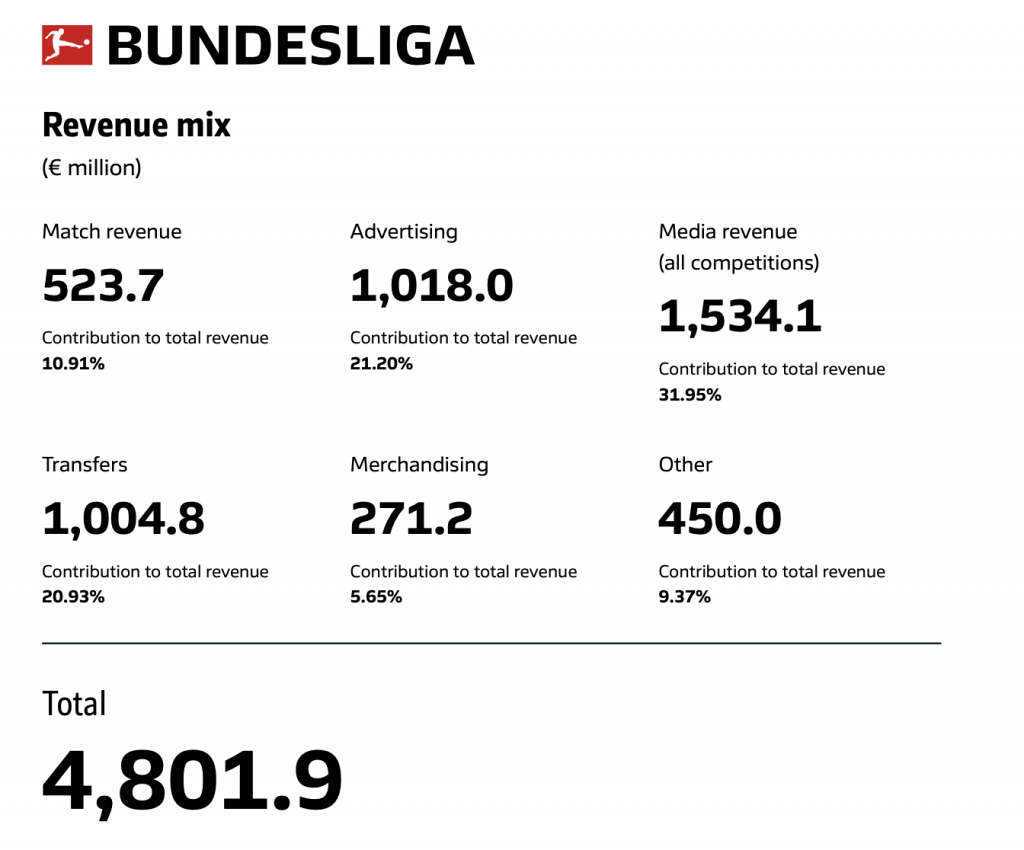
The 2024/25 season marks a historic financial milestone. For the first time, the 36 clubs of the Bundesliga and Bundesliga 2 generated more than six billion euros in revenue, reaching. Operating profit reached €271.5 million, while total tax and duty contributions amounted to almost €1.7 billion.
Yet beyond the headline figures lies a deeper shift — one that reflects football’s evolving understanding of long-term responsibility.
Economic Strength as a Platform for Stability
The Bundesliga alone generated €5.12 billion, while Bundesliga 2 grew to €1.21 billion — a 13.1% increase year-on-year. More clubs reported positive results than in the previous season, with equity across the Bundesliga surpassing €2.17 billion for the first time.
League President Hans-Joachim Watzke framed this growth as more than commercial success:
“Football brings people together across all differences and boundaries, creating shared experiences. The economic growth of the Bundesliga and Bundesliga 2 – with renewed record revenues – also has a positive societal effect.”
“Football brings people together across all differences and boundaries, creating shared experiences. The economic growth of the Bundesliga and Bundesliga 2 – with renewed record revenues – also has a positive societal effect.”
DFL CEO Marc Lenz reinforced the importance of maintaining equilibrium:
“With its balanced mix of income and rational use of resources, German professional football maintains the increasingly difficult balance between sporting competitiveness and economic stability.”
This language matters. In an era where wage inflation and investor dependency challenge many European leagues, the German model continues to emphasise structural prudence — underpinned by licensing regulations and the 50+1 governance principle.
“With its balanced mix of income and rational use of resources, German professional football maintains the increasingly difficult balance between sporting competitiveness and economic stability.”
Embedding Sustainability into the Licensing Framework
What differentiates this reporting cycle is not simply revenue growth, but governance evolution.
The DFL has formally integrated sustainability criteria into its mandatory licensing system. Environmental and social performance are no longer voluntary initiatives — they are conditions of participation.
For the 2025/26 season, the bar rises again: clubs will be required to provide independent, third-party verification of compliance with sustainability requirements. This transition from self-disclosure to audited validation represents a significant maturity step.
In practice, this includes centralised data collection on emissions, energy use, water consumption and waste management, creating a consistent baseline across all 36 clubs. Standardised metrics enable benchmarking and transparency — two foundations essential to credible impact reporting.
DFL CEO Steffen Merkel summarised the broader philosophy:
“Record revenues reflect the great social popularity of football and are also an important building block for sustainable economic stability. Together, we are working to further strengthen this pillar of professional football.”
“Record revenues reflect the great social popularity of football and are also an important building block for sustainable economic stability. Together, we are working to further strengthen this pillar of professional football.”
Football’s Expanding Social Footprint
The league’s economic ecosystem extends far beyond matchday.
Employment across both divisions reached a record 64,122 people in 2024/25, the highest figure in German professional football history. Nearly 21 million tickets were sold during the season, underlining sustained spectator engagement.
Over the past decade, professional football in Germany has contributed more than €14 billion in taxes and social contributions.
The DFL’s reporting increasingly positions football as civic infrastructure: a generator of employment, tax revenue and community cohesion.
From Revenue to Responsibility
The strategic question facing the DFL is not whether it can generate growth — it demonstrably can — but how that growth translates into measurable environmental and social impact.
By digitising its reporting, standardising its metrics, and moving toward independent sustainability audits, the DFL is signalling a structural shift: accountability is becoming institutionalised.
The move from narrative reporting to enforceable criteria within licensing frameworks is one of the clearest indicators that sustainability is being embedded into the operational DNA of elite sport.
The German model suggests that financial strength and regulatory discipline can coexist with environmental ambition. If successfully implemented, it may offer one of the most scalable blueprints currently emerging in European football.
Read moreDFL







Join the GSS Alliance Partners programme today
Stay ahead of the game with our FREE weekly newsletter, delivering the latest sport and sustainability news from around the globe straight to your inbox

11th Hour Racing
Join the GSS Network programme today



Register for GSS Workshops today
Join the GSS Education programme today